Choosing a Fire Stopping Materials Supplier
A failed penetration seal rarely looks dramatic on day one. The problem shows up later - during inspection, at handover, or when a project team realizes the installed system does not match the approved assembly. That is why choosing the right fire stopping materials supplier is not just a purchasing decision. It is a compliance, schedule, and risk-control decision that affects multiple trades at once.
For contractors and MEP teams, firestopping sits at the intersection of design intent and site reality. Openings are created by plumbing pipes and fittings, electrical conduits and cable trays, HVAC services, and structural movement joints. Each condition needs the right tested system, the right sealant or wrap, and the right documentation. When supply is inconsistent or technical guidance is weak, the result is familiar - substitutions on site, rework before inspection, and pressure on closeout deadlines.
What a fire stopping materials supplier should actually solve
A capable supplier does more than provide cartons of sealant. The real job is to support approved assemblies with products that fit the conditions on your project and arrive when the workfront is ready. That includes standard penetration seals, head-of-wall and perimeter joints, shaft wall conditions, and service openings with mixed penetrations.
On a live project, procurement teams are not looking for theory. They need a supplier that can confirm availability, align the product to the specification, and dispatch quickly enough to avoid holding up follow-on works. Firestopping is often one of those packages that gets noticed only when it is missing. By then, drywall closure, ceiling works, testing, and authority inspections can all be affected.
The best suppliers treat firestopping as part of a wider building materials flow, not an isolated line item. That matters because the teams installing firestopping are often the same teams coordinating adhesives and sealants, fasteners, hand tools, power tools, and fire and safety equipment. Consolidated procurement reduces friction. It also makes urgent replenishment easier when site consumption changes faster than forecast.
Fire stopping materials supplier selection criteria
Price matters, but it is rarely the only deciding factor on serious projects. A low rate loses its appeal quickly if products are unavailable, approvals are unclear, or the supplied material does not match the tested requirement. A better way to assess a supplier is to look at four operating realities.
Compliance has to be documented, not assumed
Firestopping products are only as reliable as the tested systems behind them. Sealants, collars, wraps, boards, putties, and coatings need to correspond to specific opening sizes, substrates, service types, and fire ratings. A dependable supplier should be able to support technical submittals, identify compatible systems, and help buyers avoid vague substitutions.
This is especially important when a project has multiple service penetrations crossing different compartments. A pipe penetration through blockwork is not the same as a cable bundle through drywall, and neither should be treated with a one-size-fits-all material. If the supplier cannot clearly explain the intended use case, the contractor is carrying unnecessary risk.
Stock readiness affects the schedule more than most teams expect
Firestopping products are frequently consumed in uneven batches. One floor may need pipe collars, another may need acrylic or intumescent sealants, while a late design revision may trigger fresh demand for firestop mortar or coated board systems. A supplier with real inventory depth can absorb those changes without turning every urgent requirement into a backorder problem.
For procurement managers handling several packages at once, stock readiness is not a convenience. It is protection against avoidable downtime. The closer a supplier operates to actual site demand, the easier it becomes to maintain progress across multiple fronts.
Delivery performance matters as much as product quality
Even approved material is no help if it arrives after the access window closes. On many projects, firestopping work is sequenced tightly around MEP rough-in, wall closure, and final snagging. A supplier that offers dependable same-day or next-day dispatch provides more value than one with lower nominal pricing but slower fulfillment.
This becomes more relevant when serving active jobs across Dubai, Sharjah, Abu Dhabi, and other UAE project locations where site coordination windows can be narrow. Fast dispatch reduces the need for over-ordering and helps contractors keep working capital under control.
Technical support should reduce procurement risk
A good supplier helps buyers purchase correctly the first time. That includes guidance on product type, estimated consumption, accessory requirements, and compatibility with related materials. It also includes support on manufacturer-backed warranties where applicable.
There is a practical difference between a trader that simply sells boxes and a supplier that understands the systems inside them. On larger projects, that difference shows up in fewer mismatches between approved submittals and delivered materials.
Where suppliers often fall short
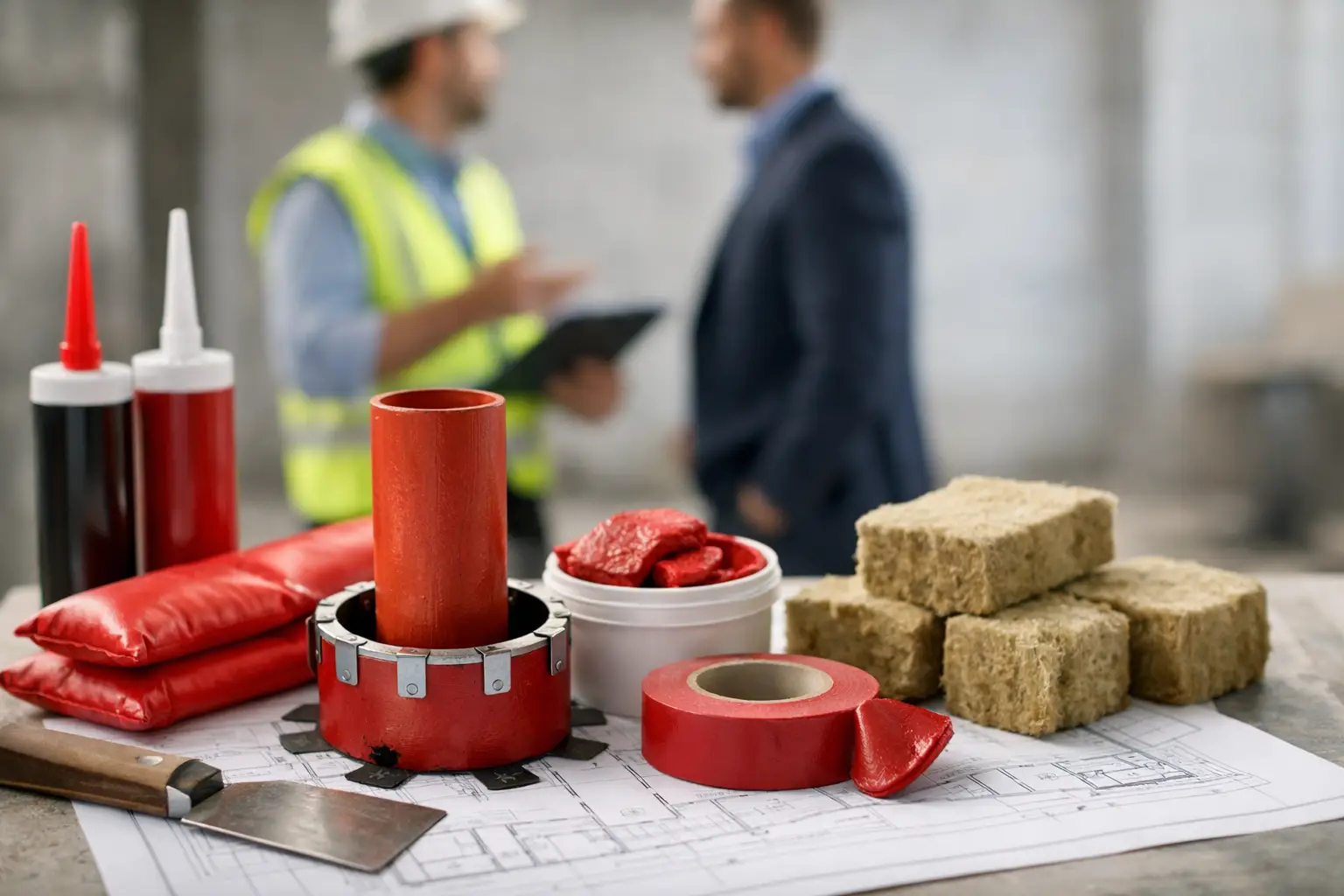
The most common gap is oversimplification. Some suppliers treat firestopping as a generic sealant category, when in reality it spans multiple tested solutions. A project may require intumescent sealants for service penetrations, ablative coatings for cable conditions, firestop pillows for temporary openings, or collars for combustible pipes. If the supplier groups all of that under one vague product recommendation, mistakes follow.
Another issue is fragmented sourcing. Contractors sometimes buy firestopping from one vendor, electrical consumables from another, plumbing materials from a third, and site tools from somewhere else. That approach can work on smaller jobs, but it creates coordination drag on larger schedules. When one supplier can support a broader basket - from electrical components and plumbing pipes and fittings to adhesives and sealants, fasteners, and safety items - procurement becomes faster and site teams spend less time chasing deliveries.
The final weakness is poor post-sale support. Firestopping is documentation-sensitive. If a project team later needs confirmation of product data, brand authenticity, or warranty handling, a supplier that disappears after invoicing creates extra work for the contractor.
Why consolidated supply works better for firestopping
Firestopping touches more trades than many categories, which makes it a strong candidate for consolidated procurement. A single B2B supplier that already supports your broader construction hardware and MEP requirements can respond faster when scope shifts. If a team needs firestop sealant along with backing material, anchor fasteners, application tools, and general site consumables, combining those requirements under one purchase flow saves time immediately.
It also improves accountability. Instead of multiple vendors blaming each other for delays or mismatched accessories, one supply partner can coordinate the order as a project package. That is particularly useful on fit-out jobs and fast-track towers where sequencing changes weekly.
This is where a distributor such as Yasu Trading Co. LLC fits a practical need for contractors - not only as a fire stopping materials supplier, but as an inventory-backed procurement partner for related construction categories. For buyers managing schedule pressure, that combined capability is often more valuable than a narrow product-only offer.
Questions to ask before you place the order
Before awarding a supplier, ask how they verify system suitability, what brands and approvals they support, and whether they can maintain continuity of supply through the next project phase. Ask about dispatch timing, not just availability on paper. Also confirm whether they can support related categories that usually travel with the firestopping package, such as sealants, fasteners, tools, and fire and safety equipment.
A useful conversation is not only about unit rate. It should also clarify lead times, substitute controls, documentation support, and what happens if site demand increases unexpectedly. The more direct the answers, the lower your procurement exposure.
The lowest bid is not always the lowest cost
There are cases where a lower-priced supplier is still the right choice - for example, on a repeat condition with a straightforward approved system and predictable quantities. But when the project has multiple penetration types, tight authority requirements, or phased call-offs, reliability usually matters more than the cheapest quote.
The hidden costs of a weak supplier are familiar: site idle time, rejected inspections, rework, emergency purchases, and extra labor spent fixing procurement mistakes. Those costs rarely appear in the first comparison sheet, but they show up later in project margins.
A firestopping package should be bought with the same discipline used for any critical life-safety material. Contractors need compliant products, clear technical backing, dependable stock, and delivery that matches the pace of site work. When a supplier can provide all four, procurement becomes simpler and project risk drops.
Choose the supplier that helps your team install the right system, not just the cheapest carton. That decision usually pays for itself long before final handover.