Unlocking high-pressure plumbing systems: the critical role of valves
Think of a high-rise residential tower. It’s more than just steel and glass; it’s a living structure. Its plumbing network is the building's circulatory system, a complex web of pipes and pumps tasked with getting water to every single floor. This isn't a gentle trickle. This is water being forced upwards against gravity, under incredible pressure.
The Unseen Sentinels of Your Building’s Plumbing

For the facility managers and engineers on the ground, controlling that powerful flow is everything. A problem in a high-pressure system isn't just a dripping tap. It's a potential disaster that can cause catastrophic damage, shut down operations, and create serious safety risks. These systems are the unsung heroes of modern high-rises, making life and work possible hundreds of metres up in the air.
The Critical Role of Valves
This is where valves come in. They are the guardians of this high-stakes environment, the critical components that tame the pressure, direct the flow, and protect the entire building. Without the right valves, the whole system would be an uncontrollable, volatile mess.
In Dubai's ever-taller buildings, where architectural ambition is the norm, systems depend heavily on components like pressure-reducing valves (PRVs) to keep things in check. The immense force from booster pumps can easily push water pressure past 10 bar on the lower floors. If that pressure isn't controlled, you get burst pipes—which account for up to 30% of emergency plumbing calls in UAE high-rise towers. If you want to dig deeper into these unique challenges, you can explore insights into high-rise plumbing solutions in Dubai.
A building’s plumbing system is only as strong as its weakest valve. In high-pressure applications, component selection isn't just a matter of function—it's a critical decision for structural integrity and long-term safety.
Navigating UAE’s Unique Demands
The job gets even tougher here in the UAE. Our demanding climate and some of the world's most stringent building regulations add extra layers of complexity.
This guide is for the contractors and engineers in the trenches who deal with these issues every day. We’ll get into the mechanics of key valve types, offer practical advice on selecting the right ones, and lay out best practices for installation and maintenance. The goal is to give you actionable knowledge to ensure your plumbing systems are robust, reliable, and safe, from the basement to the penthouse.
Mastering Fluid Control with Gate and Check Valves
When managing fluid control in a high-rise tower, engineers rely on specialised valves to handle the immense forces. The plumbing network functions like a building's circulatory system, where precise control is paramount. Two of the most essential sub-products for this job are gate valves and check valves.
They play distinct and complementary roles. Think of a gate valve as a manual roadblock. Its job is to provide a complete, secure shutdown, allowing maintenance crews to isolate a section for repairs without draining the entire system. A check valve, on the other hand, is like an automated one-way street. It is the silent guardian that ensures water only flows in a single direction, preventing the chaos of backflow when pumps shut down.
The Deliberate Control of Gate Valves
A gate valve is prized for its straightforward, rugged design—the ultimate isolation device. Its mechanics are simple: a solid wedge-shaped "gate" is raised or lowered by turning a handwheel. When fully open, the gate retracts completely, creating an unobstructed channel with minimal pressure drop, which is crucial for efficiency in high-pressure systems. When closed, the gate wedges down against two seats, forming a tight seal that stops the flow entirely. It is designed for on/off service only.
One of the most common—and expensive—mistakes we see is someone using a gate valve to try and throttle or regulate flow. Partially opening the gate creates intense turbulence and vibration that will quickly eat away at the gate and seats, leading to leaks and total valve failure. If you need to regulate flow, you need a globe valve. You can learn more about the differences in our complete guide to industrial valves.
The Automatic Protection of Check Valves
While a gate valve requires human command, a check valve operates autonomously, reacting instantly to changes in flow. It is the system's first line of defence against backflow, which can contaminate clean water supplies or cause severe equipment damage. In the context of a high-rise residential tower, one of the greatest dangers of backflow is water hammer. This occurs when a pump stops and the massive column of water in the vertical pipes crashes back down, creating a violent shockwave. A correctly installed check valve snaps shut the moment flow reverses, arresting this destructive force and protecting pipes, joints, and pumps.
The mechanics are brilliantly simple. In most designs, like a swing or lift check valve, the forward flow of water pushes open a disc or flapper. The instant that flow stops or reverses, gravity or a small spring pulls the disc back onto its seat, sealing the pipe and preventing any backward movement.
Here’s a quick breakdown of how these two critical components stack up.
Gate Valve vs Check Valve Functional Comparison
| Attribute | Gate Valve | Check Valve |
|---|---|---|
| Primary Function | To provide complete isolation (on/off) of fluid flow. | To automatically prevent the reversal of flow (backflow). |
| Operation | Manual operation via a handwheel or actuator. | Automatic and passive, activated by fluid flow direction. |
| Typical Application | Isolating pumps, sections of pipe, or equipment for maintenance. | Preventing backflow at pump discharge points and protecting potable water lines. |
| Flow Control | Not suitable for regulating or throttling flow. | No flow regulation capability; it is either open or closed based on flow. |
Understanding how the deliberate gate valve and the automatic check valve work together is fundamental to designing and maintaining high-pressure plumbing systems that last. One gives you the power to intervene safely, while the other provides constant, unseen protection, ensuring both reliability and safety in the UAE's tallest structures.
Selecting Valves for the Demanding UAE Climate
Picking the right valve for a high-pressure plumbing system in the UAE isn't just about getting the function right; it's a true test of durability. The region throws a unique set of challenges at every component: intense humidity, high salinity in the water, and scorching ambient temperatures. This creates a punishing environment where only the toughest materials survive.
Get this choice wrong, and you're not just looking at a premature failure. You're facing failed municipal inspections, expensive project delays, and the massive headache of rework. That’s why understanding material science and getting the specifications spot-on is front and centre for any successful plumbing project here.
Choosing Materials Built for Durability
The first line of defence against the UAE's harsh conditions is the material the valve is made from. Not all metals can stand up to constant humidity and corrosive water. Knowing their strengths and weaknesses is absolutely key to preventing costly disasters down the road.
Here’s a quick rundown of the common materials and how they stack up:
- Brass: You'll often see brass used for smaller valves. It offers decent corrosion resistance, but it's vulnerable to something called dezincification in high-salinity water, which basically eats away at its structure over time.
- Stainless Steel: Now we're talking. This is a far better choice for fighting off corrosion and handling high temperatures, making it a go-to for critical applications in any high-pressure system.
- Ductile Iron: Known for its raw strength and toughness, ductile iron is a beast, especially for larger valves. When it’s properly coated with something like fusion-bonded epoxy, its corrosion resistance gets a massive boost, making it perfectly suited for the region.
This simple diagram helps visualise the two main valve functions we covered earlier.
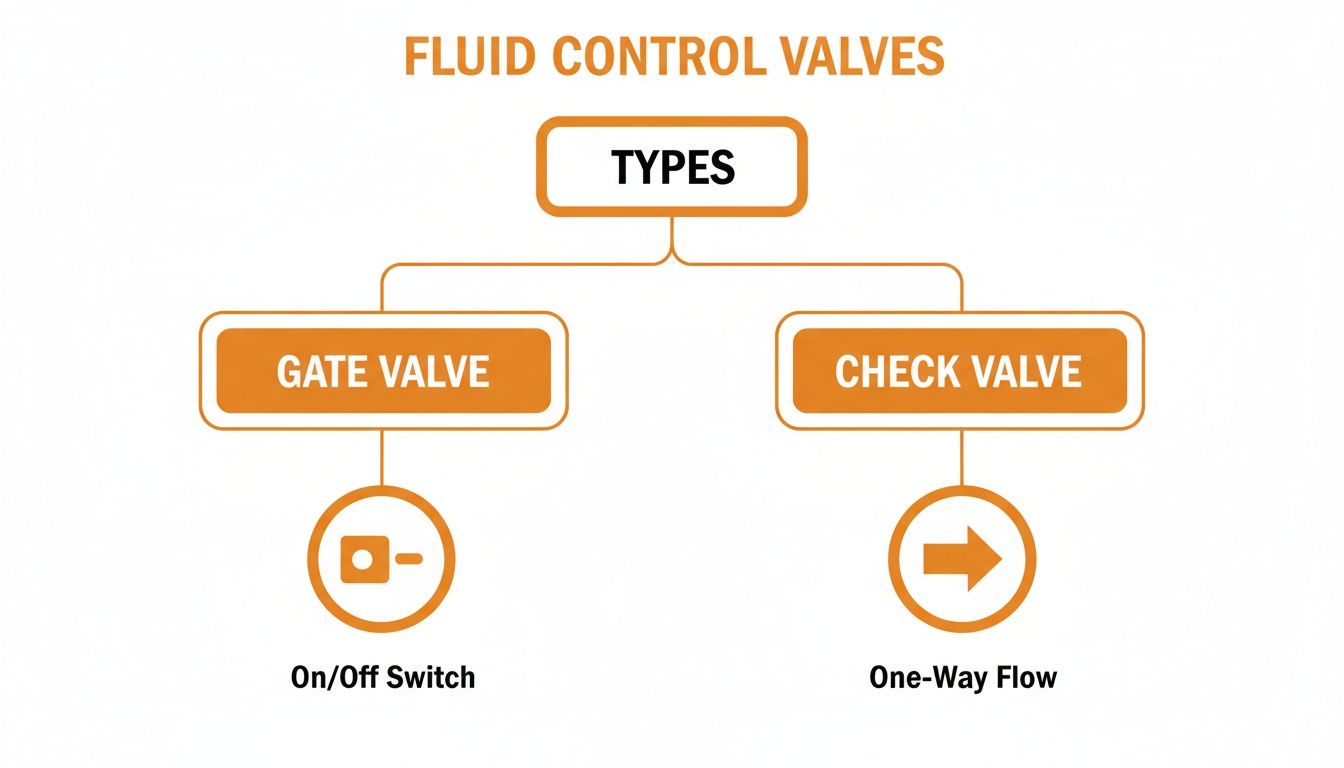
As you can see, it shows the basic difference between a gate valve (your manual on/off switch) and a check valve (which automatically ensures water only flows one way).
Demystifying Pressure Ratings
Once you've settled on the material, the next critical number you need to look at is the pressure rating. You'll see valves stamped with things like PN16 or PN25. These aren't just random codes; they tell you exactly how much stress the valve can handle.
The "PN" stands for Pression Nominale, a European standard that tells you the nominal pressure in bars the valve can withstand at room temperature. So, a PN16 valve is built to handle up to 16 bar of pressure. Simple as that.
In a high-rise tower, the pressure isn't the same everywhere. The system is broken into pressure zones, and the highest pressures are always on the lower floors. Matching the valve's PN rating to the maximum possible pressure in its zone isn't just a good idea—it's non-negotiable for safety.
A valve with the wrong pressure rating is a ticking time bomb. It might hold up for a bit, but the constant stress will lead to metal fatigue, leaks, and maybe even a catastrophic burst. Always, always check the engineering specs for each zone and choose a valve with a rating that gives you a safe margin.
Adhering to Local Regulations and Standards
Finally, remember that every single component you install in the UAE has to meet the tough standards set by local authorities. Bodies like the Dubai Municipality and the Dubai Electricity and Water Authority (DEWA) have very specific rules for plumbing materials to protect public safety and water quality.
Using non-compliant valves is a gamble no contractor can afford. It’s a guaranteed failed inspection, which slams the brakes on your entire project until you rip it out and replace it. That means paying for new parts and labour, plus absorbing the huge financial hit from the project delays.
Giving engineers and contractors the knowledge to pick compliant, durable, and correctly rated valves is the bedrock of building reliable high-pressure plumbing systems. Making smart procurement decisions from day one is what ensures long-term success and avoids the all-too-common pitfalls of component failure.
Installation and Maintenance for Lasting Performance
You can specify the best, most expensive valve on the market, but if it's installed badly or just left to fend for itself, it’s going to fail. It’s as simple as that. In high-pressure systems, where the forces at play are massive, getting the installation right isn't just "best practice"—it's the only way to guarantee safety and a long service life.
A valve's story begins the moment you take it out of the box. Any seasoned MEP professional will tell you that the time you spend on prep work pays you back tenfold by preventing future headaches. Rushing this stage is a recipe for disaster, setting up a brand-new valve for leaks, poor performance, and disruptive repairs that nobody has time for.
Critical Installation Best Practices
A perfect installation comes down to a few non-negotiable steps. Each one is designed to head off a potential point of failure before it ever becomes a problem, ensuring the valve performs exactly as it should under extreme pressure.
- System Flushing: Before you even think about fitting a new valve, the entire pipe section needs a thorough flush. This gets rid of any leftover welding slag, dirt, or debris that could score the valve seats or jam the mechanism on day one.
- Correct Valve Orientation: It sounds obvious, but you’d be surprised how often this is missed. Many valves, especially check valves, are directional. Install one backwards, and it’s not just useless—it can create dangerous system backups.
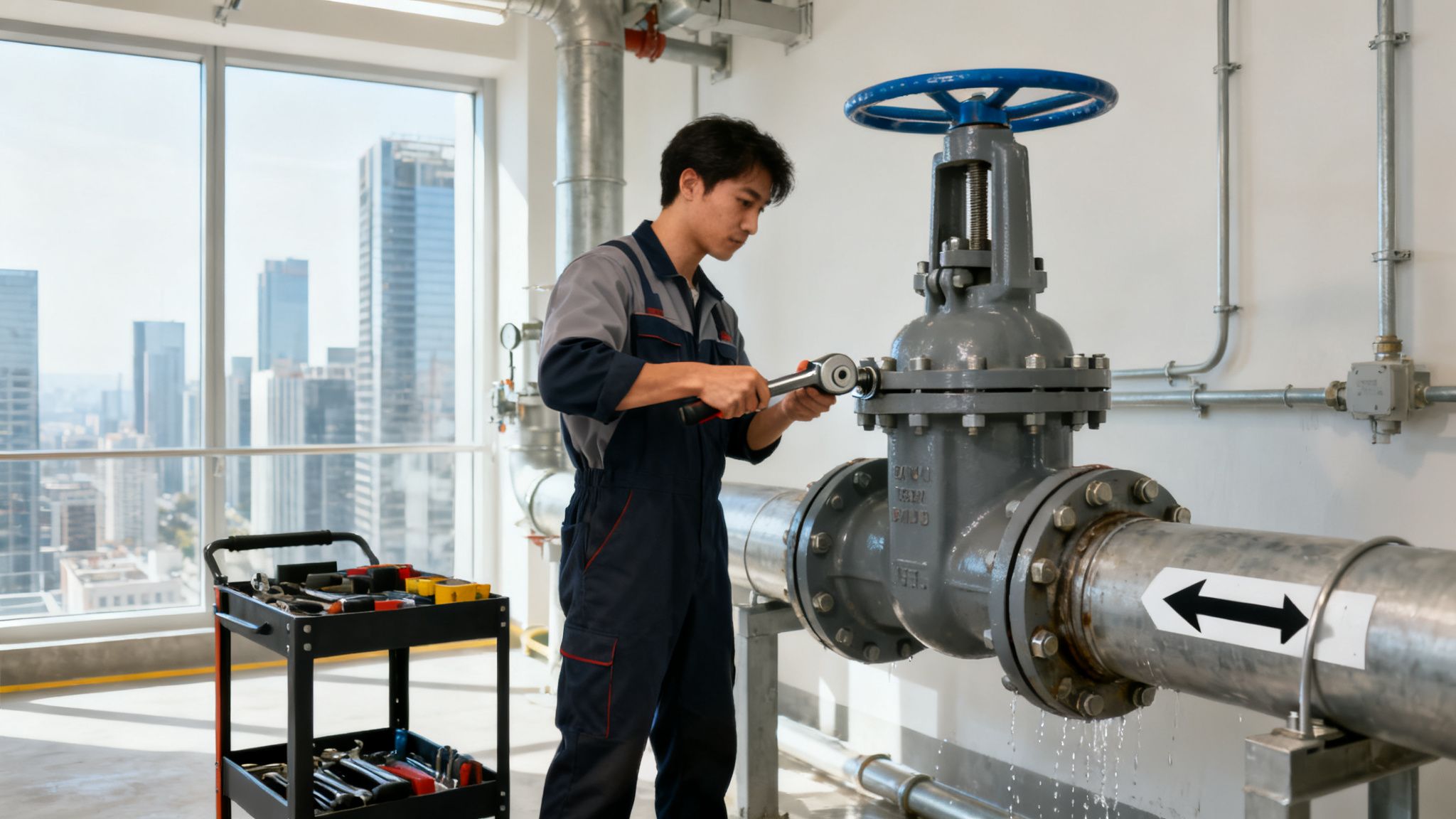
- Precise Bolt Torque: Overtightening flange bolts is a classic mistake. It can easily warp the valve body or even cause stress fractures. Always use a calibrated torque wrench and follow the manufacturer's pattern to get a tight, even seal without crushing the component.
Cutting corners here has real consequences. Using the wrong sealant, for example, can eat away at the valve's gasket material, creating a weak point that’s guaranteed to give way under pressure.
Proactive Maintenance: A Strategic Investment
Once a valve is in, its fate depends on proactive maintenance. This means shifting your mindset from a reactive, fire-fighting repair model to a strategic plan that keeps the whole system running smoothly and minimises downtime. Think of it less as a cost and more as an investment in reliability.
A solid maintenance plan is the secret to getting the most out of all your high-pressure plumbing systems. This involves keeping a detailed log for every critical valve, tracking its service history and flagging any performance dips over time.
A proactive maintenance culture is the single most effective way to extend the lifespan of plumbing components and avoid the catastrophic costs associated with emergency shutdowns. It's about prevention, not just reaction.
This commitment to upkeep also has a direct impact on your operational efficiency. A recent Abu Dhabi hospital retrofit in 2023 showed that switching to well-maintained control valves led to a 20% reduction in energy consumption. This is a huge win that aligns perfectly with the goals of UAE Vision 2030, proving how smart component management helps the bottom line and the environment.
For contractors and developers, this means specifying robust, serviceable systems from the start. Since 2002, Yasu Trading Co. LLC has supplied Bosch and Makita-compatible components that meet all municipality standards, complete with the technical support and on-time dispatch you need to keep projects on track.
Here are a few key maintenance activities that should be on every checklist:
- Regular Leak Inspections: Do a visual sweep of valve stems, bonnets, and flanges. Look for any tell-tale signs of weeping or dripping.
- Corrosion Checks: Keep a sharp eye out for rust or any material degradation, a common issue in the humid UAE climate. Learning how to prevent corrosion in plumbing fittings in the UAE is essential.
- Exercising Valves: Every so often, fully open and close your gate valves. This simple action prevents mineral deposits from building up and causing the valve to seize up.
For systems with more complex components, knowing the procedure for adjusting relief valves on flow dividers is also vital for safety and performance. This disciplined approach ensures every valve in your system does its job reliably for years to come.
Troubleshooting Common Valve Failures
In a high-pressure system, a small valve problem can snowball into a major disaster in minutes. When a call comes in, you don't have time for guesswork. A fast, accurate diagnosis isn't just about good service—it's about safety and keeping the building operational. Think of this as your field guide for tackling the most common valve headaches we see every day in the UAE's high-rise projects.
Getting to the root cause is everything. Whether you're dealing with a jarring bang that echoes through the pipes or a persistent drip that won’t quit, figuring out why it's happening is the key. It’s the difference between a quick fix and a lasting solution, saving you from a callback and the client from more downtime.
Diagnosing Water Hammer and Check Valve Issues
There's nothing quite like the sound of a water hammer. That violent shudder and loud, banging noise is one of the most destructive forces in high-pressure plumbing systems. It’s the result of a water column stopping on a dime, sending a massive shockwave ripping back through the pipework. Nine times out of ten, the culprit is a check valve that's not doing its job.
A check valve is designed to close the very instant forward flow stops, preventing any backflow. But if the internals are worn out, jammed with debris, or just stuck, it can slam shut a split-second too late. That tiny delay is all it takes for water to start reversing course, and when the valve finally closes against that backward momentum, you get that destructive shockwave.
Here’s a quick way to track it down:
- Follow the Noise: Pinpoint where the banging is loudest. It’s usually near pumps or at the bottom of long vertical risers.
- Inspect the Check Valve: Isolate the system and take a look at the nearest upstream check valve. Check for wear on the disc or seat and hunt for any grit or scale that could be stopping a clean, fast closure.
- Check the Placement: Is the valve installed correctly? Sometimes the problem isn't the valve itself, but where it was placed in the system design.
Identifying Leaks and Seized Valves
Beyond the drama of a water hammer, you'll constantly run into the more silent, stubborn problems. Things like a "passing" gate valve that lets water seep through when it's supposed to be fully closed, or a ball valve that's completely seized and won't budge. These are the everyday issues that can bring maintenance work to a grinding halt.
A passing gate valve is almost always a victim of seat erosion. If someone tried to use it to throttle the flow (a big no-no), the high-velocity water will carve channels right into the soft seating material, creating a permanent leak path. If you see constant drips from the valve stem, it's likely the packing or gaskets have given up. They can dry out and shrink over time, a common problem given the ambient heat here in the UAE.
When a valve fails, it’s giving you a clue. A close look at that eroded seat, corroded stem, or brittle seal tells you a story about what’s happening inside the system. It’s valuable intel for preventing the same failure down the line.
A seized valve is usually down to one of two things: corrosion or neglect. Corrosion can fuse the stem threads together, making it impossible to turn. Likewise, if a valve is left untouched for years, mineral deposits can cement it in place. This is exactly why "exercising" your valves—opening and closing them fully every so often—is such a critical part of any good preventative maintenance plan. By understanding these root causes, you can get the system back to 100% and keep the building’s circulatory system flowing smoothly.
Your Partner in Plumbing Procurement
Getting your head around the technical side of high-pressure plumbing systems is one thing. Actually getting the right parts in your hands, on time, and knowing they meet the UAE's tough standards? That’s a whole different ball game. This is where the theory hits the road, and a solid procurement partner becomes your project's secret weapon.
Every single valve or fitting you install is a promise—a promise of safety, quality, and durability. Sourcing the right components isn't just about ticking a box on a spec sheet; it's the very bedrock of your project's reputation. We’ve all seen it: costly delays don't start with a problem on-site, they start with a procurement headache, a wrong part number, or a supplier who can't keep their promises.
Your Direct Line to Quality and Speed
At Yasu Trading, we’ve built our business to solve exactly those problems for contractors across the UAE. We know that when you need a specific PN25 gate valve or a specialised corrosion-resistant check valve, you mean now, not next week. Our warehouses are stocked deep with trusted global brands, meaning the components you need are ready to go when you are.
But it’s more than just having the parts. Our team provides practical, hands-on support to back it up. We’re here to help you double-check specifications, making sure every valve is a perfect match for the pressure zone and fully compliant with Dubai Municipality and DEWA codes. It’s this kind of collaboration that stops sourcing mistakes from blowing up your timeline and budget.
Think of the right supplier as more than just a vendor; they're a strategic part of your team. They make sure every piece of the puzzle fits the spec and shows up exactly when you need it, keeping your workflow smooth and your project in the black.
Logistics That Keep Your Project Moving
Our hub in Naif, Deira, is the heart of our operation. From there, we can get materials to your site with same-day or next-day delivery, whether you're building a tower in Dubai, a commercial complex in Abu Dhabi, or a new development in Sharjah. This speed means your crews stay busy and your project stays on track, without the constant worry of material holdups.
When you work with Yasu Trading, you’re taking the guesswork and delays out of your supply chain. You’re getting a partner who is just as invested as you are in making sure every component is tough, reliable, and absolutely right for the job.
Of course, managing high-pressure systems goes beyond just the hardware. Smart business operations and strategic partnerships are crucial. Digging into insights for plumbing companies can uncover new ways to improve how you deliver your services and run your business more efficiently.
Ultimately, our job is simple: make sure your projects are built with the best materials, delivered on time, every time. Let us worry about the procurement details so you can focus on building. Contact the Yasu Trading logistics desk today and let’s get your next project moving with confidence.
Frequently Asked Questions
When you're dealing with high-pressure plumbing systems in the UAE, a lot of questions come up on site. For contractors and engineers on the ground, getting the right answers isn't just a nice-to-have—it's critical for safety, compliance, and keeping the system running for years to come. Here are some of the most common queries we hear from professionals in the field.
These aren't just academic questions; they get to the heart of the daily challenges of managing the immense forces at play inside Dubai's high-rise towers. From choosing the right material to knowing how to operate it, every decision ripples through the building's entire plumbing network.
What Is the Most Common Cause of Valve Failure in Dubai High-Rises?
More often than not, valve failure in Dubai’s skyscrapers comes down to a one-two punch of environmental and mechanical stress. The biggest culprit is corrosion, which is put into overdrive by the region's high humidity and the salinity you often find in the water supply. It's a relentless attack on the valve materials, slowly but surely eating away at their integrity.
Then you have the sheer mechanical stress of these high-pressure systems. These valves are constantly fighting massive forces, which causes serious wear and tear on the internal parts. The best way to fight back is to specify highly corrosion-resistant materials—like coated ductile iron or stainless steel—right from the start, and stick to a strict, proactive maintenance schedule.
How Often Should Pressure-Reducing Valves Be Serviced?
For a piece of equipment as vital as a pressure-reducing valve (PRV), "set it and forget it" is not an option. Best practice, which lines up with DEWA guidelines, is to give them a full inspection and service twice a year. And we're not talking about just a quick glance.
A proper service on a PRV should always include:
- Checking for pressure creep: You need to make sure the valve isn’t letting downstream pressure slowly climb when there’s no flow.
- Cleaning internal components: The technician needs to open it up and clean out any sediment or scale build-up that could jam the mechanism.
- Recalibrating settings: The pressure settings have to be double-checked and adjusted to keep the system safe and fully compliant with local rules.
Can a Gate Valve Be Used to Regulate Water Flow?
This is probably one of the most common—and most destructive—mistakes we see. The answer is a hard no. Gate valves are designed for one thing only: to be fully open or fully closed. Trying to use one to throttle or regulate flow is a surefire way to destroy it.
When a gate valve is left partially open, the water screams through the small opening, creating intense vibration and turbulence. This chaotic, high-velocity flow acts like a sandblaster, eroding the gate and its seat. Before you know it, the valve is so damaged it can't create a proper seal, leading to leaks and a mandatory replacement.
If you need to regulate flow, you need a globe valve. It’s that simple. Using the right valve for the job is absolutely fundamental to the health of any high-pressure system.
For over 20 years, Yasu Trading Co. LLC has been the go-to partner for contractors and engineers across the UAE, providing municipality-compliant plumbing components and expert support. To streamline your procurement and ensure your next project is a success, visit us at https://yasutrading.com.