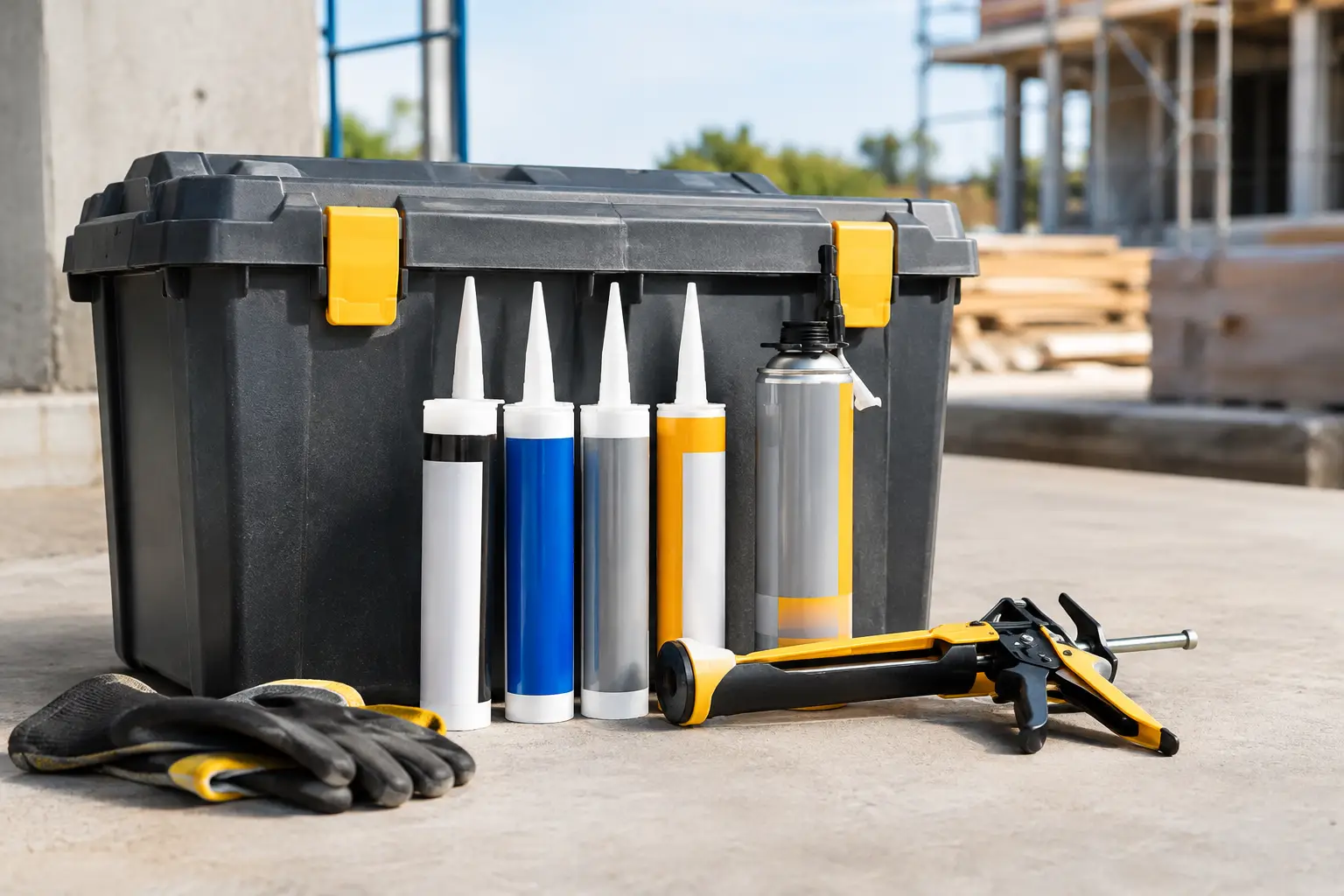
How to Store Construction Adhesives on Site
A cartridge left in a hot site container can look perfectly usable and still fail when it matters. The sealant may skin over too fast, the adhesive may cure inside the nozzle, or the product may no longer meet the performance expected in its approved application. Knowing how to store construction adhesives is therefore not a housekeeping detail. It is part of protecting installation quality, material traceability, and the project schedule.
For contractors, MEP teams, fit-out crews, and facilities maintenance departments, storage must account for more than a label date. Temperature swings, direct sun, humidity, dust, stock rotation, and incomplete cartridges all affect whether an adhesive is ready for use. A controlled process reduces material waste and prevents last-minute replacement orders when a crew is ready to install.
Why adhesive storage affects jobsite performance
Construction adhesives and sealants are chemical products. Their bond strength, cure behavior, viscosity, and application consistency depend on the product remaining within the manufacturer's specified storage conditions. Polyurethane, silicone, acrylic, epoxy, hybrid polymer, contact adhesive, and solvent-based products do not react to poor storage in exactly the same way, but none should be treated as ordinary consumables.
Heat is the most common risk on Gulf construction sites. Repeated exposure to elevated temperatures can shorten shelf life, thicken the material, separate components, or begin a curing reaction before application. Freezing can also damage water-based adhesives and some sealants. Even where the ambient weather is manageable, a closed metal container, vehicle cab, or outdoor storage cage can become substantially hotter than the surrounding air.
The operational consequence is simple: a low-cost cartridge can create expensive rework. A failed joint, loose skirting, leaking sanitary connection, or poorly bonded panel can delay handover, trigger inspection concerns, and use labor twice. Store adhesives as specification-controlled materials, especially where they support fire stopping, waterproofing, façade work, or MEP penetrations.
How to store construction adhesives correctly
Start with the product data sheet and the label. The manufacturer sets the acceptable temperature range, shelf life, orientation, and any special precautions. Many products perform best in a cool, dry covered store, commonly around 41°F to 77°F (5°C to 25°C), but that is not a universal rule. Do not assume one storage range suits every product in the adhesive and sealant store.
Keep products in their original unopened packaging until they are issued for use. Original packaging protects cartridges, sausages, cans, and tubes from contamination and preserves batch information. It also gives the site team access to application instructions, hazard warnings, manufacture dates, and expiry dates without relying on memory or handwritten labels.
Store cartons off the floor on clean shelving or pallets. This prevents water contact, reduces dust exposure, and makes it easier to inspect cartons for crushed cartridges, leaks, or damaged seals. Avoid stacking cartons higher than the manufacturer permits. Excessive weight can distort cartridges and damage nozzles, particularly during long storage periods.
A shaded indoor storeroom is preferable to an exposed container. If container storage is unavoidable, improve air circulation, use insulation where practical, and monitor internal temperature rather than relying on outdoor weather readings. Do not place adhesive cartons against sun-facing walls, near generators, hot pipes, welding areas, or heat-producing electrical equipment.
Separate products by chemistry and use
A mixed shelf of unnamed tubes is a predictable source of installation errors. Organize adhesives and sealants by product type, application, and approved project use. Keep general-purpose construction adhesive separate from sanitary silicone, fire-rated sealant, thread sealant, epoxy anchoring adhesive, and flooring adhesive.
This separation matters because packaging can be similar while performance is not. A neutral-cure silicone intended for glazing is not automatically suitable for wet-area sanitary joints. A standard sealant cannot substitute for a tested fire-stop system. For MEP work, teams should clearly identify products approved for pipe penetrations, cable containment, drainage connections, and equipment mounting.
Use a simple shelf label showing the product name, color where relevant, batch or lot number, received date, expiry date, project allocation, and storage condition. For larger projects, a digital material register gives procurement and QA/QC teams a clear record of what is on hand and what must be used first.
Control temperature, moisture, and contamination
The most reliable storage area is dry, shaded, clean, and consistently ventilated. Adhesives should not be stored beside paints, fuels, thinners, acids, or other chemicals unless the safety data requirements specifically permit that arrangement. Solvent-based products may require dedicated flammable-material controls, including approved cabinets and ignition-source separation.
Moisture management is equally important. Unopened foil sausages and cartridges have protection, but damaged packaging allows humidity and site dust to affect the product. Keep box flaps closed. Do not leave cartons open in active work zones. If a package is wet, crushed, swollen, leaking, or visibly contaminated, isolate it for inspection instead of returning it to available stock.
Avoid transferring adhesives into unmarked containers. This removes critical information and can create a safety and compliance issue. If smaller work packs are issued, maintain the original packaging or use a durable secondary label that retains the exact product identification, batch reference, hazard information, and expiration date.
Manage opened cartridges and partially used products
Once opened, an adhesive has a different storage life from an unopened unit. Air and moisture exposure can cause surface curing, nozzle blockage, solvent loss, or contamination. The practical rule is to issue only the quantity a crew can use within the product's workable period.
For cartridges and sausages, cap or seal the nozzle immediately after use using the manufacturer-recommended method. Mark the opening date, time, user, and work area directly on the cartridge or on a controlled issue tag. Store it upright if the product instructions require it, then inspect the nozzle and material condition before reuse.
Do not rely on a fresh-looking nozzle as proof that a partly used adhesive remains suitable. If the material has thickened, separated, developed lumps, changed color, or does not dispense consistently, remove it from service. With two-component epoxies and chemical anchors, never attempt to save mixed material beyond its stated pot life. Once components are combined, the curing clock has started.
Use first-expire, first-out stock rotation
Standard first-in, first-out is useful, but construction adhesives are better managed using first-expire, first-out. Place the nearest expiration dates at the front of the shelf and issue those units first, provided they remain appropriate for the assigned application.
Receiving teams should check every delivery before it enters stock. Confirm the product, quantity, condition, batch details, and remaining shelf life against the purchase order and project requirement. A bulk delivery with limited usable life can become a site liability if it will not be consumed before expiry.
Set a routine inspection schedule. Weekly checks work well for active sites, while slower-moving stores may use a monthly review. Flag stock approaching expiry early enough for project teams to plan consumption, reallocate approved material, or arrange replacement. Never use expired adhesive on the assumption that it will be acceptable for a noncritical area. The manufacturer warranty and stated performance may no longer apply.
Build storage into procurement planning
Procurement decisions affect storage quality. Ordering excessive quantities too early exposes adhesives to longer site storage, temperature risk, and expiration. Ordering too little can stop installation crews and force substitutions that may not meet the approved specification. The right approach depends on the consumption rate, available climate-controlled space, delivery lead time, and the product's shelf life.
For phased projects, schedule adhesive deliveries to match installation windows rather than filling site stores months in advance. This is particularly useful for fit-out sealants, flooring products, tile adhesives, and specialty MEP sealants that may be required in separate work fronts. Keep a defined buffer for urgent repairs and punch-list work, but size it based on actual usage.
A distributor that can support project-based quantities, verified product data, and rapid dispatch helps reduce the need to overstock. Yasu Trading Co. LLC supports contractors with inventory-backed supply across adhesives, sealants, tools, fasteners, plumbing materials, and electrical components, helping teams consolidate urgent material requirements without compromising approved specifications.
Give site teams a clear rejection process
Site stores and supervisors should know when not to issue a product. Quarantine adhesives that are expired, damaged, leaked, overheated, frozen, unidentifiable, or suspected of improper storage. Mark them clearly as hold stock so they are not picked during a rush.
The QA/QC team can then review the product against manufacturer guidance and project requirements. This is better than allowing an installer to make a field decision under schedule pressure. For safety-critical or tested systems, only documented manufacturer confirmation should determine whether questionable material can remain in service.
A disciplined adhesive store does not need to be complicated. It needs protected space, visible labeling, regular checks, and stock rotation that matches the work plan. When crews receive materials that are within shelf life, correctly identified, and ready to apply, installation moves faster and the finished work is easier to stand behind.