How to Use the Yasu Construction Cost Calculator for Project Planning in UAE
Staring down a new construction project in the UAE, the first thing on your mind is the budget. You need numbers, and you need them fast and reliably. The smartest way to get a handle on your project's costs right from the start is by using the Yasu Construction Cost Calculator. Just plug in your project type, location, and total area, and you'll get an instant, data-backed preliminary estimate.
This isn't just some generic tool; it's a contractor's first port of call in Dubai, Abu Dhabi, or Sharjah. It's a step-by-step tutorial designed to drive direct usage of the site tool.
Your First Step to Accurate UAE Project Budgeting
Embarking on any build, whether you need a quick warehouse estimation in the UAE or you're deep into planning a villa's building cost in Dubai, starts with a solid financial foundation. We've all been there—messing with outdated spreadsheets and manual calculations. It's not just slow; it’s a recipe for errors that can blow your budget down the line. A proper UAE construction cost calculator gets you beyond guesswork and gives you a realistic baseline in minutes.
Let's put this into practice. Imagine you're a general contractor in Dubai, about to bid on a new villa project in Jumeirah. You've just found the Yasu Trading Co. LLC's Construction Cost Calculator, and it's a real game-changer. Yasu has been in the trenches with contractors since 2002, so with over 20 years of experience from their Deira hub, they know what we need.
This free online tool pulls in real-time data for everything from steel and Grohe plumbing fittings to Bosch electrical components, all up to Dubai Municipality standards. It's designed for how we actually work.
This guide will walk you through turning that initial idea into a financial plan you can trust. We'll stick with our real-world scenario—a luxury villa in Jumeirah—to show you exactly how this simple tool helps you prepare tenders faster and dodge those nasty budget surprises.
Why does a digital calculator beat traditional methods?
A digital calculator beats traditional methods by providing an immediate edge in speed and accuracy. The old way of budgeting—calling a dozen suppliers, juggling price lists, waiting for callbacks—can take days, whereas a digital tool delivers a preliminary budget in minutes using current market data.
- Speed: You can have a complete preliminary budget in less than five minutes. Seriously.
- Accuracy: It's pulling from current market data for both materials and labour, not last month's prices.
- Compliance: The estimates are built around prevailing UAE construction standards, so you're starting on the right foot.
- Accessibility: It’s a free, web-based tool. You can access it from the site office, your truck, or home.
You can see from the screenshot below that the interface is clean and gets straight to the point. No fluff.
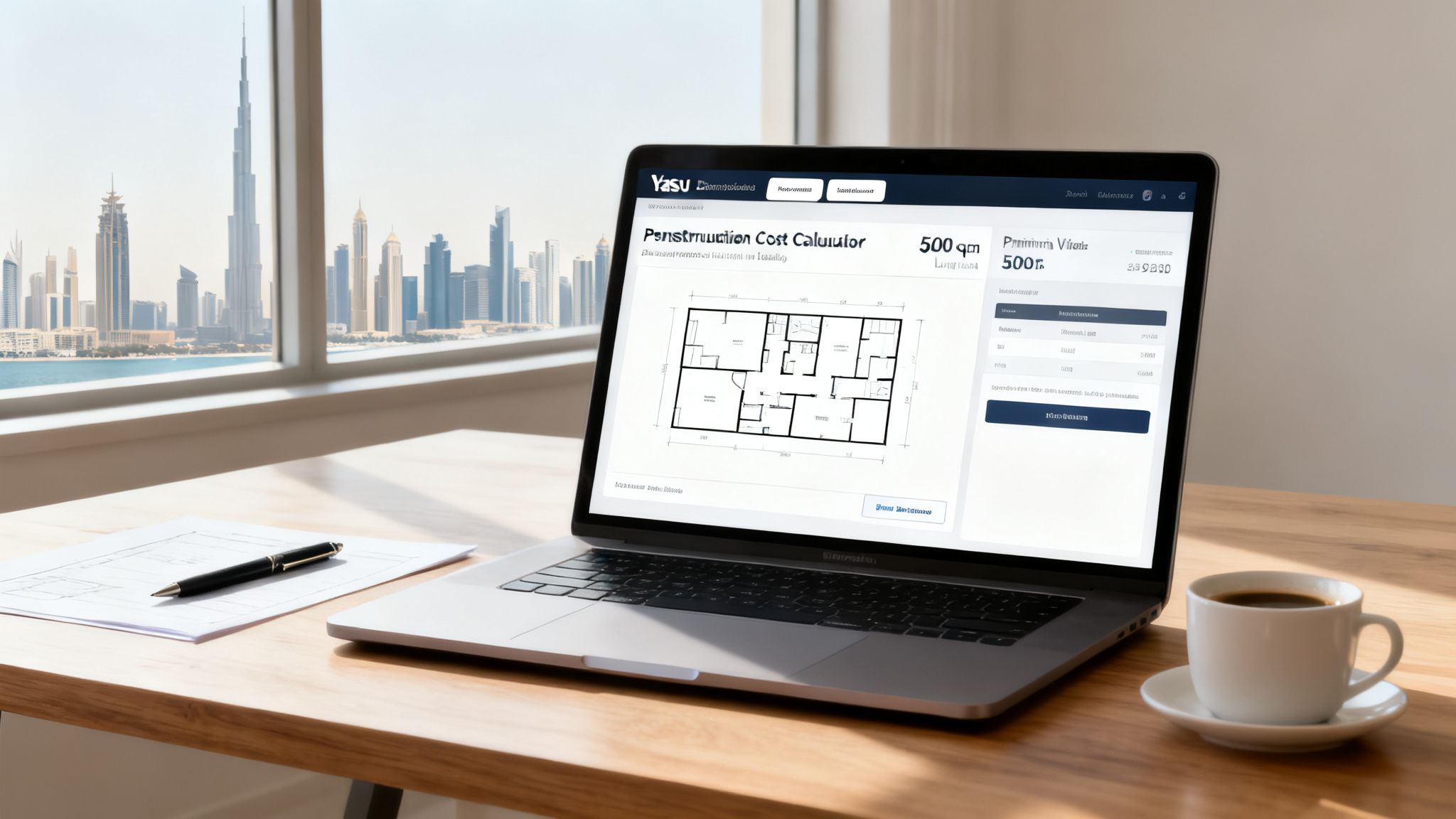
This first screen just asks for the three core inputs that drive the whole thing: Project Type, Location, and Area. As you start refining these numbers, it’s also a good time to look into proven strategies to reduce construction costs without cutting corners on quality. That way, your estimates are not just accurate, they're competitive.
How do you generate your first estimate in minutes?
To generate an estimate in minutes, you simply input three key pieces of information into the calculator: Project Type, Location, and Total Built-Up Area. This step-by-step process is designed to be fast and intuitive, providing you with the core numbers needed to start planning properly.
Alright, let's get straight to it. When you first land on the UAE construction cost calculator, you'll notice it's clean and simple. No fluff. It’s built to do one thing well: give you a solid cost estimate, fast. I’m going to walk you through your first budget, using a real-world example, so you can see just how quickly you can get the numbers you need to start planning properly.
The whole process kicks off with three key pieces of information. Think of these as the foundation of your estimate. Get them right, and you're already on the path to an accurate budget.
- Project Type: First up, you’ll choose between a Villa or a Warehouse. This simple choice is powerful—it tells the calculator what kind of materials, MEP systems, and labour to account for. It’s the core logic of the entire calculation.
- Location: Next, pick the Emirate—Dubai, Abu Dhabi, Sharjah, etc. This isn’t just a label. It’s a smart feature that automatically tweaks the numbers behind the scenes for different labour rates, municipality fees, and local logistics costs.
- Total Built-Up Area: Finally, pop in the total project area in square metres. This is the main number that scales all your material and labour quantities.
A Practical Walkthrough: A 500 SQM Villa in Dubai
Let's run a common scenario to see how this works in practice: a 500-square-metre luxury villa in Dubai.
We’ll punch these details straight into the calculator:
- Project Type: Villa
- Location: Dubai
- Total Built-Up Area: 500 sqm
Once those three details are in, the calculator isn’t just doing simple multiplication. It’s comparing your inputs against a live database built on real-world UAE project data. This is so important, because the villa building cost Dubai can be a world away from a similar project in, say, Fujairah, thanks to local rules and supply chain quirks.
The real magic is in the location-based variables. Choosing 'Dubai' vs. 'Abu Dhabi' instantly factors in costs that align with local municipality requirements and labour market rates, which I’ve seen run 5-10% higher in Dubai. This feature alone helps you sidestep one of the most common—and costly—early-stage budgeting mistakes.
What is a built-up area for construction?
The built-up area is the total covered space of a building, measured across all its floors, including everything inside the outer walls like rooms and corridors. It does not typically include open areas like balconies or terraces, and being precise here is crucial for a reliable estimate.
The calculator uses this number to figure out everything from concrete and blockwork quantities to the amount of paint and tiles needed. If you’re a contractor who needs a quick warehouse estimation UAE scenario, the same principle applies, but the calculator swaps in coefficients for industrial structures. This ensures your initial numbers are grounded in reality, whether you're building a home or a massive storage facility.
By focusing on just these three inputs, you can get a surprisingly powerful baseline budget in less than a minute. It’s a massive step up from scribbling on a notepad or spending hours on a spreadsheet. You get instant data to guide those crucial first client meetings.
Give it a try yourself. Head over to the free Yasu construction cost calculator and plug in your own project details. The speed and clarity you get back will give you confidence in the tool right from the start.
How do Standard and Luxury tiers affect your budget?
The Standard and Luxury tiers directly affect your budget by toggling the cost per square metre for materials, finishes, and systems. Choosing 'Standard' provides a cost-effective budget compliant with UAE construction standards, while 'Luxury' factors in premium imported materials and high-end finishes, significantly increasing the overall estimate.
Once you’ve punched in the basic project details, you’ll hit one of the most critical decisions in the Yasu UAE construction cost calculator: choosing the quality tier. This isn't just about picking nice finishes. Selecting 'Standard' or 'Luxury' sends ripples through every single line item of your budget.
Getting this right from the start is absolutely crucial for managing your client's expectations and ensuring the final build matches their vision—and their wallet.
What's the real difference between Standard and Luxury tiers?
The real difference is that 'Standard' and 'Luxury' are pre-packaged cost profiles based on real project data from across the UAE. The 'Standard' tier reflects a durable, compliant, and cost-effective build, whereas the 'Luxury' tier accounts for the premium price of high-end finishes, imported materials, and advanced MEP systems.
Let’s dig into what each one means for your project planning.
Standard Tier: This is your go-to for most projects where durability, compliance, and budget control are the main goals. We're talking about commercial builds, mid-range residential villas, and any job that needs to be functional and efficient. It assumes you're using reliable, quality materials from a trusted building materials distributor that get the job done right without breaking the bank.
Luxury Tier: When your project demands the best, this is the option you choose. It automatically adjusts the estimate upwards to account for premium materials and high-specification finishes. This tier is built for projects like an opulent villa in Jumeirah or a boutique hotel where quality is paramount. It prices in brands like Grohe for plumbing, sophisticated MEP systems, and premium imported tiles.
Here's the bottom line: The logic behind choosing the 'Luxury' tier is that it can easily bump up the estimated villa building cost Dubai by 30-50%, sometimes even more, compared to the 'Standard' build. This isn't just about more expensive taps; it reflects a fundamental shift in the quality, origin, and craftsmanship of nearly every component.
Your three core inputs—Type, Location, and Area—create the initial blueprint for the estimate.
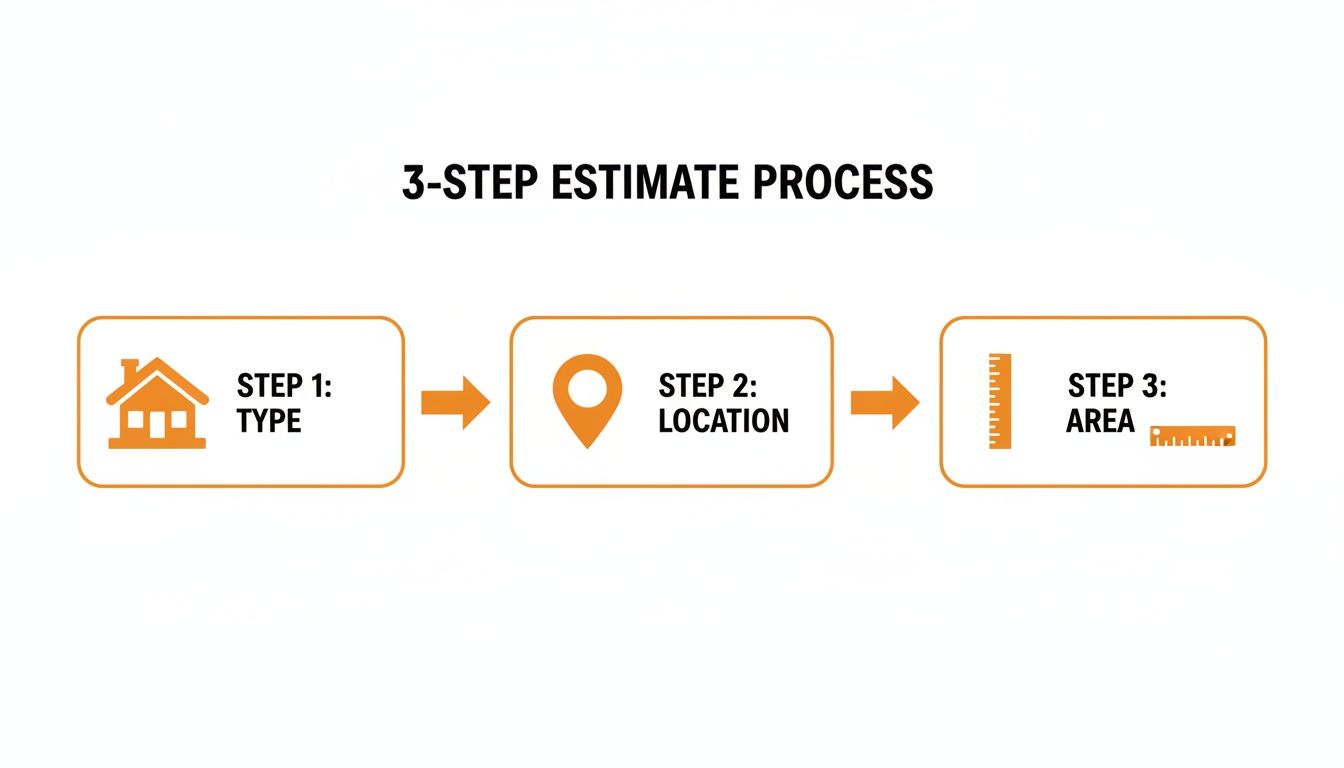
This simple, three-step process lays the groundwork. But it's the quality tier that truly sharpens the financial pencil.
How do location-based variables affect the final cost?
Location-based variables (e.g., Dubai vs. Abu Dhabi) affect the final cost by automatically adjusting for regional differences in labour rates, municipality fees, and logistics. The calculator's logic ensures that an identical project in Dubai is priced differently than one in Sharjah, reflecting the unique cost structure of each Emirate.
The calculator is smarter than just swapping out material costs. For instance, the labour cost to perfectly install high-end marble flooring in a luxury Dubai villa is worlds apart from laying standard ceramic tiles in a Sharjah warehouse. The calculator understands these regional differences. It ensures that a warehouse estimation UAE project in a Northern Emirate is priced differently from an identical structure in Abu Dhabi, giving you a much more realistic figure.
This location-specific adjustment is what separates a vague guess from a reliable estimate.
A Clear Comparison for Client Discussions
Here’s where this feature becomes your best friend in client meetings. You can run the numbers for the same project twice—once on 'Standard' and again on 'Luxury'—to generate two clear, data-backed budget scenarios in minutes.
This immediately elevates the conversation. Instead of guesswork, you're discussing concrete trade-offs. You can physically show a client how their dream for premium Italian marble will impact the overall budget compared to a durable, locally sourced alternative.
Presenting these figures, generated by a tool from a leading supplier in Dubai, gives your proposals incredible weight. It empowers your clients to make smart, informed decisions right from the very beginning.
Turning Your Estimate Into an Actionable Plan
Once the Yasu UAE construction cost calculator spits out your preliminary budget, you’ve got more than just a number. You have the starting point for making real-world project decisions. This is where a simple estimate starts its journey to becoming a strategic tool, guiding everything from your tender prep to your final procurement runs.
The calculator gives you a detailed breakdown that serves as a roadmap for the project’s financial health. It’s not a final, binding quote, of course, but think of it as an incredibly powerful first draft of your budget. This report is the foundation you need.
How do you interpret the calculator's cost breakdown?
You interpret the cost breakdown by reviewing its key segments: Material Costs, Labour Costs, MEP Works, and a Contingency Allowance. This layout allows you to see where the budget is allocated, identify potential areas for savings, and start a detailed financial discussion with your team and client.
You'll see the report segments costs into a few critical areas:
- Material Costs: This is usually the big one, covering all the physical stuff you’ll need. It's calculated based on the quality you picked (Standard or Luxury) and the total built-up area.
- Labour Costs: This figure is smartly adjusted based on the Emirate you’re building in, which is crucial given the regional differences in wages and what you can expect in terms of productivity.
- MEP (Mechanical, Electrical, and Plumbing) Works: This covers all the vital systems that make a building usable. The cost here can swing wildly between a basic warehouse and a high-end villa.
- Contingency Allowance: This is your safety net for the unexpected. A solid contingency is usually around 5-10% of the total project cost, and it’s non-negotiable for a well-managed project.
Getting a handle on these components is the first step. You can start to play with the numbers and see how a small change in one area—say, opting for a different brand of tiles—sends ripples through the entire budget.
From Estimate to Procurement: A Practical Example
Let's get practical. Imagine your villa building cost Dubai estimate shows a hefty sum for plumbing fixtures under the 'Luxury' tier. Don't just accept that number. It’s an immediate action item.
Take that figure and walk it straight over to a trusted supplier in Dubai, like Yasu Trading, and ask for a formal quote on high-end brands like Grohe.
Doing this accomplishes two things right away:
- It Validates the Estimate: You find out in minutes if the calculator’s allowance is in the right ballpark for today's market prices.
- It Uncovers Savings: A good wholesale building materials distributor might offer you a package deal or suggest an alternative product that still hits the luxury spec but at a much better price point.
This isn't just planning anymore; it's proactive cost management before you've even spent a single dirham on site.
What is a contingency allowance in construction?
A contingency allowance in construction is a specific amount of money set aside in the budget to cover unforeseen costs or project changes. It acts as a planned financial buffer for unexpected issues, like discovering bad soil conditions or accommodating last-minute client requests, keeping the project on track.
By including this allowance right in the initial estimate, the calculator helps you set realistic financial expectations from day one. It's a massive part of professional project planning that builds trust.
The real magic of the calculator's PDF report is how it opens the door for clear, data-driven conversations. When you put that breakdown on the table in a stakeholder meeting, you’re not just showing them a final number—you're walking them through the logic behind it, all backed by a tool from a name they trust.
Refining the Estimate for Pre-Tender Documents
The calculator's estimate is your baseline. The next, crucial step is to layer on the project-specific details that no online tool could ever know. These are the unique variables that will truly shape the final budget.
Start thinking about details like:
- Unique Architectural Designs: Does the plan call for complex curves, custom joinery, or non-standard structural work? These all demand specialist labour and pricier materials.
- Site Logistics and Access: Is your site tucked away down a narrow road? Will you need a crane for material handling? These logistical headaches add to your operational costs.
- Municipality Approvals and Fees: The calculator has a good sense of general regional costs, but specific plot requirements or special permits can add unexpected fees to the budget.
- Soil Conditions and Foundation Needs: A bad soil test result can mean a complete rethink of the foundation, and that’s a costly change.
By adding these specific layers to the calculator’s baseline, you methodically turn a quick estimate into a solid pre-tender document. Your refined plan becomes far more accurate and puts you in a much stronger position when you're negotiating with subs or presenting your proposal to the client. This entire process is the key to how to use the Yasu construction cost calculator for project planning in UAE—moving from a bird's-eye view to a detailed, actionable financial plan.
Connecting Your Estimate to a Smart Procurement Strategy
Think of the report from the UAE construction cost calculator as more than just a set of numbers. It’s the handshake between your digital plan and your real-world execution. This is where your detailed cost breakdown becomes an actionable shopping list, bridging that critical gap between budgeting and buying.
This transition is precisely where you can find major savings. Armed with the calculator's output, you can walk into a trusted supplier in Dubai, like Yasu Trading, with a data-backed material list. It puts you in the driver's seat, ready to lock in competitive wholesale prices and secure your supply chain from day one. Your budget instantly becomes a strategic advantage.
How do you turn a material list into a formal quote?
You turn a material list into a formal quote by taking the calculator's PDF report and using it to build a detailed Request for Quotation (RFQ). Present this RFQ to a building materials distributor to get line-item pricing, validate the estimate against live market rates, and negotiate package deals.
You're no longer making a vague enquiry. Instead, you're presenting a detailed list tied to a defined project scope. For instance, if your villa building cost Dubai estimate calls out specific quantities for plumbing and electrical fixtures, you can ask for a line-item quote for those exact items.
We actually designed the Yasu calculator to be the first step in this process. You can share your report directly with our team to get a formal quote, making sure the prices reflect current stock and availability for everything from Makita power tools to National Paints.
What value-add services should a supplier offer?
A good supplier should offer value-add services beyond just pricing, including specialised sourcing for hard-to-find items, reliable site-direct delivery across all Emirates, and guaranteed compliance with UAE construction standards. These services save you time, reduce risk, and ensure your project stays on schedule.
Look for a distributor that offers:
- Specialised Sourcing: Can they track down those hard-to-find items or specific brands your consultant has specced? This ensures your project stays on track without compromise.
- Site-Direct Delivery: You need reliable, on-time delivery across every Emirate, from a job site in Dubai to a new build in Abu Dhabi. It's non-negotiable for keeping your schedule intact.
- Guaranteed Compliance: Your supplier must ensure all materials meet strict UAE construction standards and local municipality rules. This eliminates the huge risk of costly rejections.
A great supplier doesn’t just take your order; they become an extension of your project team. They consolidate your procurement, manage complex logistics, and provide the technical support needed to ensure you're using the right materials for the job, preventing costly mistakes before they happen.
Integrating Procurement with Project Timelines
Smart procurement is all about timing. The calculator gives you the foresight to plan material orders weeks, or even months, in advance. Let's say you're working on a large-scale warehouse estimation UAE project. You can use your estimate to schedule deliveries of structural steel to arrive precisely when your foundation work is ready for it, avoiding both expensive site storage fees and workflow delays.
This kind of forward-planning is crucial for managing your project's cash flow and keeping the site organised. By working closely with a supplier’s logistics team, you can stagger deliveries so materials land exactly when you need them.
To get even more from your budget, mastering effective procurement cost reduction strategies is a must for protecting your margins. It all starts with a data-driven estimate. For a deeper dive into financial planning, you can learn more about strategic construction cost management in our detailed guide.
Going Beyond the Basics: Tips for Complex Projects
Let's be honest, not every job is a straightforward new build on a clean plot. Experienced contractors know the real world is messy. Luckily, the Yasu UAE construction cost calculator has the flexibility to handle renovations, extensions, and even large-scale phased projects if you know how to approach it.
When you're tackling a renovation or adding an extension, the trick is to isolate the scope. Don't plug in the total plot size. Instead, input only the square metre area of the new or renovated space. This tells the calculator to focus its material and labour calculations squarely on the work being done, giving you a much more accurate baseline for that specific job.
How do you use the calculator for phased construction?
For phased construction, you use the calculator by treating each phase as a separate mini-project. Run one estimate for the initial phase (e.g., the warehouse shell) and then a completely separate estimate for the next phase (e.g., the office fit-out), allowing you to align your budget with the project timeline and better manage cash flow.
This method I've seen work perfectly for everything from a large warehouse estimation UAE project in Sharjah to a multi-villa compound in Abu Dhabi that's being built out over a year.
Pro Tip: Here's a technique I always recommend: stress-test your numbers. If your project is steel-heavy, run a second estimate where you manually bump up the unit cost for structural materials by 10-15%. This quick simulation shows you what a sudden price spike would do to your budget and helps you justify a more robust contingency in your tender.
Now, while the calculator is incredibly thorough, it can't see everything. There are always project-specific costs you’ll need to add on top of its estimate. Remember to manually account for things like:
- Demolition and site clearing for any existing structures.
- Specialised equipment rentals, like heavy-lift cranes or piling rigs.
- Landscaping and external works, which almost always need their own specialised quotes.
Think of the Yasu calculator as the powerful engine for your core budget. By layering these other unique costs on top, you can adapt its accuracy for just about any construction job you'll face here in the UAE.
Your Questions Answered
We get a lot of questions about the Yasu calculator. Here are some of the most common ones we hear from contractors on the ground.
Is the Yasu Construction Cost Calculator genuinely free?
Yes, the calculator is absolutely free to use. Yasu Trading Co. LLC provides it as a resource to help the UAE construction community—including contractors, developers, and project managers—create solid preliminary budgets without any subscriptions or hidden fees.
How current is the cost data in the calculator?
The cost data is updated regularly by our team to reflect current market fluctuations, material costs, and labour rates across the UAE. The estimates are based on a combination of historical data and ongoing market analysis to ensure they are timely and relevant.
Can I use this for a renovation or interior fit-out?
Yes, you can adapt the calculator for a major renovation by inputting only the total area you're working on. While primarily designed for new builds like villas and warehouses, it can provide a rough idea for interior-only jobs, but be aware it might include structural costs you don't need.
Pro Tip: For fit-outs, use the calculator for an initial ballpark figure. Then, give a trusted supplier in Dubai—like us at Yasu Trading—a call for a precise quote on the specific interior materials you're sourcing.
What exactly is included in the final estimate?
The final estimate includes core construction costs, covering materials, labour, and essential MEP works, all adjusted for the quality tier (Standard or Luxury) you select. It does not include external costs like land purchase, architectural fees, permits, or landscaping.
How accurate is the UAE construction cost calculator?
For preliminary planning, it is highly accurate, typically falling within a 10-15% range of the final build cost for standard projects. The final accuracy of your villa building cost Dubai or warehouse estimation UAE depends on the precision of the data you input.
Ready to stop guessing and start planning with real numbers? Give the free tool from Yasu Trading Co. LLC a try today. It’s the first step to building a smarter, more accurate construction budget.