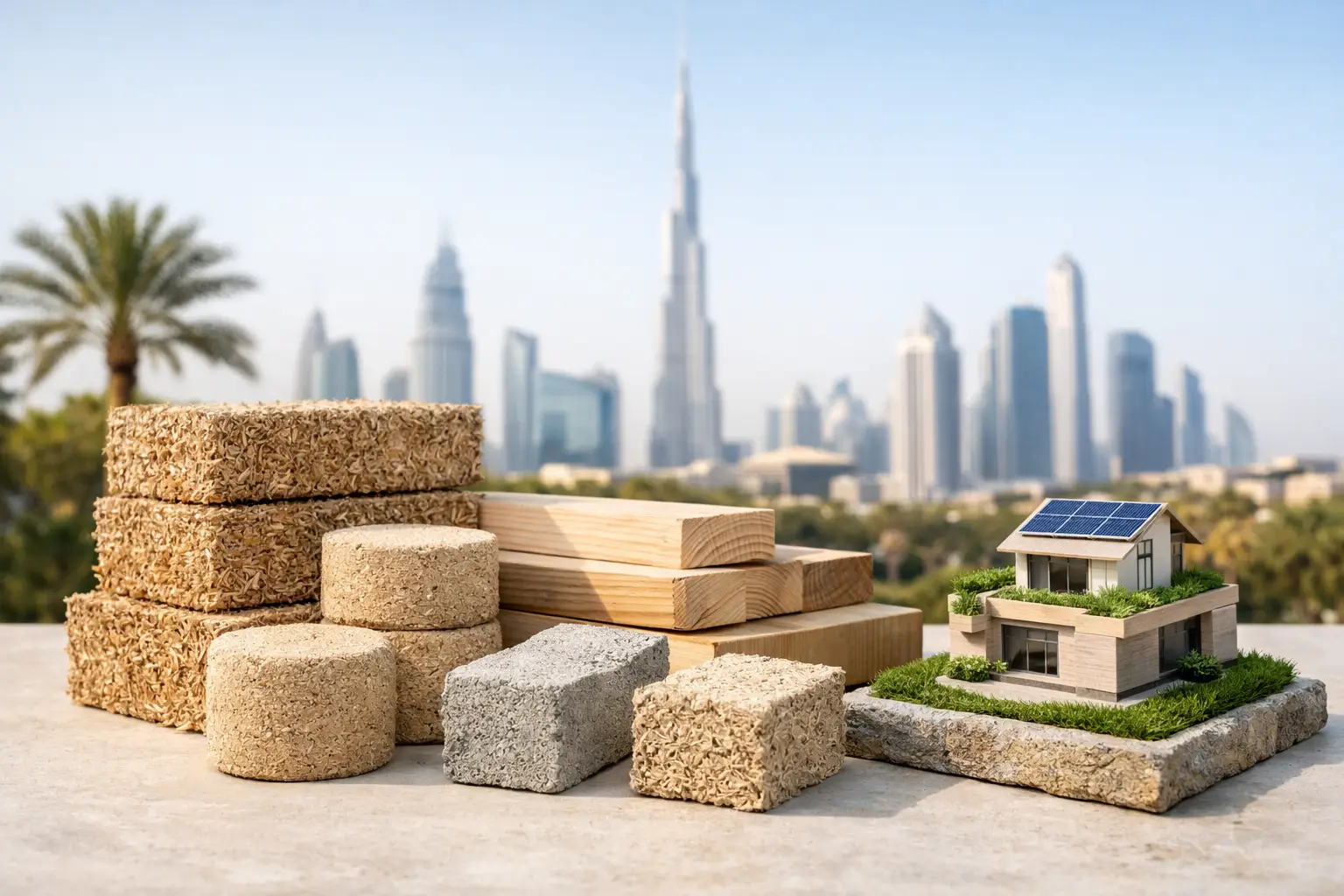
Low Carbon Building Materials for UAE Projects
A material can look sustainable on a datasheet and still create a procurement problem on site. If it is not approved, available in the required quantity, or compatible with the specified system, the carbon benefit will not protect the schedule. For contractors, low carbon building materials need to perform in three ways: reduce embodied emissions, meet project and municipality requirements, and arrive when the work crew needs them.
The right approach is not to replace every conventional product with a new alternative. It is to identify the high-volume materials and repeat purchases where lower-carbon options can be specified without adding delivery risk, installation uncertainty, or inspection exposure.
What Low Carbon Building Materials Mean on a Project
Low carbon building materials are products designed, manufactured, reused, or selected to reduce carbon emissions across their life cycle. On an active construction project, the immediate focus is usually embodied carbon - the emissions associated with extracting raw materials, manufacturing, transporting, and installing a product before the building is occupied.
Concrete, steel, aluminum, insulation, glazing, gypsum products, piping, cable containment, finishes, and sealants all contribute. Their impact is not equal. Structural concrete and steel often carry the largest embodied-carbon load because of the quantities involved. But MEP and fit-out packages matter as well, especially across multi-floor residential, hospitality, retail, and commercial projects.
A lower-carbon claim should always be reviewed in context. Recycled content can be valuable, but it does not automatically mean a product is appropriate for the application. A material may reduce manufacturing emissions yet require longer transport, special installation methods, or replacement earlier than the specified alternative. The best choice is one that meets the performance requirement for the full intended service life.
Start With the Materials That Move the Carbon Number
Procurement teams get better results by targeting the categories with the greatest volume, cost, or repeat use. This keeps the process commercial and practical rather than turning sustainability into a separate purchasing exercise.
Concrete and cement-based products
Cement production is carbon-intensive, so concrete mixes with supplementary cementitious materials can offer a meaningful reduction. Depending on the engineer's approved mix design, this may include materials such as slag, fly ash, calcined clay, or limestone blends that reduce the clinker content of cement.
The trade-off is technical control. Strength development, curing conditions, durability exposure, pumping requirements, and concrete delivery timing all need review. For structural work, no mix should be substituted based on a general environmental claim. It must be approved by the consultant and tested to the project specification.
For nonstructural cement-based products, such as blocks, pavers, repair mortars, and screeds, ask suppliers for product data that confirms compressive strength, water absorption, fire performance, and applicable approval status. These are often easier areas to introduce lower-carbon alternatives without affecting the structural program.
Steel, aluminum, and metal products
Steel has a high embodied-carbon impact, but it is also highly recyclable. Products made through electric arc furnace production with verified recycled content can reduce emissions compared with conventional primary steel routes. The same logic applies to aluminum, where recycled feedstock requires significantly less energy than producing primary metal.
For reinforcement, structural sections, fasteners, cable trays, access panels, and hardware, the priority remains compliance with the specified grade, coating, corrosion resistance, and load requirement. In the UAE's hot, humid, and coastal conditions, a lower-carbon material that lacks the required corrosion protection can create a much larger lifecycle cost. Select for durability first, then compare verified carbon information between compliant options.
Gypsum, insulation, and fit-out boards
Interior packages can create significant material volumes across partitions, ceilings, shafts, and wall linings. Gypsum boards with recycled content, optimized board thicknesses, and locally or regionally manufactured options may reduce the carbon associated with the fit-out package.
Insulation requires a different assessment. Thermal performance has an operational impact for the life of the building, particularly where cooling demand is high. A product with a slightly higher initial footprint may still be the better project decision if it delivers the required R-value, moisture resistance, fire rating, and long-term performance. Compare tested performance values, not marketing language.
MEP pipes, fittings, and electrical systems
MEP procurement is often where project teams can reduce waste quickly. Correctly specified plumbing pipes and fittings, valves, electrical conduits, cable management products, and installation accessories prevent rework, leaks, failed pressure tests, and premature replacement.
For plastic piping, confirm the pressure class, temperature rating, chemical compatibility, and approved joining method before comparing recycled content or carbon declarations. For electrical components, verify load rating, insulation class, ingress protection, and fire-performance requirements. Material efficiency only helps if the installed system passes testing and remains reliable in service.
Ask for Evidence, Not Broad Environmental Claims
A supplier should be able to provide more than a statement that a product is green. The most useful document is an Environmental Product Declaration, commonly called an EPD. This presents life-cycle information using a defined methodology, making it easier to compare products within the same category.
An EPD does not mean one product is automatically better than another. It gives the consultant, contractor, and procurement team data to assess the product against the project target. Product data sheets, test reports, recycled-content declarations, country of origin, and manufacturer warranties are also part of the decision record.
For projects pursuing green building requirements, verify the exact submittal requirement early. Some specifications require third-party environmental documentation. Others prioritize regional sourcing, responsible raw materials, VOC limits, or waste diversion. Late document requests are a common cause of material holds, even when the product itself is acceptable.
Build Carbon Checks Into Procurement, Not After Ordering
Low-carbon purchasing works best when it is integrated into the normal submittal and buying workflow. The procurement team should identify eligible products during the material takeoff stage, not after site demand has become urgent.
A practical review should cover five points:
- Confirm the approved specification, performance requirement, and any consultant restrictions.
- Request comparable technical data and available environmental documentation from the manufacturer.
- Check stock availability, lead time, minimum order quantities, and batch consistency.
- Assess delivery distance and whether consolidated dispatch can reduce separate site trips.
- Record warranty terms, installation requirements, and the approval trail before issuing the purchase order.
This process protects both the carbon objective and the construction sequence. A lower-carbon substitute that arrives weeks late can force temporary works, crew downtime, and urgent air freight. Those outcomes may erase the intended benefit while increasing project cost.
Reduce Waste Through Better Material Coordination
The lowest-carbon product is not always the one with the lowest manufacturing figure. Avoiding over-ordering, damage, offcuts, duplicate deliveries, and replacement work can make a measurable difference across a project.
Use current drawings and coordinated quantities for each release. Where practical, standardize approved products across repeated floors or units so site teams do not manage multiple similar systems. Order compatible accessories together - pipes with fittings and valves, boards with jointing materials and fixings, or electrical conduits with boxes and supports. This reduces last-minute substitutions and keeps installation systems complete.
Consolidated procurement also matters. Receiving multiple approved categories through one inventory-backed supplier can reduce separate delivery movements and simplify document control. For fast-moving construction sites in Dubai, Sharjah, and Abu Dhabi, dependable dispatch is part of responsible material selection. A planned delivery is preferable to repeated emergency collections and fragmented orders.
Where Lower-Carbon Choices Need Extra Caution
Not every category is ready for a simple substitution. Fire-rated assemblies, structural products, potable-water systems, pressure piping, electrical protection devices, and safety equipment should be evaluated primarily against their certified performance and authority requirements.
Be cautious with generic equivalency claims. A lower price, recycled-content percentage, or environmental label does not prove compatibility with the approved assembly. Check whether the manufacturer supports the required application, whether accessories are matched within the system, and whether warranty coverage remains valid after installation.
The same applies to local availability. Regional supply can reduce transport emissions, but only if the manufacturer has stable production, consistent quality, and complete technical documentation. Procurement teams should avoid approving a one-time alternative that cannot support the remaining project phases or future maintenance needs.
Make the Next Material Release More Defensible
For the next package, start with one high-volume category and request both technical and environmental documentation before the quote is finalized. Concrete-related products, steel items, gypsum boards, insulation, plumbing systems, and electrical containment are practical starting points because they combine repeat demand with measurable specification controls.
Yasu Trading can support contractors with municipality-compliant building materials, technical product guidance, project-based quotes, and site-direct delivery planning. The goal is not to chase a label. It is to source materials that reduce avoidable carbon while keeping approvals, quality, and the work program under control.