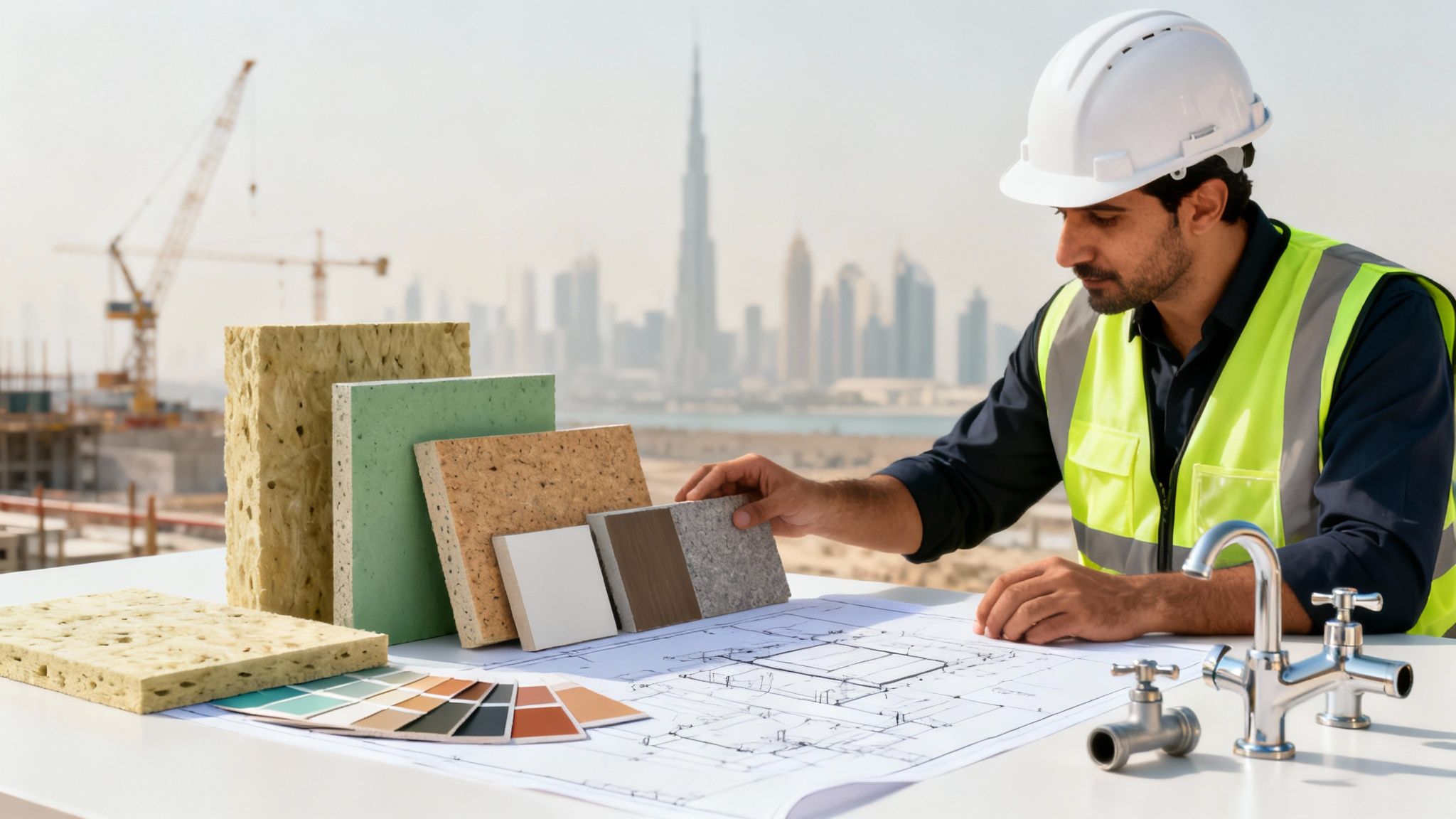
Al Sa'fat 2026: A Contractor’s Guide to Sustainable Material Selection
Getting your head around Dubai's updated Al Sa'fat 2026 green building regulations can feel like a tall order. But really, it all comes down to a simple idea: making smarter, more sustainable material choices right from the get-go.
For us contractors, the mandatory Bronze and Silver certifications aren't just another compliance headache. They're a real strategic advantage. Selecting low-VOC paints and recycled fasteners from a trusted supplier in Dubai like Yasu Trading helps projects meet these municipal requirements while reducing long-term lifecycle costs.
Decoding Al Sa'fat 2026 for Dubai Contractors
In the UAE, the Al Sa'fat Dubai Green Building System is no longer some niche "green" thing—it's just how we build now. The 2026 updates have sharpened the focus, putting the entire lifecycle of our building materials under the microscope. This isn't just about what you install; it's about everything from how the raw material was sourced to what happens to it at the end of its life.
The whole system is built on mandatory certification levels. For any new build, hitting the Bronze Sa'fa is the absolute baseline. If you're working on a government-funded project, the bar is higher—you need to secure a Silver Sa'fa rating. This tiered system directly shapes your procurement strategy because higher ratings demand tougher material specs.
Why is Al Sa'fat compliance a competitive advantage?
Treating Al Sa'fat compliance as a box-ticking exercise is a missed opportunity; the smartest contractors see it as a powerful way to stand out in a crowded market. A solid track record of delivering Al Sa'fat-compliant projects improves your tender success rate, as clients seek partners who can guarantee a smooth journey to the Building Completion Certificate (BCC).
And it's not just about reputation. Sticking to these sustainable standards brings real money-saving benefits that go far beyond the initial build.
- Reduced Lifecycle Costs: When you specify energy-efficient MEP gear and durable, high-performance materials, you're lowering the building owner's future bills. That's a powerful selling point that can make your bid the winning one.
- Avoidance of Costly Penalties: Non-compliance simply isn't an option. Dubai Municipality is strict, and failing to meet the standards can lead to hefty fines, project delays, and the nightmare of having to rip out and replace unapproved materials.
- Enhanced Project Value: Buildings with Al Sa'fat certification are known for their quality, efficiency, and healthier indoor spaces. That often translates to higher property values and attracts better tenants.
What is the role of smart material selection?
At its core, Al Sa'fat 2026 is all about using approved green building materials in the UAE. This means you need a calculated approach, picking products that do the job well while having a minimal environmental footprint.
For example, the rules have specific limits on Volatile Organic Compounds (VOCs) in paints, adhesives, and sealants to ensure better indoor air quality—a huge factor for certification.
Another key area is recycled content. The standards push for materials like fasteners or insulation made from recycled sources. When you source these from a reliable supplier in Dubai like Yasu Trading, you know you're getting items that are not just compliant but also come with all the paperwork to prove it.
By focusing on materials with documented sustainable properties—like low-VOC paints from National Paints or recycled-content fasteners—you're building a strong file of evidence. This makes the final inspection and handover process a whole lot simpler.
To give you a clearer picture, here’s a quick rundown of some of the core material requirements you'll be dealing with.
What are the key material requirements for Al Sa'fat 2026?
| Material Category | Al Sa'fat 2026 Mandate (Bronze/Silver) | Example Compliant Product |
|---|---|---|
| Paints & Coatings | Must meet low-VOC (Volatile Organic Compound) content limits to improve indoor air quality. | Low-VOC acrylic paints from reputable brands like National Paints. |
| Adhesives & Sealants | Strict limits on VOC content apply to all interior-use products. | Water-based, low-VOC construction adhesives. |
| Insulation | Must be free from asbestos and have a low Global Warming Potential (GWP). | Fibreglass or mineral wool insulation with high recycled content. |
| Wood Products | Wood must be sourced from sustainably managed forests (e.g., FSC certified). | FSC-certified timber for structural or finishing applications. |
| Steel & Fasteners | Encourages use of materials with a specified percentage of recycled content. | Steel rebar or metal fasteners with documented recycled content. |
This table is just a snapshot, but it highlights how the regulations touch almost every material that goes into a project.
Why partner with a knowledgeable distributor?
Sourcing, vetting, and documenting all these compliant materials can be a massive logistical headache, which is where an experienced building materials distributor becomes a game-changer. Instead of chasing down specs from dozens of vendors, you can rely on a single source that already has a deep inventory of municipality-approved items.
A distributor like Yasu Trading makes the whole procurement process easier. We live and breathe UAE construction standards. We don't just sell you the products; we provide the technical datasheets and certifications you need for your compliance file. This approach saves you time, cuts down on risk, and lets your team focus on building, not paperwork.
What Materials Count for Al Sa'fat Compliance?
To hit those Al Sa'fat 2026 targets, you need to rethink your material procurement from the ground up. It’s about being deliberate, choosing products with proven low environmental impact, high efficiency, and the performance specs to back it all up.
Let's cut through the noise and look at the core disciplines—MEP, finishes, and structural bits—to see exactly what you need to be sourcing for your next project.
Getting your project to the mandatory Bronze and Silver certification levels hinges on the decisions you make here. These regulations are smart; they’re designed to improve everything from the air people breathe inside to the building's DEWA bill for years to come. Your material choices are front and centre.
How do MEP choices make or break your rating?
MEP systems are under a huge microscope with Al Sa'fat because they are the biggest consumers of energy and water in any building. For your plumbing scope, this means you must specify fixtures with high water efficiency ratings, like low-flow faucets and dual-flush toilets.
Over on the electrical side, it's all about efficiency. We're talking LED lighting across the board, high-efficiency transformers, and even wiring and conduit systems designed to prevent energy leakage. The easiest way to handle this is to partner with a building materials distributor who gets it. They'll have the stock and, more importantly, the technical data sheets to prove every item is compliant.
Why are low-VOC paints a must-have for Al Sa'fat?
Low-VOC paints and adhesives are completely non-negotiable for Al Sa'fat certification because Volatile Organic Compounds (VOCs) are chemicals that harm indoor air quality. The rules are crystal clear, with strict limits on the grams per litre (g/L) allowed for anything you put on interior walls and floors.
Finding products that meet the standard is actually pretty straightforward if you know where to look. For instance, a local supplier in Dubai like Yasu Trading will carry low-VOC options from manufacturers like National Paints, which are made specifically to meet UAE construction standards. Using them is a direct win, earning you vital credits in the Indoor Environmental Quality section and making the building a healthier place to be.
The ground is shifting under our feet. Al Sa'fat 2026 is pushing for a minimum of 25% recycled content in many non-structural materials. This isn't happening in a vacuum—it’s part of the UAE's bigger Net Zero 2050 vision. And it’s happening while the construction market is forecast to grow 22% to US$130.8 billion by 2029. For contractors, this means sustainable sourcing isn't just about red tape; it's about staying competitive for a slice of the $56.9 billion in contracts expected in 2025 alone.
What about structural and non-structural components?
Al Sa'fat 2026 forces us to look at the environmental cost of our structural materials, meaning we must source steel with a high percentage of recycled content and use fasteners made through low-impact processes. Switching to recycled-content fasteners from a supplier like Yasu Trading can slash the embodied carbon of those elements by as much as 30%.
Insulation is another big one. The standards are firm: no harmful stuff like asbestos, and it must have a low Global Warming Potential (GWP). You should be looking for proven products like fibreglass or mineral wool insulation that come with documentation verifying their recycled content.
Here’s a quick-glance breakdown of what this looks like in practice:
- Finishing Materials:
- Low-VOC Paints: Your ticket to hitting indoor air quality credits.
- Recycled-Content Flooring: This includes carpets or tiles made from post-consumer waste.
- Sustainably Sourced Wood: Look for proper certifications like FSC (Forest Stewardship Council).
- MEP Systems:
- Low-Flow Plumbing Fixtures: A direct and measurable impact on your water efficiency score.
- Energy-Efficient Wiring: Cuts down on the building's long-term operational costs.
- High-SEER HVAC Units: A massive factor in the building’s overall energy performance.
Thinking this way—discipline by discipline—is the key to a smooth project handover. When you understand these categories and work with a supplier who knows the Al Sa'fat game, you can build a procurement plan that guarantees compliance from day one. The aim is to make sustainable construction standards a core part of your process, not a last-minute headache.
How to Create a Compliant Material Specification Checklist
Let’s be honest, building a material specification checklist that ticks all the Al Sa'fat boxes isn't about starting from scratch. It's about weaving sustainability criteria right into your procurement workflow from the very beginning. Think of it as a proactive measure—it shifts compliance from a frantic, last-minute exercise into a core part of how you manage projects. This framework is all about turning dense regulations into clear, actionable steps for your team on the ground.
Your first move? Map the specific Al Sa'fat clauses directly to your project's scope. Not every rule applies to every building. You need to zero in on the mandatory requirements for your target certification, whether it's Bronze or Silver, and then translate those into tangible material properties. This is where you get granular.
This isn’t just about understanding the rules; it’s about converting regulatory jargon into hard numbers and specifications that your procurement manager can actually use. It’s the difference between a vague sustainability goal and a clear, non-negotiable directive.
What’s the first step in building a specification checklist?
You start by translating Al Sa'fat requirements into measurable metrics for each material category. For paints, this means defining the absolute maximum allowable Volatile Organic Compound (VOC) content in grams per litre (g/L). For insulation, it’s about specifying the required U-value and getting concrete proof that it’s free from harmful substances.
This translation is everything. It gives your team the power to ask the right questions and, more importantly, to demand the right documentation from every building materials distributor. Without these hard numbers, you're just taking shots in the dark.
To keep things straight, structure your checklist by discipline—MEP, Civil, Finishes—and assign clear responsibility for verification to a specific person on your team. That accountability is what creates the clear audit trail Dubai Municipality will be looking for.
This flow chart gives a great visual of how different material categories move through the compliance process, highlighting the unique needs of MEP, finishing, and structural components.
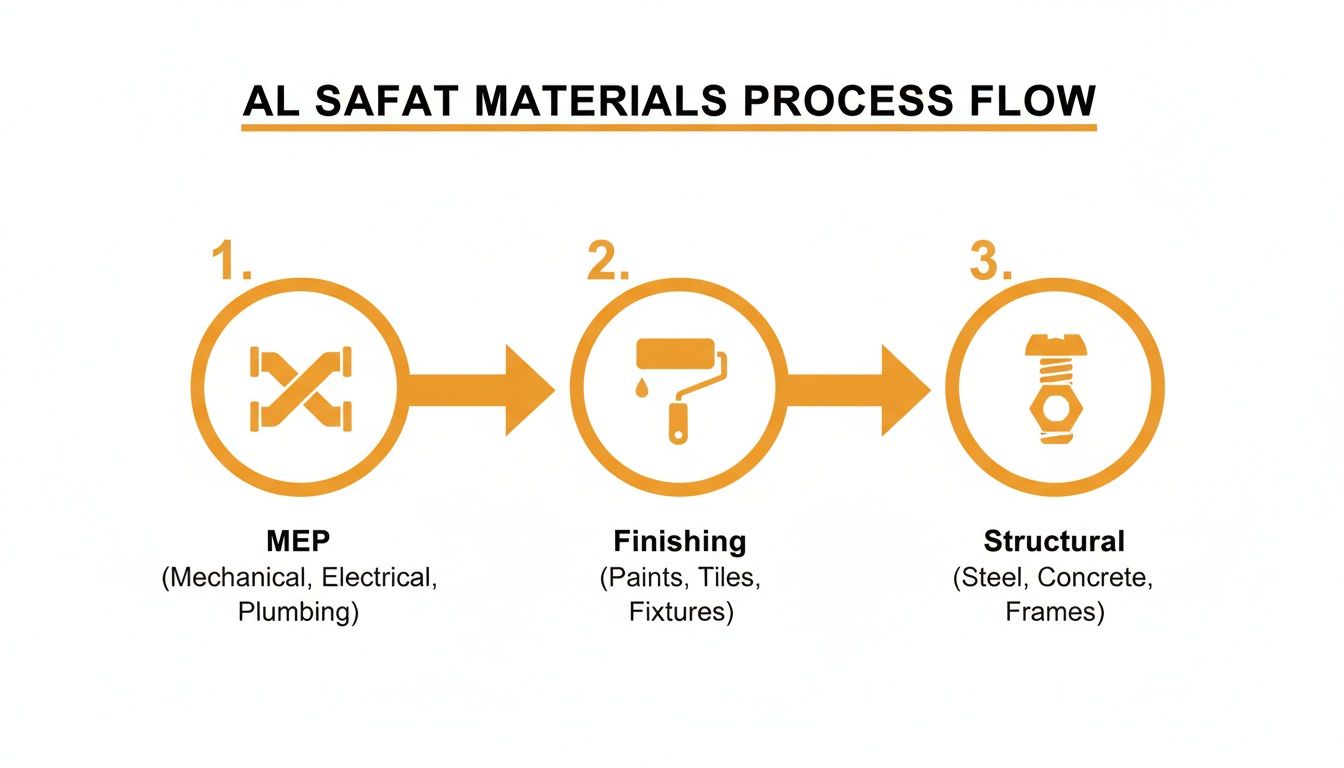
It’s a good reminder that every stage has distinct yet interconnected requirements that need managing right from the get-go.
How do you actually verify material compliance?
Verification comes down to demanding and reviewing specific documentation before a purchase order is raised. Your checklist must have a column for the required proof, like an Environmental Product Declaration (EPD), which offers third-party verified data on a product's lifecycle impact.
For materials like steel or even fasteners, you’ll need declarations straight from the manufacturer confirming the percentage of recycled content. And for any interior finish, Material Safety Data Sheets (MSDS) are non-negotiable for confirming those critical VOC levels. Don’t just take a salesperson's word for it—the paperwork is king.
It's also worth remembering that compliance isn't just about sustainability. A key part of how to create a compliant material specification checklist is ensuring materials also meet safety and accessibility standards. For example, a complete guide to anti-slip tile safety and ADA standards provides the kind of specific ratings and regulations for flooring that should be part of any comprehensive spec sheet.
How do you integrate the checklist with your procurement workflow?
This checklist has to be a live tool, fully integrated into your procurement system. The moment your procurement manager gets a material request, their first action should be to cross-reference it with the Al Sa'fat checklist.
This simple step acts as a gatekeeper, ensuring only compliant products even make it to the sourcing stage. It also shows the immense value of partnering with a knowledgeable supplier in Dubai. A distributor like Yasu Trading, who has a deep understanding of UAE construction standards, can provide compliant options and all the necessary paperwork upfront, saving your team from countless headaches and wasted hours.
Picture this real-world scenario: your site foreman puts in a request for a specific brand of sealant he’s used for years. Your procurement manager pulls up the checklist, sees the required low-VOC spec, and immediately flags that the requested brand doesn't comply. They then give Yasu Trading a call, and within minutes, they have a compliant alternative from National Paints recommended, complete with the technical datasheet emailed over for approval. A costly mistake is avoided before it ever happens.
Here are the essential columns your checklist must have:
- Item Description: Be specific (e.g., "Interior Wall Paint, Eggshell Finish").
- Al Sa'fat Requirement: Note the exact clause or metric (e.g., "VOC content < 50 g/L").
- Required Documentation: What proof do you need? (e.g., "EPD or MSDS").
- Proposed Product: The specific product being considered for purchase.
- Supplier: The vendor or distributor you're sourcing from.
- Compliance Status: A simple "Yes/No" or "Pending Verification".
- Verified By: The name of the team member who signs off on it.
By taking this structured approach, you build a system that doesn’t just ensure compliance with Al Sa'fat Dubai regulations. It actively protects your project from delays and your company from liability. It effectively turns your procurement process into your first line of defence in achieving certification.
What is the Smartest Way to Source and Procure Compliant Materials?
The most effective strategy for procuring Al Sa'fat-compliant materials is to partner with a specialised building materials distributor. This turns a potentially high-risk, fragmented procurement process into a smooth, reliable operation.
Working with an established supplier in Dubai gives you tangible advantages over trying to source from multiple, unvetted vendors. It's the best way to safeguard your project against the kind of delays and penalties that give project managers nightmares.
A single-source partnership gives you immediate access to a pre-vetted inventory of municipality-approved products. Think about it: this completely eliminates the guesswork and the soul-destroying task of verifying every single item individually. Instead of juggling dozens of suppliers, you get the logistical efficiency of consolidated procurement, which simplifies everything from delivery schedules to payment processes.
Why is a single-source supplier the smarter choice?
A single, knowledgeable partner like Yasu Trading acts as your project's first line of defence against non-compliance. We live and breathe the specific UAE construction standards that define Al Sa'fat 2026 and curate our inventory to match. That kind of ground-level expertise is a critical asset when you're navigating the maze of green building regulations.
Fragmented sourcing, on the other hand, is just fraught with risks.
When you're dealing with multiple vendors, you're constantly chasing inconsistent documentation, dealing with varying product quality, and facing logistical nightmares. A missed delivery from just one supplier can stall an entire phase of construction, creating a domino effect of costly delays and potential penalties from Dubai Municipality. It happens all the time.
What are the pitfalls of fragmented sourcing?
Going it alone and trying to source materials from various unknown vendors opens your project up to some serious vulnerabilities that can tank your timeline and your budget.
- Compliance Uncertainty: Every new vendor needs a rigorous vetting process. If you skip it, you risk accidentally buying materials that don't meet Al Sa'fat's strict criteria for recycled content or low-VOC emissions.
- Documentation Headaches: Chasing down the right technical data sheets and manufacturer declarations from a dozen different sources is an administrative black hole. It drains resources and is a recipe for errors.
- Supply Chain Disruptions: Juggling delivery schedules from several suppliers massively increases the likelihood of delays. A single late shipment of a critical component can throw your entire project timeline off schedule.
- Inconsistent Quality: Product quality can vary wildly between lesser-known suppliers. This can lead to performance issues on-site and, worst-case scenario, expensive rework.
This piecemeal approach is a world away from the security you get with a trusted building materials distributor. A partner like us centralises quality control and makes sure every single product arrives with the paperwork needed for a smooth audit.
The reality for UAE contractors getting ready for Al Sa'fat 2026 is that material selection has direct, bottom-line consequences. The construction industry is projected to expand by 5.2% in 2025 to AED 189.59 billion, and new codes are targeting a 30% reduction in water use. Non-compliance simply isn't an option. Partnering with a distributor that stocks verified products, like Grohe's low-flow plumbing, is crucial to securing your share of the $92 billion in project awards expected in 2025 and avoiding costly setbacks.
How does a dedicated supplier streamline your workflow?
Working with a dedicated supplier in Dubai like Yasu Trading offers a clear, strategic advantage. Our job isn't just to sell you products; we act as an extension of your procurement team, actively helping you nail the Al Sa'fat Dubai requirements. The benefits are immediate and measurable, hitting your project's efficiency and financial health right where it counts.
For example, our team is on hand with technical support to ensure the specs match your project's needs, from MEP systems to the final finishes. That expert guidance is invaluable, and it positions your projects for green certifications that can boost property values by 8-10%. On top of that, our deep inventory of thousands of SKUs and established relationships with brands like National Paints and Makita mean you get consistent quality and competitive pricing.
This partnership makes your day-to-day operations significantly easier. By consolidating procurement, you slash administrative overhead, streamline logistics with our same-day site delivery, and ensure every material that lands on your site is fully compliant and ready to go.
For a deeper dive into optimising your supply chain, check out our guide on sourcing building materials in Dubai. It's the most logical business decision for any contractor who wants to succeed in the UAE's evolving construction landscape.
Getting Your Paperwork Right for Tender and Handover
Let’s be honest: getting Al Sa'fat 2026 compliance right isn't just about what you build, it’s about what you can prove. The paper trail is every bit as important as the materials bolted to the structure. This is your roadmap to managing the compliance paperwork, from the moment you bid on a project to the day you hand over the keys.
If you want to avoid those last-minute scrambles for a completion certificate, you need to get organised from the start. Think of your documentation not as a tedious chore, but as a critical part of your risk management. Get it right, and you'll sail through inspections.
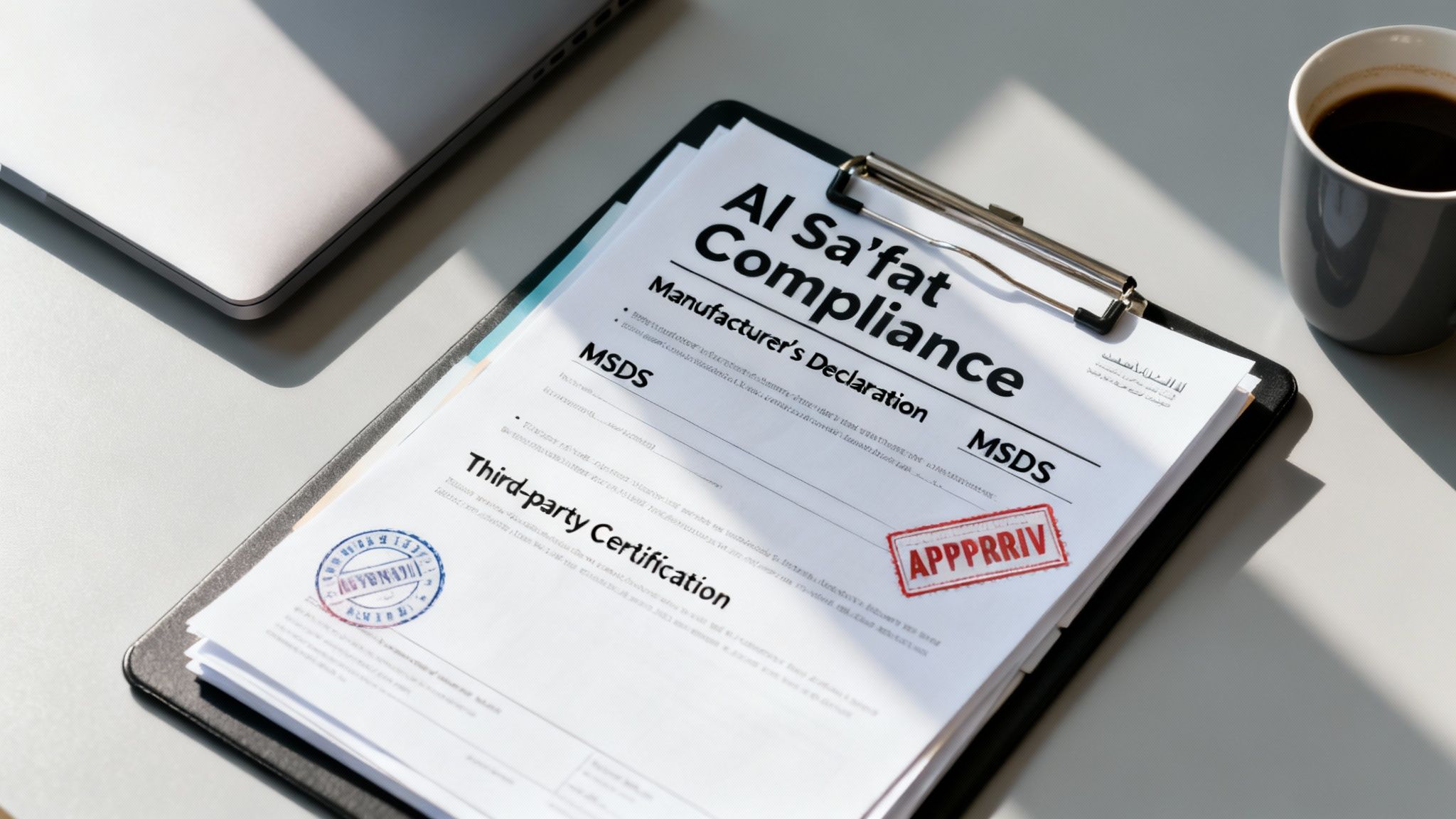
What are the must-have documents for Al Safat Compliance?
Your compliance file is built on a foundation of essential, non-negotiable documents that provide undeniable proof your materials meet strict Al Sa'fat Dubai regulations. These papers are the official evidence backing up a manufacturer's claims, and you need one for every regulated item, from a tube of sealant to a pallet of insulation.
The key documents include Manufacturer's Declarations, which confirm data like recycled content percentage, Material Safety Data Sheets (MSDS) for verifying VOC levels in paints and adhesives, and third-party certificates like FSC for wood.
How do you master the paper trail from tender to handover?
When you're bidding for a job, a well-organised documentation file screams competence. It shows you understand the nuances of UAE construction standards and gives you a serious edge over the competition. Knowing the ins and outs of writing a method statement is a huge plus here, as it lets you clearly articulate how you'll manage compliance from day one.
Fast forward to project completion, and that same file becomes your ticket to a smooth handover and swift approval from Dubai Municipality.
Your checklist should always include these four items:
- Manufacturer’s Declarations: This is a formal statement from the maker confirming key data points, like the exact percentage of recycled content in their steel or insulation.
- Material Safety Data Sheets (MSDS): Absolutely critical for paints, adhesives, and sealants. The MSDS provides the hard numbers, especially the Volatile Organic Compound (VOC) content in grams per litre.
- Third-Party Certifications: These are your independent verifications. Think FSC certificates for sustainably sourced timber or other official labels that prove a product's green claims.
- Environmental Product Declarations (EPD): An EPD gives you the full story. It’s a comprehensive, third-party-verified report on a product’s environmental impact throughout its entire lifecycle.
Working with a prepared supplier in Dubai completely changes the game. A distributor like Yasu Trading doesn’t just drop off materials; we deliver a complete, audit-ready documentation package with every order. Your compliance file is built right, from the very first delivery.
How does a smart supplier make documentation easy?
A knowledgeable building materials distributor is more than just a vendor; they're a compliance partner. By working with a company like Yasu Trading, you effectively lift the administrative weight off your team's shoulders.
Instead of your project managers chasing dozens of manufacturers for paperwork, you get one reliable source for both the products and their certified documents. The benefits are immediate and obvious.
First, you guarantee accuracy. We know exactly what Dubai Municipality inspectors look for and make sure every datasheet and certificate is correct and up-to-date. Second, it saves a massive amount of time, freeing up your team to focus on what they do best: building.
Imagine this scenario: you're using low-VOC paints and fasteners with high recycled content. By sourcing them through us, the official MSDS for the paint and the manufacturer's declaration for the fasteners arrive with the delivery. They go straight into your project file, ready for any spot-check or audit. No delays, no stress.
This proactive approach is fundamental to a successful al sa'fat 2026: a contractor’s guide to sustainable material selection. It takes the guesswork out of compliance and is the surest way to get from tender award to project completion without any snags.
Answering Your Al Sa'fat 2026 Questions
When you're on site, dealing with the day-to-day realities of a project, the theory behind green building codes can get a little fuzzy. We get it. Project managers and procurement teams are constantly asking us practical questions about Al Sa'fat 2026, so we've put together some straight answers to the most common queries we hear.
Is Al Sa'fat Certification Mandatory for All Construction Projects in Dubai?
Yes, absolutely. For any new building going up in Dubai, Al Sa'fat certification is non-negotiable.
The absolute minimum for every single project is the 'Bronze Sa'fa'. However, if you're working on a government-funded building, the bar is set higher – you’ll need to achieve the 'Silver Sa'fa' rating. This shift makes a solid grasp of sustainable construction standards a must-have for any contractor looking to operate successfully in the emirate.
How Can a Building Materials Distributor Help Me Avoid Project Delays?
A specialised distributor like Yasu Trading acts as your compliance insurance policy by helping you get materials right from the start. Our inventory is pre-vetted to meet UAE construction standards, and every item comes with the required documentation, eliminating sourcing mistakes and supply chain headaches.
This means you’re not just getting materials; you’re getting certainty. With our reliable, same-day site delivery across the UAE, you sidestep issues that could easily bring your schedule to a screeching halt. Your team can stop chasing technical data sheets and focus on what they do best: building.
What Are the Biggest Financial Risks of Ignoring Al Sa'fat 2026 Standards?
Ignoring Al Sa'fat 2026 is a surefire way to hurt your bottom line, as it exposes you to serious financial hits. You face hefty municipal fines, the high cost of rework for non-compliant materials, and the inability to secure your Building Completion Certificate (BCC), which prevents project handover.
But the financial pain doesn't stop there. A project stuck in compliance limbo can trigger contractual penalties and sour client relationships, damaging your company's reputation and your ability to win future tenders.
Do Sustainable Materials Always Cost More Than Traditional Ones?
No, this is a common misconception. While some green building materials in the UAE might have a slightly higher initial price, they often deliver significant long-term savings by reducing a building's lifecycle costs.
Energy-efficient electrical systems and water-saving plumbing fixtures, for example, directly slash running costs—a huge value-add for the owner. By working with a wholesale supplier in Dubai like Yasu Trading, you also get access to competitive, volume-based pricing. Using low-VOC paints from a brand like National Paints or recycled fasteners are easy wins that secure certification credits without a major price jump.
Navigating Al Sa'fat 2026 doesn't have to be a headache. At Yasu Trading Co. LLC, we back you up with a full inventory of municipality-compliant materials, expert support, and all the documentation you need for a seamless handover. Explore our extensive range of products today and streamline your next project.