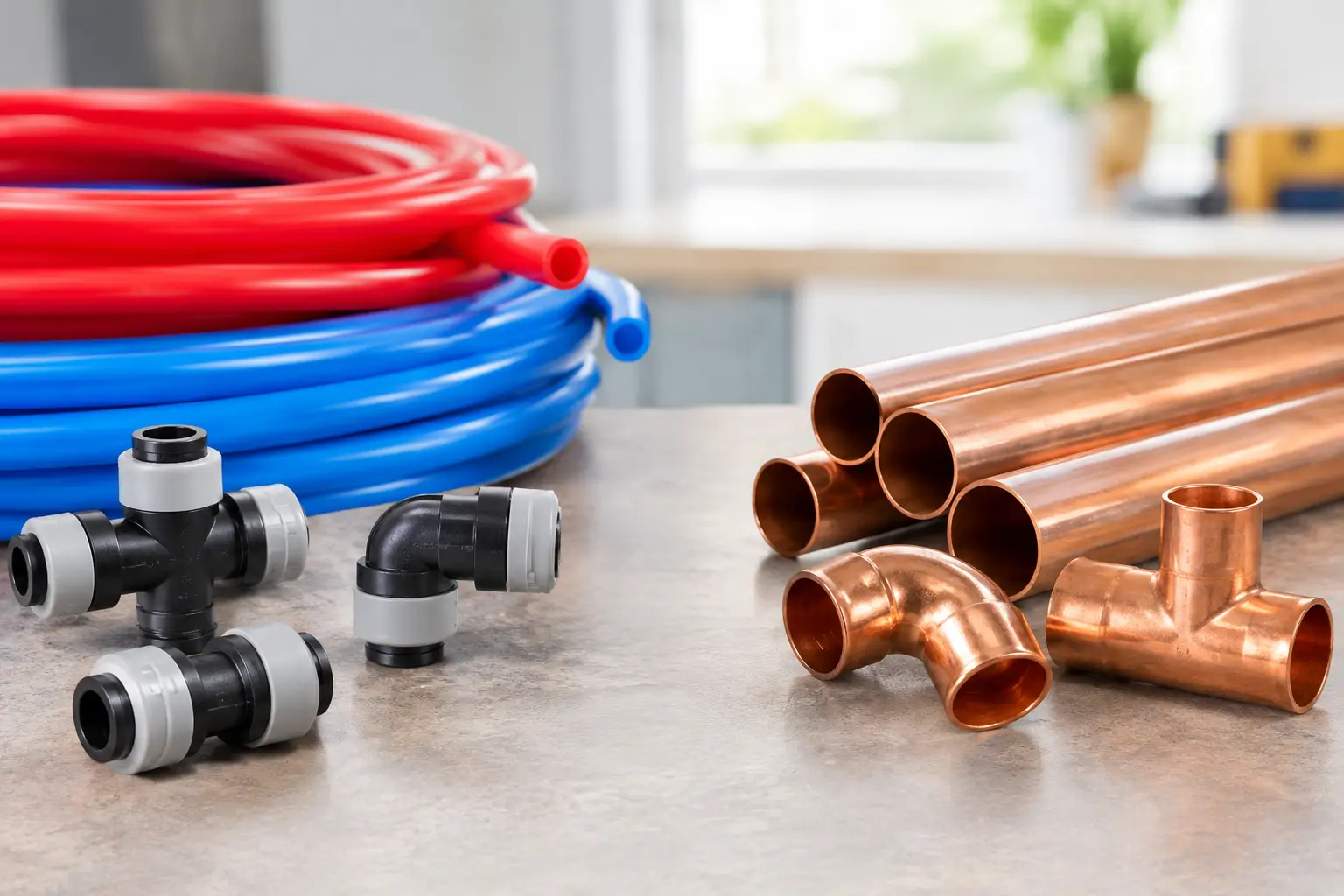
PEX Versus Copper Plumbing: Which Fits Your Project?
A plumbing system can look economical on the material schedule and still become expensive once site labor, access constraints, testing, and handover risk are included. That is why the PEX versus copper plumbing decision should be made at specification stage, not when installers are already waiting for materials. For UAE contractors and MEP teams, the right choice depends on the application, authority requirements, building use, water conditions, and the program behind the project.
PEX versus copper plumbing: start with the application
PEX and copper are both proven piping materials, but they solve different site problems. PEX is a flexible cross-linked polyethylene pipe commonly used for domestic hot and cold-water distribution. Copper is a rigid metal pipe with a long record in potable-water, HVAC, and specialist services where temperature tolerance, visible installation quality, or particular specifications call for it.
The first procurement question is not which pipe is universally better. It is whether the material is approved for the planned service and accepted by the project consultant, client, and relevant local authority. Product approvals, pipe ratings, fitting systems, insulation requirements, and installation methods must align with the issued-for-construction drawings and project specification. A substitution made only to reduce purchase price can create inspection delays, rework, or warranty disputes.
For concealed residential and hotel water distribution, PEX can be a practical option where the specified system is approved. Its flexibility helps installers route long runs through congested ceilings, risers, and wall cavities with fewer direction changes. For exposed plantroom work, high-temperature duties, or projects where the specification calls for metal piping, copper may remain the more suitable choice.
Labor and installation speed often decide the cost
Copper pipe requires accurate measurement, cutting, deburring, alignment, and jointing. Depending on the system and specification, joints may be soldered, brazed, press-connected, or mechanically joined. This work demands trained installers, controlled workmanship, and sufficient access around every connection. Hot-work permits and fire-watch procedures may also affect the program when brazing is required.
PEX changes the installation sequence. The pipe can bend around gradual changes in direction, reducing the number of elbows and fittings in many layouts. Connections are generally made with a matched fitting system, using the manufacturer-approved expansion, crimp, clamp, or press method. Fewer fittings can mean faster installation and fewer potential leak points, but only when pipe routing, bend radius, support spacing, and tool calibration are correctly managed.
For fit-out contractors working to a compressed handover date, this difference is substantial. A PEX system can reduce handling time on repetitive apartment, villa, hospitality, and washroom distribution work. Copper can take longer to install, yet it may provide a cleaner result in exposed areas and can be easier to protect from accidental damage where rigid, well-supported pipework is needed.
Do not compare pipe price alone. Compare installed cost: pipe, fittings, valves, insulation, supports, specialist tools, labor productivity, testing, fire permits, and likely waste. A lower-cost pipe with labor-intensive fittings may not be the lower-cost installed system.
Fittings are part of the system, not an afterthought
PEX performance depends heavily on fitting selection and installation discipline. Mixing pipe, fittings, tools, and sleeves from unrelated systems can compromise the manufacturer warranty and make responsibility unclear if a failure occurs. Procurement teams should request the complete approved system, including compatible valves, manifolds, adapters, clips, and transition fittings.
Copper also requires disciplined component control. The alloy, wall thickness, joining method, flux or filler material where applicable, and valve connections must match the specified duty. On projects with multiple crews, standardizing one approved system reduces installation variation and simplifies inspection records.
Durability, heat, and jobsite exposure
Copper handles high temperatures well and is noncombustible. These characteristics are useful where operating conditions are demanding or where the project design has specific fire-performance considerations. Copper also resists UV exposure better than PEX, making it better suited to visible installations or locations where sunlight cannot be avoided.
PEX does not corrode in the way metal pipe can, and it is less likely to suffer damage from certain aggressive water conditions that affect copper. Its flexibility can also offer an advantage in buildings subject to movement or in areas where slight expansion and contraction must be accommodated. However, PEX should not be exposed to direct sunlight beyond the manufacturer’s permitted storage and installation limits. Rolls left uncovered on site can lose value before they are installed.
Temperature and pressure ratings matter more than broad material claims. Domestic hot-water circulation, boosted cold-water systems, and mixed-use developments can place different demands on the pipework. Confirm the operating temperature, design pressure, peak conditions, and disinfection regime before finalizing the material. The pipe rating must cover the actual duty, not only normal operating conditions.
Water quality can shift the decision
Water chemistry deserves attention, particularly on long-life projects. Copper can be affected by unfavorable pH, high chloride content, erosion-corrosion caused by excessive velocity, or poor installation practices. PEX avoids metal corrosion, but it still needs protection from mechanical damage, UV exposure, incompatible chemicals, and improper connections.
Neither material removes the need for good design. Dead legs, inadequate pipe sizing, unsupported runs, poorly located valves, and inaccessible joints cause maintenance problems regardless of what the pipe is made from. A sound layout with correct isolation points and clear identification will serve facilities teams better than a material choice made in isolation.
Maintenance and lifecycle planning
Copper has a familiar maintenance profile for many facilities teams. It is rigid, readily identifiable, and often preferred for exposed services where technicians need to trace pipework quickly. When properly installed for appropriate water conditions, it can provide long service life.
PEX can support efficient maintenance when manifold layouts and isolation valves are planned correctly. A home-run arrangement, for example, can allow one branch to be isolated without shutting down an entire zone. That may be valuable in occupied hospitality, residential, and healthcare-adjacent environments. The trade-off is that manifold locations must remain accessible and clearly labeled, while the additional valve and manifold cost must be included in the budget.
For either system, protect the installation record. Keep approved material submittals, pressure-test reports, as-built drawings, manufacturer instructions, and warranty documents within the handover file. This protects the contractor during defects-liability discussions and gives the facilities team a practical reference after occupancy.
Compliance and testing should be planned before delivery
Material compliance is not a box to tick at the end. Before ordering, verify that the exact pipe and fitting range is accepted under the project specification and applicable municipality requirements. Check potable-water suitability, pressure and temperature class, third-party certification, fire-stopping interface requirements, and the consultant’s approved material submittal.
Pressure testing should follow the approved method statement and the manufacturer’s instructions. The team needs calibrated gauges, defined test sections, controlled filling and venting, documented test duration, and signed records. Testing too early, before joints are visible and properly inspected, creates avoidable risk. Testing too late can hold ceilings, finishes, and handover activities.
Material handling is equally operational. Store PEX away from direct sunlight, heat sources, sharp edges, and chemical contamination. Keep copper tube capped and protected from debris, flattening, and theft. Delivering materials in workable batches helps preserve site space and prevents a large quantity of pipe from being damaged before installation.
A practical procurement decision for contractors
Choose PEX when an approved flexible system supports the design, labor speed is critical, concealed routing is complex, and the service conditions fall within the manufacturer’s ratings. Choose copper when the specification requires it, the pipework will be exposed, higher temperature tolerance is needed, or the project demands a rigid metal installation.
There are also projects where using both is the sensible answer. Copper may be used in exposed risers, plantrooms, or connection zones, while PEX serves approved domestic distribution branches. The transition must be detailed with compatible fittings, proper support, and clear responsibility between trades.
For project buyers, the most dependable route is to procure a complete, approved piping package rather than separate pipe and fittings from multiple sources. Confirm stock availability early, especially for valves, adapters, manifolds, insulation accessories, and the tools required by the selected jointing method. One missing fitting type can stop an otherwise complete floor installation.
Yasu Trading Co. LLC supports contractors with jobsite-ready plumbing pipes, fittings, valves, tools, and related MEP materials for coordinated procurement and on-time site delivery. Bring the approved specification, drawings, and required quantities to the sourcing stage early. The right pipe is the one that passes inspection, installs predictably, and keeps the next trade moving.