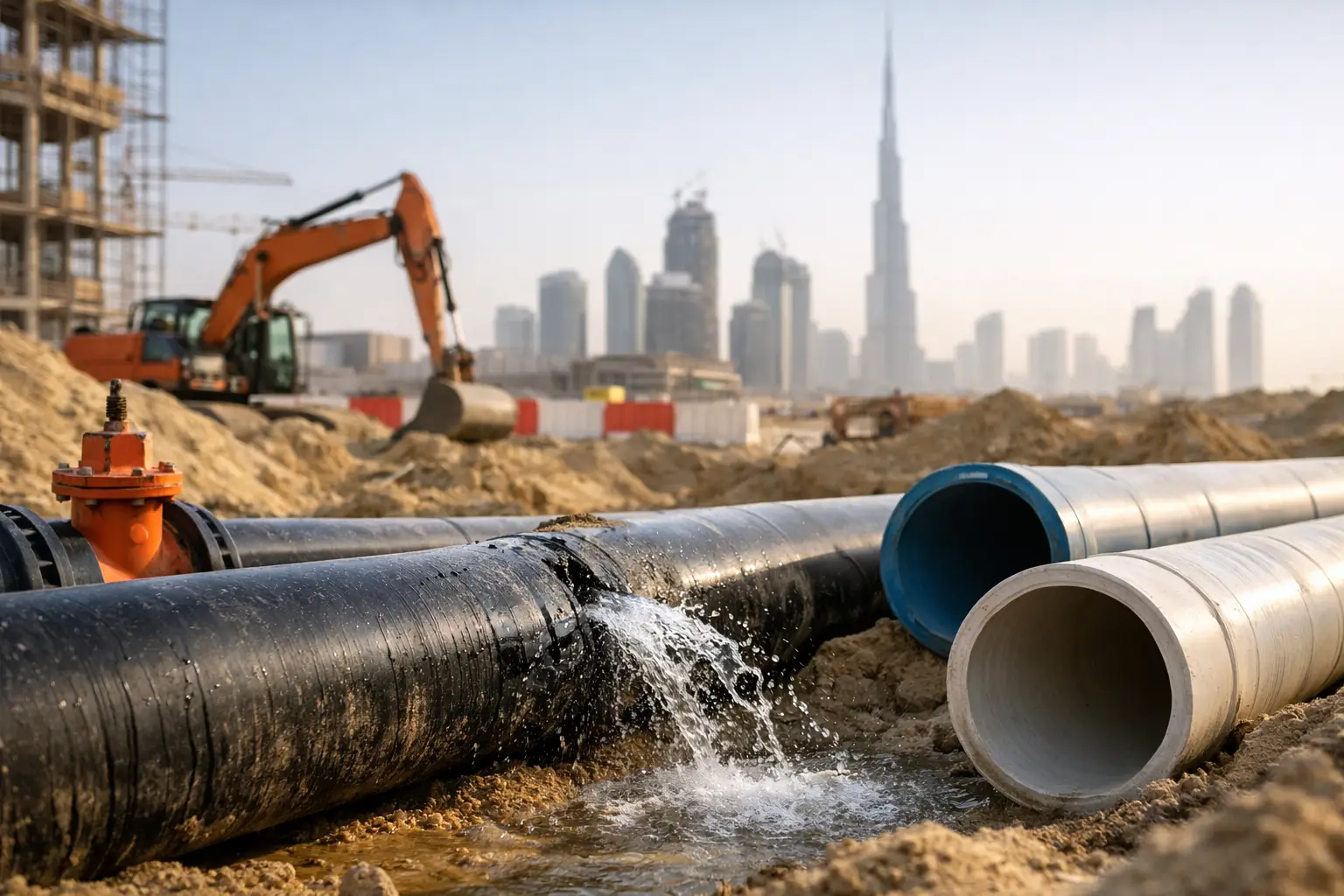
Pipe Damage Prevention for UAE Construction Sites
A pressure-test failure just before ceiling closure can cost far more than the replacement pipe. It can stop follow-on trades, force removal of completed work, create inspection risk, and put handover dates under pressure. Effective pipe damage prevention begins before materials reach the site and continues through storage, installation, testing, and protection of completed services.
For contractors and MEP teams, the objective is not simply to avoid leaks. It is to install a system that meets the approved specification, performs under operating conditions, and remains protected from avoidable site damage until commissioning.
Pipe Damage Prevention Starts With the Right Specification
Many pipe failures originate in procurement, not installation. A pipe, fitting, valve, solvent cement, sealant, or support selected outside the approved system can create compatibility issues that remain hidden until pressure testing or occupancy. The lowest unit price is not a saving if it leads to rework, rejected materials, or a warranty dispute.
Start with the project submittal and identify the exact pipe material, pressure class, diameter range, jointing method, and applicable municipal or consultant requirements. PVC, CPVC, PPR, HDPE, copper, and GI systems each have different operating limits, connection requirements, and support needs. A cold-water line, a hot-water riser, a drainage stack, and a fire-related service should never be treated as interchangeable pipe applications.
Material compatibility matters at every connection. For example, the adhesive and cleaner specified for a PVC system may not be suitable for CPVC. Thread sealants must suit the pipe material and service medium. Transition fittings should be approved for the materials being joined. When a fitting does not match the pipe manufacturer’s guidance or approved project specification, the installation team should stop and verify it before work proceeds.
Procurement teams should also confirm that pipes and fittings are municipality-compliant and supplied from recognized, traceable brands. Product markings, batch information, manufacturer documentation, and warranty support make it easier to resolve a site query before it becomes a delay.
Protect Pipes Before Installation Begins
Pipes are frequently damaged long before they are installed. Poor storage can distort plastic pipe, contaminate joint surfaces, crack fittings, or allow moisture and debris to enter open ends. In the UAE, prolonged exposure to direct sunlight and high temperatures can add another layer of risk, particularly for plastic materials stored in open laydown areas.
Store pipe bundles on level, supported racks rather than directly on uneven ground. Support should be spaced to prevent bending and sagging. Keep materials clear of vehicle routes, sharp steel, welding areas, and locations where heavy items may be placed on top of them. Smaller fittings should remain in their original cartons or organized bins until required.
Open pipe ends need protection. Caps or plugs prevent sand, dust, water, and jobsite debris from entering the system. This is particularly relevant for drainage and water lines installed in phases, where pipework may remain open for days or weeks while other trades continue nearby.
Handling discipline is equally important. Do not drag pipes across concrete, throw fittings from trucks, or use pipe bundles as temporary supports for other materials. Delivery inspection should include a quick review for crushed ends, deep scratches, cracks, discoloration, and missing labels. Damaged materials should be quarantined rather than quietly issued to the installation crew.
Install for Movement, Access, and Long-Term Support
Correct installation is where pipe damage prevention becomes visible in the finished system. Even approved materials can fail early if they are poorly supported, overtightened, misaligned, or installed without allowance for thermal movement.
Pipe supports must match the pipe type, diameter, and service. Hangers that are too widely spaced can allow sagging, stress at joints, and poor drainage falls. Supports that are too tight can restrict expansion and cause localized stress. Plastic pipe systems often require guidance on expansion loops, offsets, or sliding supports, especially on longer runs exposed to temperature variation.
Do not use improvised metal straps or sharp-edged supports that can cut into plastic pipes. Use suitable pipe clamps, channels, brackets, and protective liners where required. For copper or GI pipework, avoid arrangements that encourage galvanic corrosion when dissimilar metals are in contact. The correct support detail depends on the system, which is why approved drawings and manufacturer recommendations should guide the installation rather than site habit.
Alignment also matters. Forcing a pipe into position to meet a fitting places constant strain on joints. The line may pass a short initial test but fail after pressure cycles or building movement. Installers should measure, cut squarely, deburr as required, and use the specified tools for the pipe material. Using unsuitable hand tools or worn cutting tools can leave damaged ends that compromise the joint.
For solvent-welded systems, clean preparation, correct application, full insertion, and adequate curing time are essential. For threaded systems, avoid excessive tightening that can crack female fittings or distort threads. For fusion systems such as PPR or HDPE, temperature control, clean surfaces, and trained operators are central to joint quality.
Coordinate Pipework With Other Trades
A well-installed pipe can still be damaged by a later activity. Core drilling, ceiling framing, tile work, duct installation, cable tray installation, and access-panel changes are common sources of accidental punctures and crushed services.
MEP coordination drawings should show pipe routes, sleeves, clearances, and access requirements before installation starts. On congested ceiling zones, sequence matters. Installing vulnerable branch lines before heavy services are complete may expose them to impact, but waiting too long can create access problems. The right sequence depends on the area and project program, so supervisors should make the decision with coordination constraints in view.
Where pipes pass through walls, slabs, or structural openings, use approved sleeves and protection details. Pipes should not be forced against sharp concrete edges. Penetrations also need proper sealing based on fire, acoustic, waterproofing, and movement requirements. A generic filler may close a visible gap but fail the approved assembly requirement.
Mark concealed pipe routes before walls and ceilings are closed. Clear records, photographs, and as-built updates reduce the risk of later drilling into hidden services. This simple control is especially valuable for facilities teams that will maintain the building after handover.
Test Before Concealment, Then Protect Completed Work
Pressure testing is a quality-control checkpoint, not a paperwork exercise. Test sections should be complete, capped correctly, isolated from equipment that could be damaged, and filled or prepared according to the approved method. Use calibrated gauges where required and document the test pressure, duration, results, and responsible personnel.
If a system fails, identify the cause rather than repeatedly increasing pressure or applying a quick external seal. A leak may indicate a defective joint, incompatible component, damaged pipe, or installation stress elsewhere in the run. Repairing only the visible drip without investigating the root cause can leave the project with a recurring defect.
After a successful test, protect completed pipework from the next phase of construction. Use temporary covers in high-traffic areas, cap exposed stubs, and mark services where impact is likely. Keep heavy tools, ladders, and stored materials away from installed pipe runs. This is particularly important when finishing trades enter the area and may not know what sits behind a partition or below a raised floor.
Make Procurement Part of Quality Control
Pipe damage prevention improves when procurement, stores, supervision, and installation teams work from the same material plan. Buying pipework from multiple unverified sources can result in mismatched fittings, inconsistent dimensions, missing certificates, and fragmented warranty responsibility. Consolidated sourcing helps teams control product origin, delivery timing, and package completeness.
For active projects, order plumbing pipes and fittings together with the related valves, pipe supports, adhesives and sealants, insulation accessories, fasteners, and required installation tools. This reduces the temptation to substitute components when a small but critical item is missing on site. It also helps site teams maintain continuity when urgent replacement materials are needed.
Yasu Trading Co. LLC supports contractors with jobsite-ready plumbing and construction material supply, specification guidance, and rapid dispatch for projects where timing and compliant materials cannot be left to chance. Before placing a bulk order, confirm quantities by diameter, fitting type, pressure rating, and installation phase so the delivery supports the work sequence rather than creating excess exposure on site.
A pipe system is protected by routine discipline: approved materials, careful storage, correct jointing, coordinated routing, recorded testing, and protection until handover. Treat those controls as part of project execution, and fewer hidden defects will surface when the schedule can least afford them.