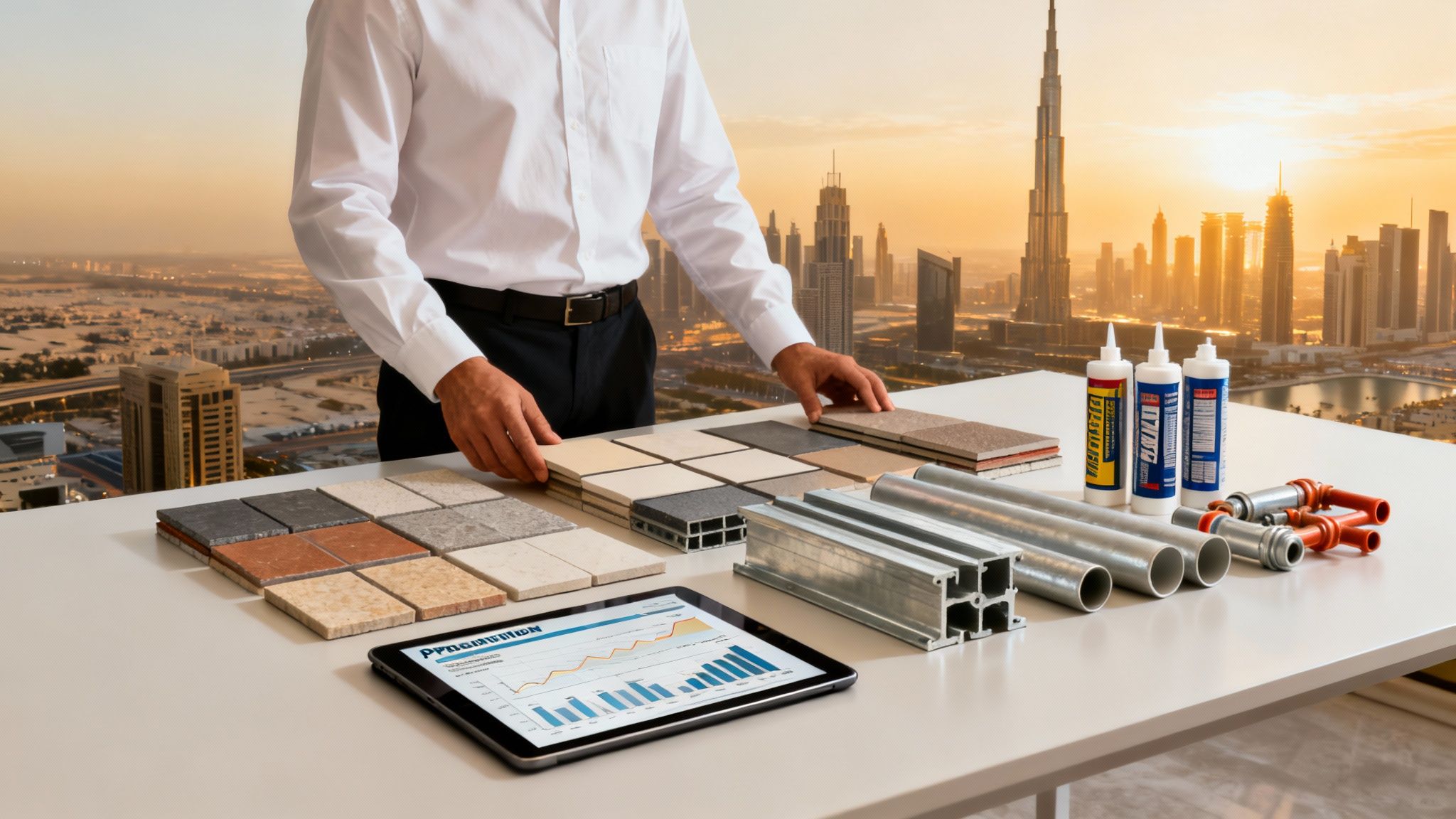
Building materials 101: a procurement manager’s guide to sourcing in dubai.
Sourcing building materials in Dubai isn't just about placing orders; it's a high-stakes balancing act. You're constantly juggling aggressive project timelines, uncompromising quality standards, and costs that can shift without warning. This guide is your playbook for turning reactive buying into a proactive, value-driven strategy. The secret? Finding a building materials distributor who knows the local landscape inside and out.
Navigating Dubai's Dynamic Construction Market
Welcome to the front lines of sourcing in one of the most demanding construction hubs on the planet. For any procurement manager, Dubai is a field of unique challenges and incredible opportunities. The city's relentless pace means project deadlines are set in stone. Even a minor delay in materials can trigger a domino effect of costly setbacks.
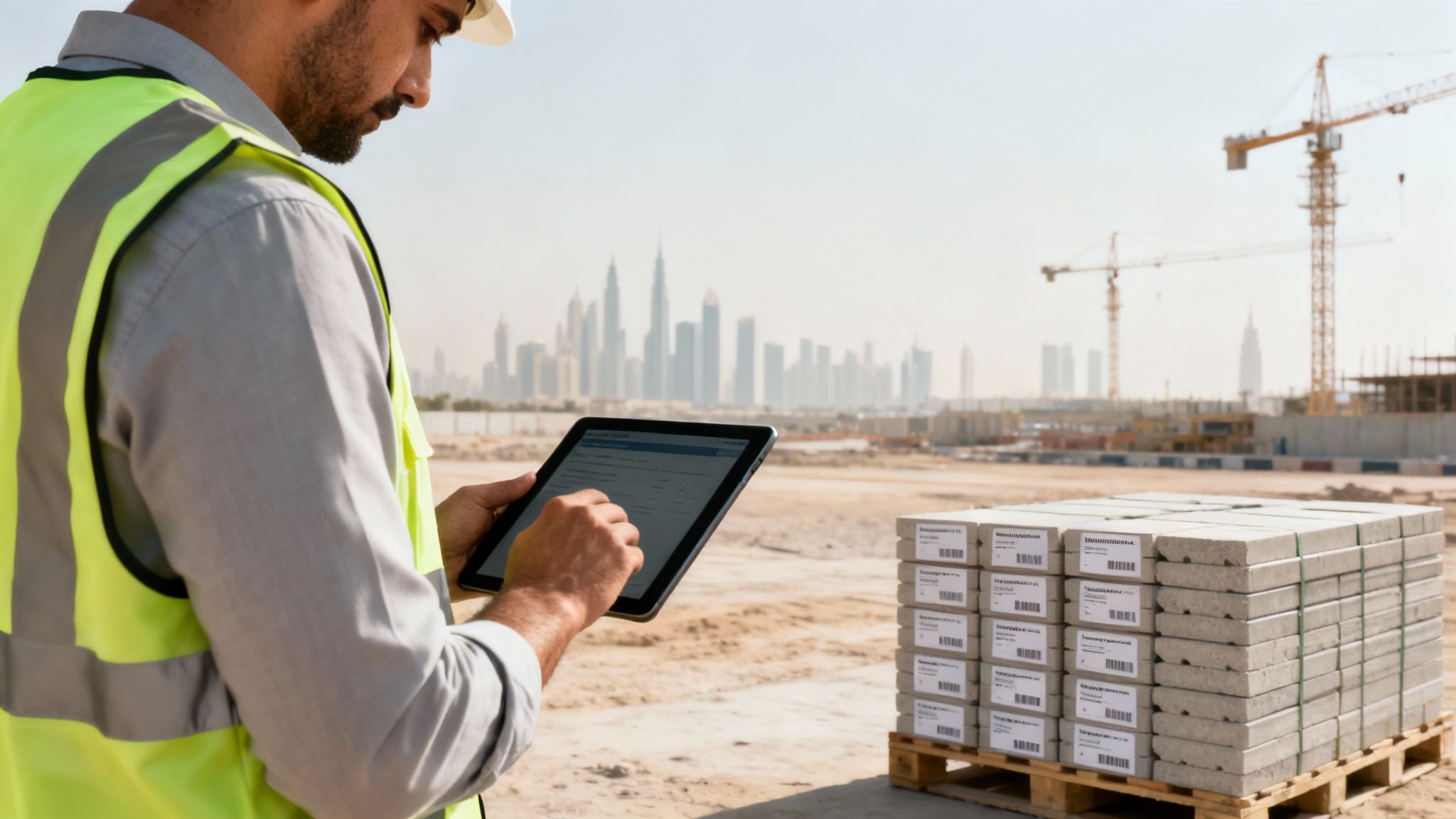
The best way to think about sourcing here is not as simple purchasing, but as a critical function of project management itself. The market is dominated by a huge pipeline of residential, commercial, and mixed-use developments, which creates a massive, consistent demand for certain types of materials.
What are the current market demands in Dubai?
The sheer scale of the UAE's construction sector dictates how you need to approach sourcing. The market was recently valued at around USD 16.2 billion and is expected to climb to USD 20.0 billion by 2030. Dubai is the engine driving that growth, with its dense concentration of real estate and infrastructure projects.
Interestingly, residential projects make up the largest slice of the pie. This means that a huge portion of local demand isn't just for concrete and steel, but for MEP components, plumbing supplies, finishing hardware, and architectural fixtures. To get a handle on this, it helps to understand the trends in the broader Building Construction industry. A savvy supplier in Dubai will already have their finger on this pulse, stocking materials that meet UAE construction standards.
Why is a proactive partnership better than reactive purchasing?
The most significant shift you can make is moving from a transactional mindset to a strategic one. A proactive approach means finding a partner who does more than just sell you products. Stop scrambling for materials when you need them.
You need a supplier who offers:
- Consolidated Purchasing: The power to source a huge variety of materials from one place, which cleans up your logistics and simplifies invoicing.
- Deep Inventory: Ready access to a large, on-hand stock of municipality-compliant products. This is your best defense against long lead times and unexpected delays.
- Efficient Logistics: A dedicated delivery fleet and system to get materials to your site exactly when you need them, keeping the project moving.
Partnering with an established supplier like Yasu Trading Co. LLC allows procurement managers to take control of their entire sourcing process. This simple shift helps maintain project momentum and shields your budget from nasty surprises, turning procurement into a real competitive advantage.
To make these concepts even clearer, the table below breaks down the core challenges and solutions for sourcing in Dubai.
Dubai Procurement Priorities at a Glance
| Challenge Area | Key Consideration | Strategic Solution |
|---|---|---|
| Pace & Timelines | Aggressive project deadlines mean zero tolerance for delays. | Align with a supplier that has deep local inventory and reliable logistics to ensure on-time delivery. |
| Quality & Compliance | Materials must meet strict Dubai Municipality and other regulatory standards. | Partner with a distributor who exclusively stocks certified, compliant products and provides documentation. |
| Cost Volatility | Market fluctuations can quickly erode project budgets. | Lock in prices through bulk purchasing and develop long-term supplier relationships for better terms. |
| Sourcing Complexity | Projects require a vast range of materials from different categories. | Choose a single-source supplier to consolidate orders, streamline communication, and simplify invoicing. |
This at-a-glance view highlights how a strategic approach, centered on choosing the right supply partner, directly addresses the day-to-day pressures of a procurement manager in Dubai.
What are the core compliance hurdles in Dubai?
Sourcing building materials in Dubai is a world away from how it's done elsewhere. Here, compliance isn't just a box to tick at the end; it's the very foundation of your entire project. If you get this wrong, you're putting your timeline, budget, and reputation on the line before the first brick is even laid.
To get it right, you have to understand the key authorities and what they control. It’s a bit like a multi-layered system, where different bodies are responsible for everything from a building's structural bones to its fire safety measures. For a procurement manager, clearing these hurdles is job number one.
What is Dubai Municipality (DM) approval?
Dubai Municipality (DM) approval is the essential pass for a huge range of building materials. It’s a mandatory certification that proves a product meets the strict local standards for quality, safety, and performance. Without that DM stamp, a material simply isn't getting onto a legitimate worksite in the emirate.
This is exactly why working with a seasoned building materials distributor is so critical. They do the heavy lifting for you by stocking inventory that’s already DM-approved. This saves you from a mountain of paperwork and the massive risk of accidentally sourcing something that doesn’t make the cut. For instance, specific waterproofing membranes or low-VOC paints must have this certification before they're even a viable option.
Why are Dubai Civil Defence (DCD) certifications important?
When it comes to fire and life safety, Dubai Civil Defence (DCD) certifications are absolutely non-negotiable. This covers a wide array of products, including fire-rated sealants, intumescent coatings, alarm systems, and emergency lighting. The DCD’s entire focus is to guarantee that in a fire, these materials will perform exactly as they should to protect people and property.
A DCD certificate is your concrete proof that a product has been put through its paces and is approved for its specific fire-resistance rating. Sourcing a firestop sealant without this certification isn't just a compliance slip-up; it's a critical safety failure with severe legal and financial blowback.
How are green building regulations changing material sourcing?
Sustainability is no longer a "nice-to-have" in Dubai—it's written into the law. The UAE’s drive for decarbonisation, along with frameworks like Dubai’s Green Building Regulations, is fundamentally changing how materials are chosen. The pressure is on to boost energy performance and lower embodied carbon.
For procurement managers, this means a growing number of project specifications demand certified, environmentally friendly products. We're talking low-VOC adhesives, thermally efficient windows, and regulation-compliant MEP and safety systems. Distributors like Yasu Trading, who carry established and municipality-approved brands, are perfectly placed to help contractors meet these green targets.
Navigating these complex rules is a core part of the job. For a wider view on safety protocols, which are central to Dubai's framework, understanding site-specific compliance like CSCS Card requirements for construction sites offers valuable context.
All these layers of regulations highlight why a partnership with an experienced supplier in Dubai is such a smart move. They become your compliance filter, making sure every item you procure—from MEP parts to architectural finishes—meets the tough UAE construction standards. This proactive step takes the risk off your shoulders, prevents costly delays from failed inspections, and frees you up to manage the project itself.
To go deeper, check out our guide on the core principles of Dubai's building codes.
How to vet a reliable building materials supplier in Dubai
Picking the right building materials supplier in Dubai isn’t just about ticking an item off a checklist; it’s about forging a partnership. Get it right, and your project flows smoothly. Get it wrong, and you're looking at delays, budget overruns, and a whole lot of headaches. A glossy brochure or a smooth sales pitch is one thing, but a supplier's real value is proven on the ground, which is why a solid vetting process is absolutely essential.
You need to dig deeper than the product catalogue. This means getting a real feel for their operational muscle—their logistics, their technical know-how, and whether they actually have the stock they claim to. It's not about being cynical; it's about being smart. You're looking for a partner who can keep up with the demanding pace of a Dubai construction site.
How do you differentiate a genuine stockist from a broker?
First things first, you need to figure out who you're actually talking to: a genuine stockist or a broker. A stockist—a proper building materials distributor—physically holds a massive amount of inventory in their own warehouse. A broker is just a middleman who takes your order and then goes shopping for it himself.
Why does this matter so much?
- Speed and Reliability: A stockist has the goods on their shelves, ready to go. This often means same-day or next-day delivery. A broker is at the mercy of their suppliers' schedules and stock levels, creating a chain of potential delays and excuses.
- Price and Consistency: When you buy from a stockist, you're buying closer to the source, which usually means a better price. Brokers have to add their own cut, bumping up your final cost.
- Accountability: If there’s a problem with an order, a stockist can walk into their warehouse and fix it. With a broker, you're stuck waiting while they chase down their own third-party suppliers. It’s a recipe for frustration.
What is the best way to verify a supplier’s inventory?
The single most effective way to know if a supplier can walk the walk is to visit their warehouse. This one move cuts through all the marketing fluff and gives you an unfiltered look at their operation, how they manage their stock, and the actual volume of materials they have ready to ship. A tidy, well-stocked warehouse is the best sign of a professional supplier in Dubai.
When you're there, use your eyes. Are materials stored properly to prevent damage? Is there a logical system for finding and dispatching orders? Does what you see on the shelves line up with their promises? A company that's been in the game for a while, like Yasu Trading with its 20-year track record, will have a warehouse that runs like a well-oiled machine.
You can learn more in an hour at a supplier’s warehouse than you can in a week of emails and phone calls. It’s the ultimate reality check and tells you instantly if they have the logistical backbone to support your project.
Why does sourcing from authorised dealers matter?
Sourcing from authorised dealers is critical for ensuring you receive genuine, high-quality products. Always check if the supplier is an authorised dealer for the brands they sell, like Makita or Bosch. Going through unofficial channels might seem cheaper upfront, but it’s a gamble that rarely pays off.
For one, counterfeit products are a real issue, and they almost never meet UAE construction standards. This isn't just about poor performance; it's a serious safety risk. More than that, buying from an unauthorised seller will almost certainly void the manufacturer's warranty. An authorised dealer guarantees you're getting the real deal, complete with full warranty support and the correct technical data sheets. It's the only way to ensure you're compliant, protected, and getting what you paid for.
Mastering Cost Management in a Volatile Market
For any procurement manager in Dubai, controlling costs is where the rubber meets the road. It’s not about hunting for the absolute cheapest price; it's about securing the best value without ever putting quality or timelines at risk. This is a balancing act, one that requires a real feel for the financial pulse of the market and the agility to manage spending in a notoriously unpredictable environment.
You have to look past the number on the quote. The real skill is in understanding what’s driving price volatility behind the scenes—whether it’s global shipping chaos, raw material shortages, or a sudden spike in local demand. Once you can pinpoint these drivers, you stop reacting to market shocks and start anticipating them, which is the key to protecting your budget.
What drives price volatility in Dubai?
Costs are a huge deal when you're sourcing building materials in Dubai. Recent market intelligence highlights that materials can eat up roughly 60% of a project's baseline construction costs. This makes your performance in procurement a make-or-break factor for project profitability.
We’re seeing tender price inflation (TPI) in the UAE forecast at 3.3%, a significant climb from 1.9% in the recent past. It’s largely down to rising material and logistics costs. Key categories like concrete, plastics, structural steel, and MEP materials have all seen what the experts call a "significant increase." If you want to dig into the numbers yourself, you can explore the full UAE market intelligence report from Turner & Townsend for a deeper understanding of these trends.
What this data screams is that a passive, "wait-and-see" approach to cost management just won't cut it anymore. You have to be proactive to survive.
What are practical strategies for cost mitigation?
Seasoned procurement managers have a few proven tactics up their sleeves. These aren't just tricks; they're smart strategies designed to bring some predictability back into the equation and use your purchasing power to create financial stability.
- Consolidate Purchase Orders: Instead of juggling dozens of specialised vendors, think about consolidating your orders with a single-source supplier in Dubai. This move can unlock serious volume discounts. It also simplifies your logistics, cuts down on admin headaches, and helps you build a much stronger, more collaborative relationship with a key partner.
- Negotiate Fixed-Price Agreements: For the essential materials you use day-in and day-out, locking in a fixed price for a set period—say, six months—can be a game-changer. It effectively insulates your project from those sudden, gut-wrenching market spikes.
- Partner with a Local Stockist: Teaming up with a building materials distributor who maintains a deep, local inventory is one of the smartest moves you can make. It dramatically reduces your exposure to international shipping delays and the price hikes that come with them. Their warehouse full of stock is your buffer against global supply chain chaos.
This simple flowchart shows you how to properly vet a local supplier who can actually help you execute these cost-saving strategies.
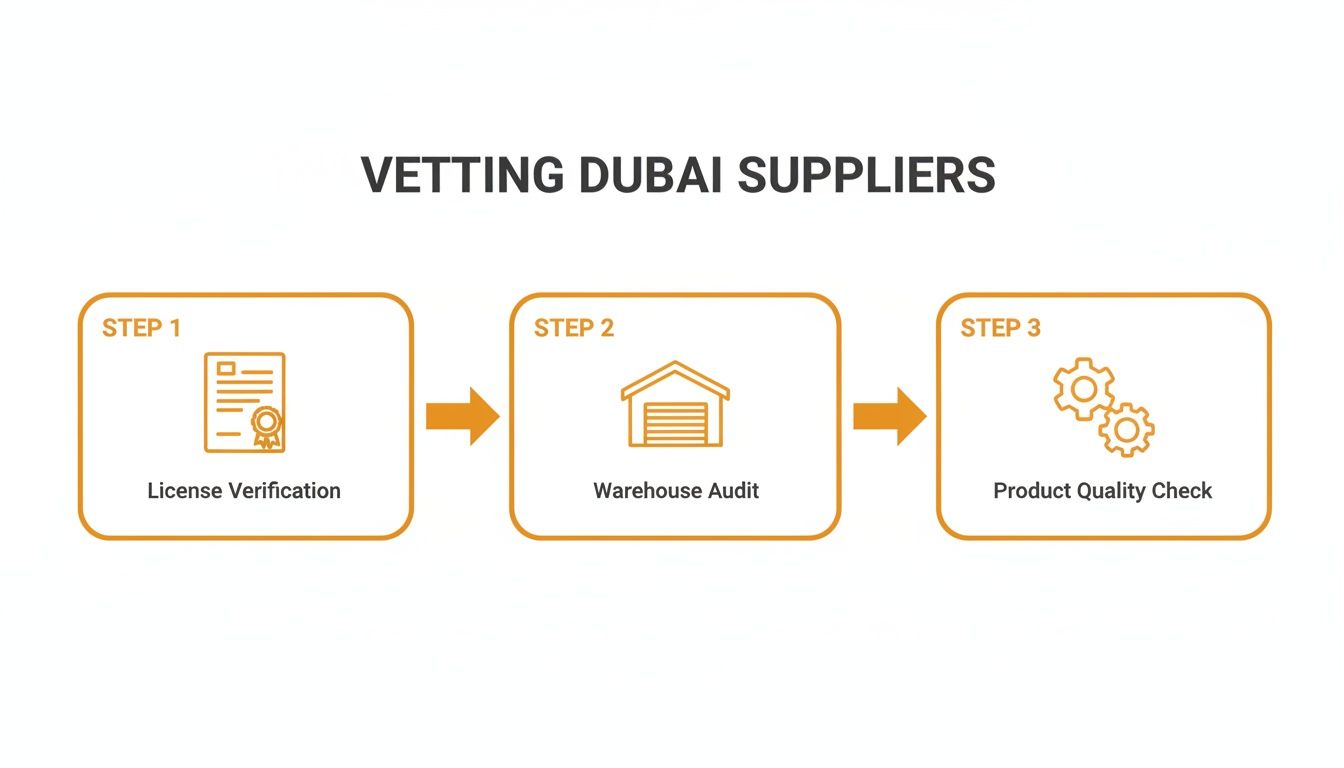
Running through these steps—verifying their trade license, auditing their warehouse, and checking product compliance—is non-negotiable. It’s how you confirm you’re partnering with a legitimate, reliable company that can deliver real value, not just a low price.
What is the Total Cost of Ownership (TCO)?
The "total cost of ownership," or TCO, is a concept you have to live by. It forces you to look beyond the initial price tag and calculate the true, long-term cost of a product. This includes everything: delivery, installation, maintenance, and the very real cost of rework or downtime if that product fails.
A low initial price is often a false economy. The real cost of a non-compliant or poor-quality material is measured in project delays, failed inspections, rework labour, and schedule penalties—expenses that can quickly erase any upfront savings.
Think about it this way: paying a bit more for a DM-certified waterproofing membrane from a trusted supplier might seem more expensive at first glance. But if that superior product prevents a single leak that would have required costly rework and pushed your project handover back by a week, it just saved you thousands of dirhams. That "more expensive" product was actually the cheaper one. This is TCO in action, and it proves that quality and reliability aren't just buzzwords; they are the cornerstones of effective cost management.
Optimizing Logistics and Managing Project Lead Times
In Dubai's fast-paced construction world, your project timeline is only as good as your supply chain. Getting logistics right isn't just about moving materials from A to B; it's a make-or-break discipline. One delayed shipment can trigger a domino effect of work stoppages, quickly turning a perfectly planned project into a logistical headache.
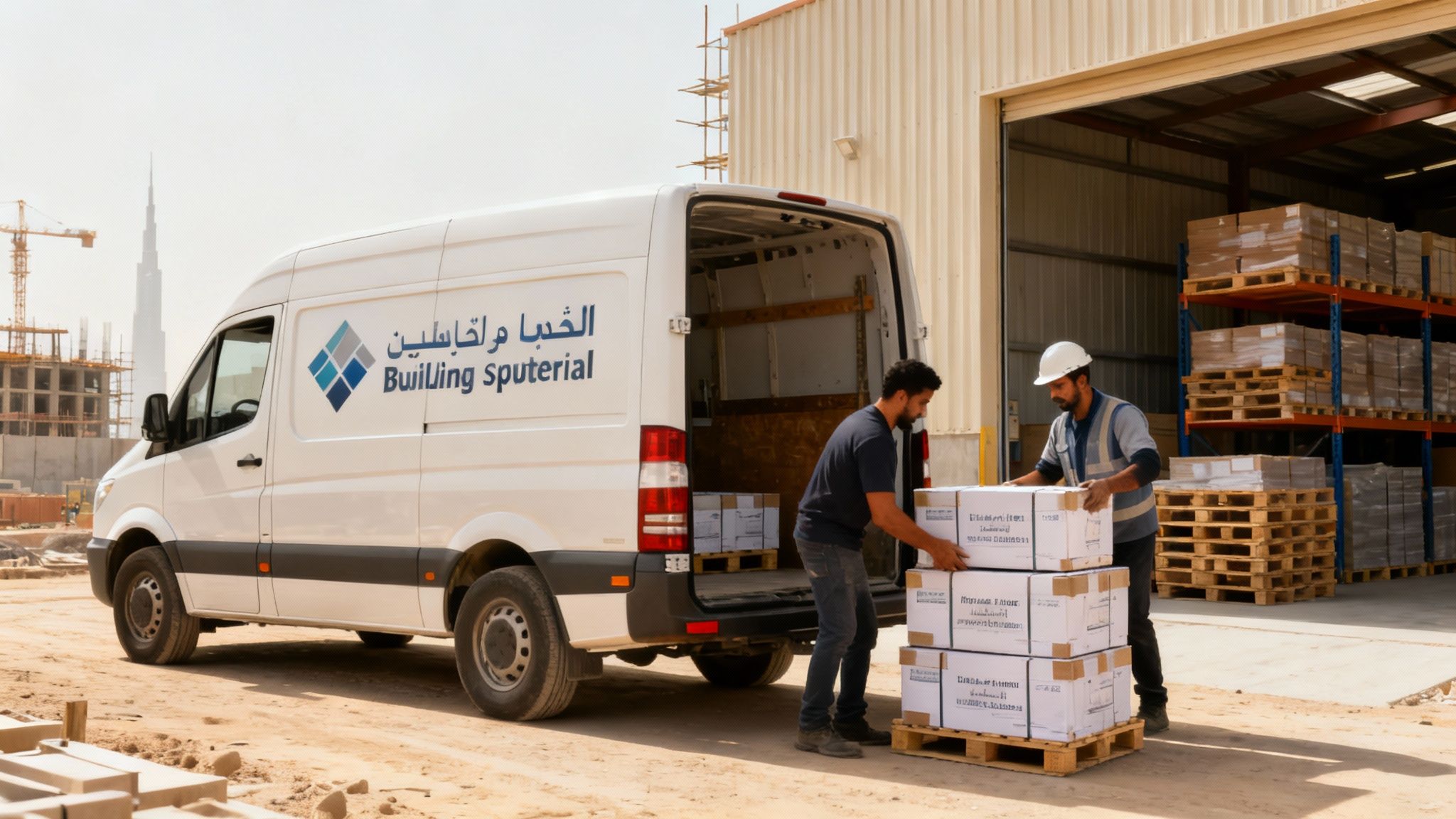
Think of your construction site like a 'just-in-time' factory floor. The electrical team can't pull wires if the conduits and fittings haven't arrived. The plumbers are stuck waiting for the right pipes. This is where sharp logistics management and realistic lead time planning become non-negotiable skills for any procurement manager aiming to succeed here.
What are common logistical bottlenecks in Dubai?
Even with Dubai's incredible infrastructure, there are specific hurdles you'll face. Port congestion can hold up international cargo for days, while that final "last-mile" delivery into a crowded urban job site is its own unique challenge. The key is to anticipate these friction points and plan around them.
A few common bottlenecks to watch out for:
- Customs Clearance Delays: One piece of incorrect paperwork or a random inspection can leave your materials sitting at the port, throwing your schedule into chaos.
- Last-Mile Delivery Hurdles: Getting a truck through city traffic and onto a busy site with multiple contractors requires surgical precision and a top-notch delivery team.
- Supplier Stockouts: If your supplier runs a lean inventory, you're exposed to their own supply chain issues, which means you can't truly predict their lead times.
How can buffer time mitigate project delays?
Building a buffer into your schedule is the best defence against the unexpected. This isn't about padding every task with weeks of extra time. It's about strategically adding a realistic cushion to the delivery timeline for your most critical materials. It’s a simple move that gives you the breathing room to handle minor hiccups without derailing the whole project.
Partnering with a local building materials distributor like Yasu Trading is like having an external inventory buffer. Their warehouse and delivery fleet become an extension of your own operation, making sure you get what you need, exactly when you need it.
You really can't overstate the value of a local partner with deep stock. When a crew on-site suddenly needs something, having a supplier in Dubai who can deliver in a matter of hours—not weeks—is a game-changer. That kind of responsiveness keeps your project moving. If you want to dig deeper into this, our guide on effective construction logistics offers more practical strategies.
What are the differences between local vs international sourcing?
Deciding whether to source from a local distributor or go directly to an international manufacturer always involves a trade-off. Going direct might seem cheaper per unit, but the hidden costs and headaches of international logistics often wipe out those savings.
Here’s a practical look at how the two approaches stack up for Dubai-based projects.
Local vs International Sourcing Comparison for Dubai Projects
| Factor | Local Supplier in Dubai (e.g., Yasu Trading) | International Manufacturer |
|---|---|---|
| Lead Time | Short (often same-day or next-day delivery) | Long (weeks or months, subject to shipping) |
| Logistics | Simple, direct-to-site delivery | Complex, involving freight, customs, and port clearance |
| Flexibility | High (can accommodate urgent, small-quantity orders) | Low (requires large minimum order quantities) |
| Compliance | Stocks products pre-approved to UAE construction standards | Requires verification for each product line |
| Support | On-the-ground technical support and quick issue resolution | Communication across time zones, slower problem-solving |
Ultimately, for most day-to-day procurement needs in Dubai, the speed, reliability, and local expertise offered by a well-stocked distributor provide a clear advantage, keeping projects on schedule and teams productive.
Ensuring Quality Control to Mitigate Project Risks
Great procurement isn't just about chasing the lowest number on a quote. It's about protecting the future of the asset you're building. For any seasoned procurement manager, solid quality control is less of a checklist and more of a core strategy for heading off disaster. Skimp on this, and you're opening the door to counterfeit parts, subpar materials, and the one thing no project can afford: costly rework.
The best defense is a good offense. This means establishing a strict quality control framework right from the start. You need clear, non-negotiable standards for every single item, whether it's a structural bolt or a bathroom tap. The idea is to build a system that checks for quality at several points in the journey, so there are no nasty surprises when the truck pulls up to the site.
How do you verify material quality?
Verifying material quality requires a two-step process: document review and hands-on inspection. Never hesitate to ask for official documentation. You should always demand manufacturer test certificates (MTCs) and reports from third-party labs that prove compliance with UAE construction standards. Once the materials land, a detailed on-site inspection is non-negotiable to make sure what was delivered is exactly what was approved.
This two-step process is your frontline defense against common headaches. Keep an eye out for:
- Counterfeit Products: It happens. Some suppliers will pass off items with fake branding that don't have the safety ratings or performance specs you need.
- 'Bait-and-Switch' Tactics: This is a classic trick. A supplier gets a top-notch sample approved, then delivers a cheaper, lower-grade product in the actual shipment.
- Incorrect Specifications: Getting materials that don't line up with the technical data sheet can stop work in its tracks and cause serious installation problems.
Think of your purchase order and contract as your most powerful tools. State clearly that payment will only be released after a successful inspection and full verification of all required certifications on delivery.
How do contractual terms protect your project?
Carefully written contract terms are your safety net. They create undeniable accountability by linking payment directly to quality milestones. This puts the responsibility for proving compliance squarely on the supplier. When you tie payments to the successful delivery and inspection of goods, you ensure you never pay for materials that don't make the cut.
This is exactly why working with an established building materials distributor is such a smart move. A reputable supplier in Dubai that handles global brands like Bosch or Grohe has already done the heavy lifting of vetting their products. They supply genuine articles with all the right paperwork, which drastically cuts your risk of dealing with fakes and ensures everything meets spec. A partnership like that simplifies your quality control, letting you focus on keeping the project on schedule.
Got Questions? We’ve Got Answers.
Even the most seasoned procurement managers run into questions on the ground. When you're in the thick of a project, you need straightforward answers, fast. Here are some of the most common queries we see from professionals sourcing building materials in Dubai, along with practical, no-nonsense solutions.
What's the best way to get a quick price on a long list of items?
The most efficient way to get a price is to bundle everything into a single Request for Quotation (RFQ) and send it to a one-stop building materials distributor. When you consolidate your list, you're not just saving time—you're giving a supplier a bigger order to work with, which often translates into better wholesale pricing.
Think about it: instead of chasing individual quotes for pipes from one place, power tools from another, and fasteners from a third, you send one list. A comprehensive supplier in Dubai can then price out the entire package, turning a logistical headache into a simple, streamlined process.
How do I know for sure a product is approved for use in the UAE?
Don't guess—ask for the paperwork. Any reputable supplier in Dubai should have no problem providing the official documentation to prove their products meet local regulations. It’s a standard part of doing business here.
Specifically, you'll want to ask for:
- Dubai Civil Defence (DCD) Certificate: This is non-negotiable for any fire and life safety products.
- Certificate of Conformity: The Emirates Authority for Standardisation and Metrology (ESMA) issues this for a wide range of materials.
- Technical Data Sheets (TDS): These give you the nitty-gritty performance specs and often confirm compliance with specific UAE construction standards.
Is it cheaper to buy straight from the manufacturer?
It might look that way on the surface, but buying direct often comes with hidden headaches and costs. Manufacturers are set up for bulk production, not for the dynamic needs of a construction site. A local distributor, on the other hand, keeps a massive inventory on hand, can break down large shipments for smaller order quantities, and offers next-day delivery right to your site.
When you look at the total cost of ownership, working with a distributor usually comes out on top. Once you factor in fewer project delays, zero cost for holding your own inventory, and a much simpler procurement process, the real value becomes clear. In a city that moves as fast as Dubai, that flexibility is everything.
For a procurement process that's built for speed and reliability, Yasu Trading Co. LLC is the partner you need. Get a single, comprehensive quote for all your project materials today at https://yasutrading.com.