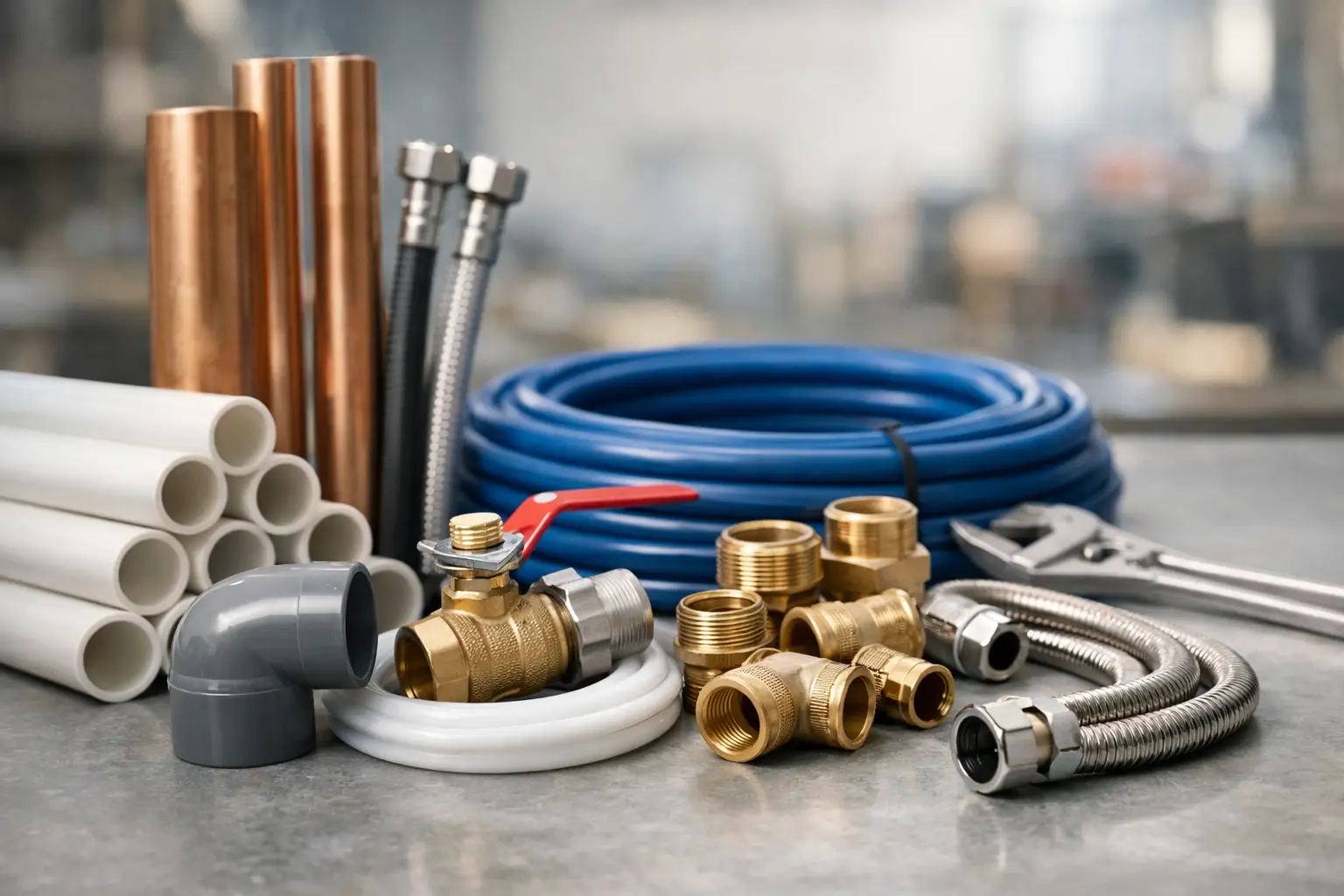
Plumbing Materials That Keep Projects Moving
A plumbing package rarely fails because one item was completely wrong. More often, delays come from a mismatch - the pipe is right, the fitting is not; the valve meets pressure needs, but not the approval requirement; the sanitary connection is available, but the support accessories are missing. For contractors and MEP buyers, plumbing materials are not just a product category. They are a coordination category that affects inspections, labor productivity, and handover dates.
On a fast-moving project, material selection needs to do three things at once: meet specification, stay available when site demand changes, and arrive ready for installation. That is why procurement teams increasingly look at plumbing as a system rather than a list of line items. The right sourcing approach reduces site disruption long before the first pipe is cut.
Why plumbing materials affect more than installation
Plumbing is closely tied to civil work, ceilings, wall closures, sanitary ware installation, testing, and authority approvals. If pipework materials arrive late or substitutions are unclear, downstream trades absorb the delay. A small procurement gap in a pump room or washroom stack-up can push multiple activities off sequence.
This is where material quality and supply reliability start to matter as much as price. A lower upfront rate can become expensive if it creates leak risk, failed pressure tests, or replacement work after finishes are complete. For professional buyers, the better question is not only what the plumbing materials cost per unit, but what they cost the project if they arrive late, fail inspection, or require rework.
Core plumbing materials every project depends on
Most projects require a mix of piping, fittings, control components, support items, and finishing connections. The exact combination depends on building type, usage load, design temperature, and local approval needs.
Pipes and fittings
This is the backbone of the package. Depending on the application, buyers may be working with PPR, uPVC, CPVC, HDPE, copper, or other specified systems. Potable water, drainage, vent lines, and concealed versus exposed installations all change the material decision.
The trade-off is straightforward. Some systems offer faster installation and corrosion resistance, while others perform better under higher temperatures, certain pressure conditions, or particular consultant preferences. The practical mistake is assuming one pipe material is universally better. It depends on the service line, project specification, and authority acceptance.
Fittings deserve the same attention as pipes. A good pipe system paired with inconsistent or non-matching fittings creates avoidable risk. Procurement teams should verify socket type, jointing method, pressure class, dimensions, and brand compatibility before release to site.
Valves and control components
Isolation valves, check valves, gate valves, ball valves, float valves, and pressure control items are small compared to the total plumbing package, but they carry outsized operational importance. Poor valve selection shows up later in commissioning, maintenance access, and system balancing.
For commercial and residential projects alike, the main issue is usually not whether a valve can fit into the line. It is whether it can perform over time under actual site conditions. Pressure rating, media compatibility, corrosion resistance, and serviceability all matter. A valve that saves money at purchase but fails early creates an FM problem the contractor will still hear about after handover.
Drainage and waste system materials
Drainage packages often look simple on paper and become complicated on site. Floor drains, cleanouts, traps, waste fittings, vent components, and connection points to sanitary ware need proper coordination with floor levels, waterproofing, and finishing details.
This category is especially sensitive to last-minute site revisions. If the drainage materials are not available in the right dimensions or configurations, site teams start improvising. That is where alignment, slope, and odor-control issues begin. The better approach is to buy drainage materials from a supplier that can support both planned quantities and urgent top-ups without forcing mixed-system compromises.
Sanitary connections and accessories
A sanitary ware installation is only as good as the concealed and semi-concealed components behind it. Connectors, flush system accessories, angle valves, hoses, traps, and mounting hardware often get treated as secondary items until the final stage, when every missing part becomes urgent.
For procurement teams, these accessories should be consolidated early with the main plumbing package. That reduces the familiar end-of-project scramble where labor waits on a handful of low-value but essential pieces.
How to select plumbing materials without creating procurement risk
The safest material decision is not always the cheapest and not always the premium option. It is the one that fits the spec, the site condition, and the delivery reality.
Start with application, not catalog preference. Water supply, drainage, hot water circulation, external services, and high-rise vertical distribution each place different demands on the material. Temperature range, pressure, UV exposure, concealed installation, chemical exposure, and maintenance access all affect what is suitable.
Then check compliance early. Municipality-compliant materials are not a paperwork formality. They protect the project from inspection issues, consultant rejection, and replacement cost. If approvals are likely to be reviewed closely, documented product conformity should be treated as part of procurement readiness.
Availability is the next filter. A material system is only practical if the full range is accessible - pipes, fittings, valves, supports, jointing accessories, and replacement quantities. Buyers often lose time when the main line is stocked but the supporting items are sourced from separate vendors. Consolidated procurement reduces that exposure.
Finally, look at installation implications. Some systems are faster to install but require trained handling or specific tools. Others are familiar to site labor but slower in confined spaces. This is an area where technical guidance from the supplier helps, especially when balancing labor productivity against material cost.
Common mistakes buyers make with plumbing materials
One common issue is buying to immediate need instead of phase planning. That may solve a short-term shortage, but it increases the chance of mixed brands, inconsistent approvals, and cost drift across the package.
Another is underestimating accessory demand. Supports, sealants, jointing consumables, clamps, sleeves, and transition fittings are easy to overlook in early ordering. Yet these are exactly the items that stop installation crews when missing.
A third mistake is treating all approved products as interchangeable. Even where multiple brands meet baseline requirements, differences in tolerances, availability, warranty handling, and system completeness can affect site performance. Substitution should be controlled, not assumed.
The final and most expensive mistake is separating commercial purchasing from technical review. Plumbing materials should not be bought on rate alone when installation method, pressure class, or compatibility concerns are still unresolved. That is where low purchase prices turn into high correction costs.
What contractors should expect from a plumbing materials supplier
For project teams under schedule pressure, supply capability matters as much as product range. A dependable supplier should be able to support bulk project requirements, repeat replenishment, and urgent same-day or next-day dispatch when site consumption shifts.
Technical support is also part of the value. Professional buyers need quick answers on specification alignment, brand options, approvals, and suitable alternatives when lead times change. Warranty support matters too, especially on branded and performance-critical items.
Just as important is assortment depth. Plumbing materials do not sit in isolation on most jobs. Buyers often need related MEP and construction categories in the same procurement cycle, from sealants and adhesives to fasteners, tools, safety items, and sanitary ware accessories. That is why many contractors prefer a single inventory-backed source that can reduce vendor coordination and protect delivery windows. For companies managing multiple sites across Dubai, Sharjah, and Abu Dhabi, that operational reliability is often worth more than chasing fragmented pricing.
Yasu Trading Co. LLC supports this model by supplying municipality-compliant plumbing pipes and fittings alongside the broader jobsite requirements contractors need to keep work fronts active.
Plumbing materials and the real cost of delay
Procurement teams already know the visible costs - unit rates, transport, and stockholding. The harder costs show up later: labor idle time, rescheduled inspections, patch-and-repair work, ceiling closure delays, and rushed replacement orders at the end of a phase.
That is why plumbing procurement works best when buyers focus on total execution value. The right materials, available at the right time, with compliance documentation and technical clarity, protect more than one trade. They protect the schedule.
When plumbing packages are planned as complete systems and sourced through a dependable wholesale partner, site teams spend less time chasing missing items and more time closing work fronts. That is usually the difference between a material order that fills a store room and one that keeps a project moving.