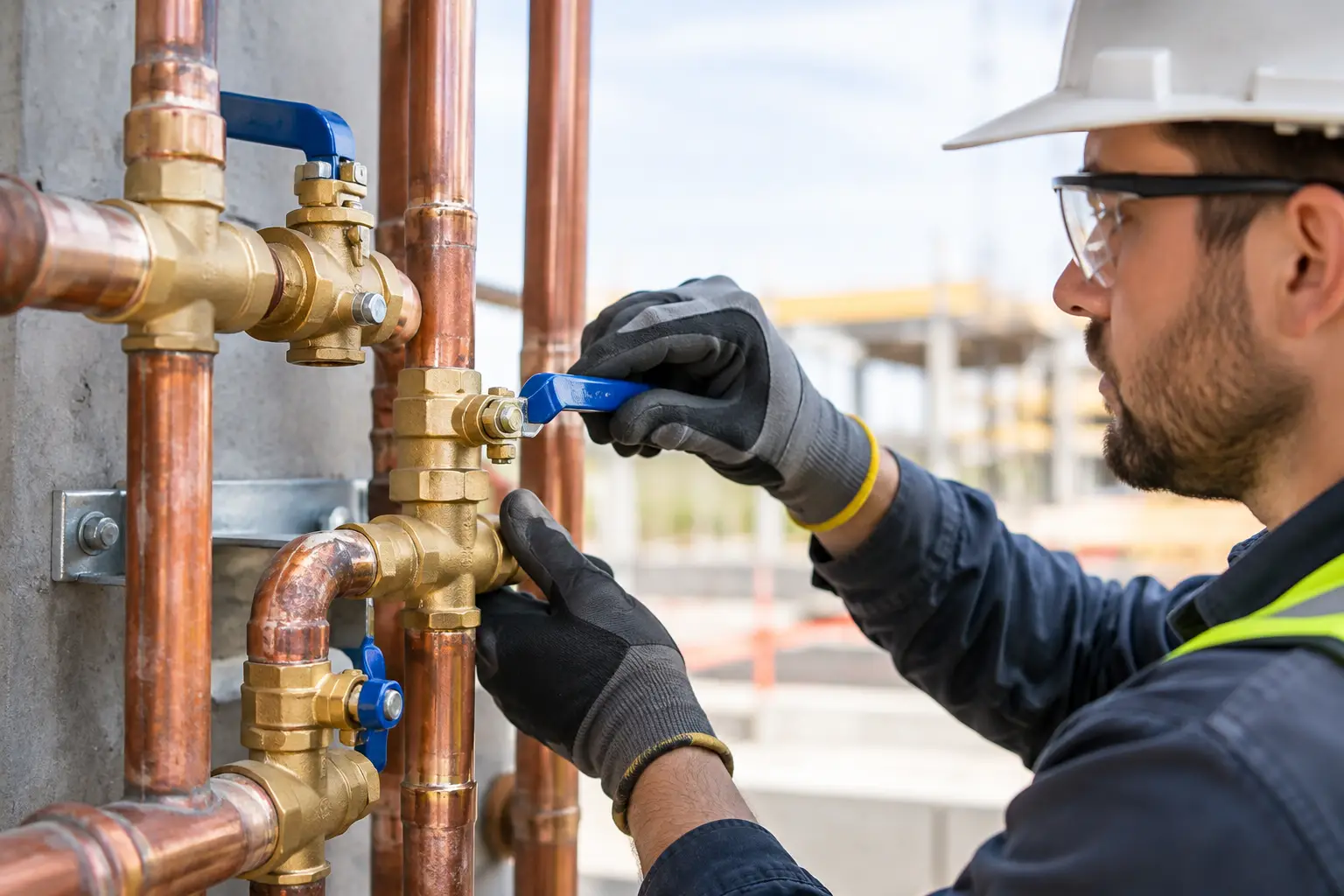
Plumbing Valve Reliability on Every Jobsite
A valve failure rarely stays small. A leaking isolation valve can delay ceiling closure, damage finished areas, trigger a maintenance callout, or leave a contractor answering difficult questions during testing and commissioning. Plumbing valve reliability is therefore not just a product issue. It is a procurement, specification, installation, and handover issue that directly affects project timelines.
For contractors and MEP teams, the objective is clear: install valves that match the system duty, comply with project requirements, arrive with traceable quality, and remain serviceable long after handover. The lowest unit price may look attractive during purchasing, but it can become the most expensive option when replacement work requires shutdowns, access panels, labor, and client coordination.
What Determines Plumbing Valve Reliability?
Reliable valve performance begins with selecting the right valve for the right section of the system. A valve that performs well on a domestic cold-water branch may not be suitable for hot-water circulation, boosted pressure lines, HVAC chilled-water connections, or aggressive water conditions.
Material compatibility is the first decision. Brass valves are widely used for potable water and general plumbing applications because they offer good machinability and dependable sealing performance. Stainless steel may be the better choice where corrosion resistance, hygiene, or demanding water conditions are priorities. PVC and CPVC valves are practical for compatible nonmetallic piping systems, but pressure ratings, temperature limits, solvent-weld quality, and exposure conditions must be checked carefully.
The valve type matters just as much. Ball valves provide quick quarter-turn isolation and are commonly specified where positive shutoff and ease of operation are needed. Gate valves are suited to fully open or fully closed duties but should not be used for throttling. Globe valves offer better flow regulation, while check valves protect pumps and piping from reverse flow. Pressure-reducing valves, float valves, angle valves, and concealed stop valves each require a specification based on operating conditions rather than appearance alone.
A reliable selection considers working pressure, temperature, media, pipe material, connection type, flow direction, access for maintenance, and required approvals. If any of these items are unclear at quotation stage, resolve them before material reaches the site.
Specify for the Actual System, Not the Catalog Image
A valve can look identical to another product while having a different body thickness, stem design, seal material, pressure class, or thread quality. For project procurement, a generic description such as “brass ball valve” is not enough.
A proper material request should define valve size, body material, end connection, pressure rating, handle type, sealing material, and intended service. For example, a threaded brass ball valve for a chilled-water line should be evaluated differently from a valve intended for hot-water distribution. The specification should also identify whether the valve needs a lever handle, lockable handle, drain point, union connection, or actuator compatibility.
Municipality-compliant materials and approved project submittals should guide the purchase decision. Where consultants require specific brands, certificates, or test documentation, substitute products should never be assumed acceptable simply because the dimensions match. A mismatch discovered during inspection can stop installation progress and create avoidable rework.
Do Not Overlook Connection Compatibility
Threaded, flanged, grooved, compression, and solvent-weld connections each have their place. The connection must match the piping system and site installation method.
Threaded valves are common for smaller-diameter plumbing applications, but poor thread engagement, excessive sealing tape, or incompatible fittings can create leaks. Flanged valves simplify removal and maintenance on larger lines, although flange alignment, gasket selection, and bolt tightening must be controlled. On plastic systems, the correct valve material and joining method are essential to prevent stress cracking or joint failure.
The Installation Practices That Protect Valve Performance
Even approved valves can fail early when installation is rushed. Site teams should treat valves as precision components, not as simple pipe connectors.
Before installation, inspect the body for damage, confirm the size and pressure marking, and make sure the valve is clean internally. Construction debris, welding residue, sand, and thread particles can damage seats and seals during the first operation. Keep valves capped until they are ready to install, particularly when materials are stored in dusty or open site conditions.
Install the valve in the correct flow direction where required, especially for check valves, pressure-reducing valves, and certain control valves. Avoid using the valve body as a point for excessive wrench force. Support adjacent pipework so the valve does not carry misalignment or dead load. A valve under permanent stress may operate during initial testing but develop leakage later as the system moves under pressure and temperature changes.
Access also affects long-term reliability. Isolation valves hidden above inaccessible ceilings or behind fixed joinery may technically be installed, yet they cannot serve their purpose during maintenance. Coordinate valve positions with access panels, equipment clearances, and commissioning requirements before closing walls and ceilings.
Test Before Finishes Make Repairs Expensive
Pressure testing is the point where weak connections and defective components should be found, not after tenants occupy the building. Test procedures must follow the approved project method statement and applicable authority requirements. Record the test pressure, duration, line section, results, and any rectification completed.
Operate each accessible isolation valve during commissioning. This confirms that handles move freely, shutoff is effective, and valve locations are correctly labeled. Leaving a valve untouched until an emergency is not a maintenance strategy. Stiff operation, a leaking gland, or incomplete closure should be addressed before handover.
For larger projects, it helps to maintain a valve schedule that identifies tag number, service, size, location, manufacturer, and maintenance access point. This creates a practical handover record for facilities teams and reduces troubleshooting time later.
Procurement Controls That Reduce Failure Risk
Plumbing valve reliability depends heavily on how materials are sourced. Mixing unverified valves from multiple suppliers can lead to inconsistent dimensions, uncertain pressure ratings, missing documentation, and difficult warranty claims. This risk increases when projects require repeat orders across several floors, blocks, or sites.
A dependable B2B supply partner helps procurement teams standardize approved valve ranges, align fittings and pipe accessories, and maintain continuity when urgent quantities are needed. Consolidating plumbing pipes and fittings, valves, sealants, fasteners, sanitary ware, and related MEP materials with one inventory-backed supplier also reduces coordination time and delivery gaps.
When comparing quotations, assess more than the piece rate. Confirm brand authenticity, available stock, technical documentation, country of origin where required, warranty handling, delivery capability, and replacement support. A slightly higher-priced valve from a verified source can offer better project value than a lower-priced item that causes inspection concerns or cannot be matched during a future phase.
For time-sensitive work in Dubai and across the UAE, ready inventory and site-direct dispatch can protect the installation sequence. Waiting several days for a missing valve size can hold up testing of an entire riser or zone. Yasu Trading supports contractors with wholesale supply, specification guidance, and on-time site delivery for project and maintenance requirements.
Match Maintenance Planning to the Valve’s Role
Not every valve needs the same maintenance attention. Main isolation valves, pump-room valves, pressure-control valves, and fire-related components deserve planned checks because their failure affects wider areas of the building. Small fixture isolation valves may be lower risk, but they still need to close reliably when repairs are required.
Facilities teams should periodically exercise rarely used valves, inspect visible signs of corrosion or leakage, and confirm that valve tags remain legible. Where water quality, high temperature, or frequent operation affects service life, keep approved replacement valves available. Planned replacement during a controlled maintenance window is far less disruptive than an emergency shutdown.
Build Reliability Into the Purchase Order
The best time to prevent valve failure is before the purchase order is released. Give suppliers clear specifications, request consistent approved brands, verify compliance documents, and confirm availability by size and quantity. Then protect the material through proper storage, installation, testing, and accessible handover.
When a valve is selected and supplied with the same discipline applied to the rest of the MEP package, it becomes what it should be: a dependable control point that keeps water systems serviceable and keeps the project moving.