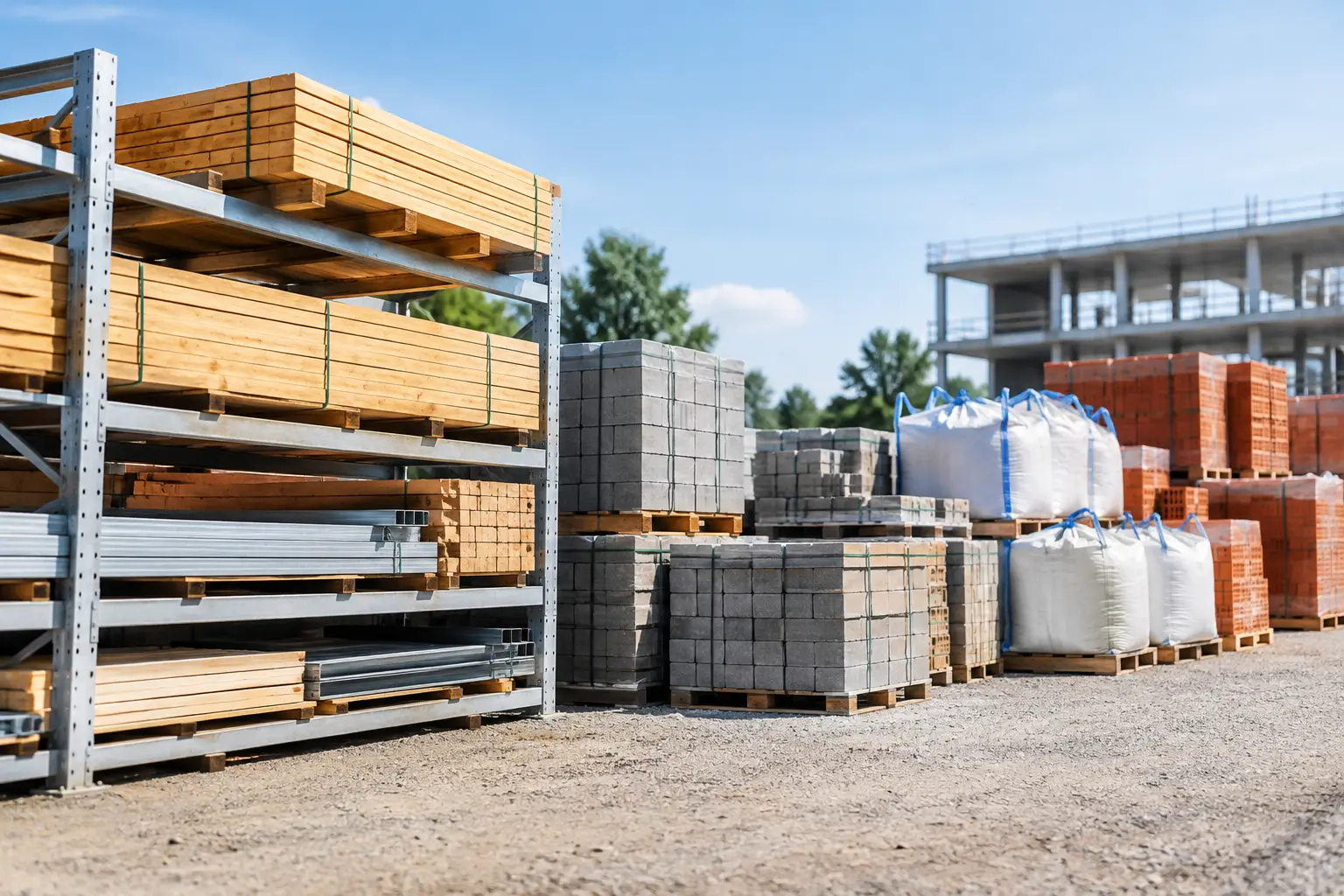
Top Building Material Storage Methods for Sites
A delivery can arrive on time and still create a site delay if pipe coils are crushed, cement has absorbed moisture, or approved electrical items cannot be located when installation starts. The top building material storage methods are not simply about keeping a warehouse tidy. They protect usable inventory, preserve manufacturer warranties, support inspection readiness, and give project teams confidence that the right material is available at the point of work.
For contractors managing multiple trades, storage needs to operate as part of the supply chain. The objective is clear: receive materials accurately, protect them from damage and contamination, control access, and release them to crews without slowing the schedule.
Start With a Material-Specific Storage Plan
One storage rule does not work for every product category. A covered laydown area may be suitable for some bundled conduit, but it is not suitable for adhesives, fire safety equipment, power tools, or sensitive electrical components. Before the first delivery, classify materials by their exposure risk, handling requirements, value, and expected issue frequency.
The practical split is usually between dry, enclosed storage; covered external storage; secured high-value storage; and clearly marked temporary issue zones near active work fronts. This prevents a common jobsite failure: materials are delivered to the nearest open space rather than the location that protects their condition.
Storage planning should also match the installation sequence. Fast-moving items such as plumbing fittings, electrical accessories, fasteners, sealants, and hand tools should be accessible without opening bulk pallets or moving unrelated stock. Bulk items should be positioned to allow safe mechanical handling and staged releases. Keeping all inventory in one crowded container may appear efficient, but it often creates avoidable picking time, damage, and stock discrepancies.
Keep Moisture-Sensitive Materials Off the Ground
Moisture is one of the most expensive storage risks in construction. It affects cement-based products, gypsum boards, timber, paint, adhesives, sealants, electrical parts, and boxed sanitary ware. Even when packaging looks intact, direct contact with a wet slab or exposure to humid air can shorten product life or compromise performance.
Use pallets, racks, or dunnage to lift materials above the floor and allow air circulation below. Check that the ground is level, drained, and free from standing water before receiving a shipment. In external areas, use weatherproof covers that shed water without sealing in condensation. Covers must be tied down securely while leaving enough ventilation for the material type.
Cement, grout, and other bagged products need particular discipline. Store them in a dry, enclosed area, place newer deliveries behind older stock, and avoid stacking beyond the packaging or manufacturer guidance. Damaged bags should be isolated immediately. A single compromised pallet can create waste, inconsistent application, and disputes over quality once work has started.
For adhesives, sealants, paint products, and chemical anchors, storage temperature matters as much as moisture. Review the manufacturer’s temperature range, keep products away from direct sun and heat sources, and monitor expiry dates at receipt and issue. A low purchase price does not offset the cost of failed bonding or rejected finishes.
Use Racking and Segregation to Protect MEP Materials
MEP materials are often delivered in a wide mix of sizes and packaging formats. Pipes, fittings, cable accessories, switches, valves, and electrical protection devices should be organized so that crews can identify the exact specification without opening multiple cartons.
Store pipes on supported racks with enough support points to prevent sagging. Keep different pipe materials and pressure classes separated and labeled. Do not stack heavy items on plastic pipes or fittings, and protect pipe ends from dirt, water, and impact. Where pipe lengths are stored externally, use a shaded covered area and follow manufacturer recommendations for UV exposure.
Electrical components require clean, dry, secured storage. Distribution boards, breakers, control items, cables, and accessories should remain in original packaging until needed. Keep electrical stock away from wet works, cutting areas, and high-dust zones. If materials are transferred into a site store, retain labels, batch information, and product documentation so approved items can be verified during installation or inspection.
Segregation is equally important for safety and compliance. Keep flammable products, chemicals, and batteries in designated areas with appropriate ventilation, warning signs, and fire protection measures. Do not place incompatible chemicals together because space is limited. A storage layout must account for the consequences of a leak, heat exposure, or accidental ignition.
Apply FIFO and Batch Control at the Receiving Stage
Good storage begins before products are put away. The receiving team should confirm the purchase order, delivery note, product description, quantity, visible condition, and applicable approval or warranty documentation. This takes minutes at delivery and can save days of investigation later.
Use first in, first out - FIFO - for items with expiry dates, changing batches, or high turnover. Date-mark each received pallet or carton where practical, then issue older compliant stock first. This is especially useful for sealants, adhesives, paints, chemical products, and consumables. For materials where batch traceability affects quality records, record batch numbers against the delivery and the installation area.
A simple receiving process should capture four control points:
- Quantity received against the order and delivery note
- Product condition, including damaged packaging or water exposure
- Batch, expiry, and approval details where relevant
- Storage location and the responsible storekeeper
These controls make reordering more accurate and help procurement teams avoid duplicate purchases. They also provide a clear trail if a consultant, client, or manufacturer asks for product verification.
Secure High-Value and Safety-Critical Inventory
Power tools, testing equipment, copper components, fire and safety equipment, and specialized hardware need controlled access. Loss is not the only risk. Unrecorded issue and return activity can leave a crew without a required tool or safety item at the exact time it is needed.
Use a locked cage, container, or store room for high-value items, with a register for issue, return, and condition. Assign responsibility to named staff rather than allowing unrestricted access. For calibrated equipment, record calibration status and keep certificates with the equipment file. For fire safety products, protect units from physical damage, heat, and moisture, and make sure labels remain visible.
Security should not make materials impossible to obtain. The best approach combines controlled access with a clear issue process during working hours. When an urgent request is raised, the storekeeper should be able to confirm availability and release the correct item quickly, rather than searching through mixed stock.
Design the Store Around Safe, Fast Material Movement
Storage layouts should support the route materials take from delivery vehicle to store, from store to staging area, and from staging area to the work face. Keep forklift lanes, pedestrian routes, emergency access, and exits clear at all times. Clearly label bays and avoid stacking materials where they block fire equipment or electrical panels.
Heavy materials belong on lower rack levels, with lighter items above. Never overload shelving, use damaged pallets, or create unstable stacks to save floor space. For long materials, use purpose-built cantilever racking or properly supported storage frames. Manual handling risks rise quickly when crews must pull items from unstable piles or climb onto pallets.
Near the active work area, create a controlled staging zone for that day or shift’s materials. This reduces repeated trips to the main store while preventing excess stock from being left exposed around the site. At the end of the shift, return unused sensitive items and remove packaging waste so the next delivery can be received safely.
Make Storage Part of Procurement, Not an Afterthought
The best storage plan depends on project size, available space, delivery frequency, trade sequence, and the materials being installed. A tower project with limited laydown space may need phased, floor-by-floor deliveries. A villa or warehouse project may benefit from larger bulk receipts and a central secure store. In both cases, ordering quantities and delivery dates should reflect actual protected storage capacity.
This is where a reliable distributor adds operational value. Consolidated deliveries can reduce the number of vehicles, handling events, and uncontrolled drop-offs entering a site. Yasu Trading Co. LLC supports contractors with jobsite-ready MEP, tools, hardware, safety, and general construction materials, helping teams coordinate supply around installation priorities rather than creating unnecessary site congestion.
Review storage conditions at each weekly site coordination meeting. Ask what stock is approaching expiry, what materials are exposed, what is difficult to find, and which upcoming deliveries require a cleared receiving area. That routine turns storage from a reactive housekeeping task into a practical safeguard for quality, compliance, and On-Time Site Delivery.
A well-run store does more than protect inventory. It gives supervisors a cleaner handover, installers the correct materials when they need them, and procurement teams fewer urgent replacement orders. Set the rules before the delivery arrives, enforce them every day, and your material storage will keep work moving instead of becoming the next critical-path problem.