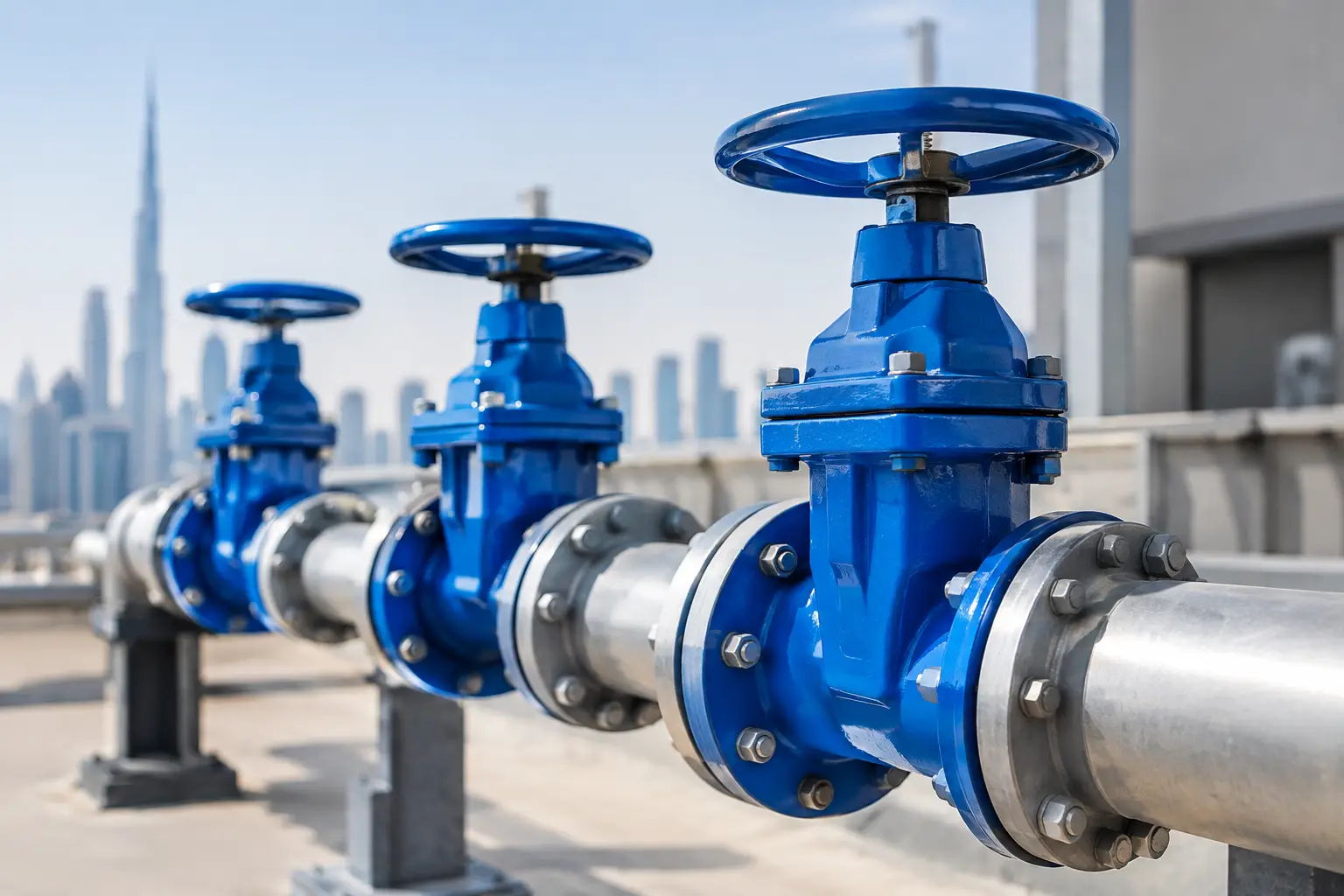
UAE Commercial Plumbing Valves for Reliable Projects
A failed isolation valve can turn a minor repair into a shutdown affecting tenants, fit-out crews, and handover dates. For contractors and MEP teams, selecting UAE commercial plumbing valves is not simply a matter of choosing a size from a catalog. The valve must suit the water system, pressure conditions, installation location, maintenance plan, and project approval requirements.
The right specification protects more than the pipework. It gives facilities teams a practical way to isolate equipment, control flow, and service individual zones without taking an entire building offline. The wrong valve can create leakage risk, difficult access, premature wear, and expensive rework after ceilings and walls are closed.
Start With the Function of Each Valve
Commercial plumbing systems need valves for different operating tasks. Treating every valve as a generic shutoff is one of the quickest ways to create a specification gap. Before ordering, confirm what each valve is expected to do in the finished system.
Isolation valves are installed so a branch line, sanitary fixture group, pump, water heater, or tank connection can be shut down for service. Ball valves are commonly selected where quick quarter-turn operation and positive shutoff are required. Gate valves may be used where a full-bore flow path is required, though they are generally intended to be fully open or fully closed rather than used for throttling.
Globe valves are better suited to controlled flow adjustment, while check valves prevent reverse flow that can damage pumps or compromise system operation. Pressure-reducing valves are used where incoming pressure must be controlled downstream, and float valves regulate water levels in tanks. Each type has a place, but the operating duty must lead the choice.
For a high-rise project, for example, pressure zoning and pump-room control requirements may call for a combination of isolation, check, balancing, and pressure-control valves. A small retail fit-out may need straightforward isolation points, but those points still need to remain accessible after the fit-out is complete.
How to Specify UAE Commercial Plumbing Valves
A sound valve specification starts with the system data, not the purchase price. Procurement teams should receive clear information from the MEP consultant, project engineer, or approved material schedule before releasing a bulk order. At minimum, confirm the pipe size, connection type, fluid, working pressure, operating temperature, installation environment, and valve function.
Match the Material to the Water and Environment
Brass valves are widely used for potable-water and general plumbing applications because they offer good corrosion resistance and dependable service in common building systems. Bronze can be appropriate for demanding water applications. Stainless steel may be selected where water quality, corrosion exposure, hygiene requirements, or chemical compatibility require a higher-grade material.
For larger plant rooms, chilled-water services, or fire-related applications, ductile iron and cast iron valves may be specified depending on the service and project standard. The valve body material is only one part of the decision. Internal seals, seats, stems, and fasteners must also be suitable for the intended medium and temperature.
Do not assume that a valve acceptable for cold domestic water will perform the same way on hot-water circulation lines, treated water, or systems exposed to aggressive site conditions. Where the application is unusual, request manufacturer data and technical confirmation before placing the order.
Verify Pressure Rating and Temperature Limits
Pressure rating must cover actual operating conditions, including the effect of building height, booster pumps, pressure fluctuations, and test pressure. A valve with an inadequate rating may hold temporarily during installation yet fail under sustained operation or commissioning conditions.
Temperature matters just as much. Hot-water systems place different demands on seals and seats than cold-water lines. For pressure-reducing, control, and check valves, review the approved operating range rather than relying only on the valve body rating. This is particularly relevant in pump rooms and central hot-water systems, where failure affects more than one tenant or zone.
Select the Correct End Connection
Threaded valves are common in smaller-diameter plumbing installations and can support efficient replacement when access is available. Flanged valves are typically used on larger pipe sizes, plant equipment, and locations where future removal is expected. Grooved-end connections can support fast installation in suitable systems, while compression or specialized connections may be specified for particular pipe materials.
The valve connection must match the pipe material and approved joining method. A correct valve with an incompatible connection creates site delays, adapter requirements, and potential leakage points. Confirm whether the project uses PPR, CPVC, HDPE, copper, GI, stainless steel, or another pipe system before finalizing the valve schedule.
Plan Isolation Around Maintenance, Not Just Installation
The best valve layout considers the technician who will need to operate it years after project completion. A valve installed above an inaccessible ceiling, behind fixed joinery, or inside a crowded shaft may meet the drawing requirement but still create a maintenance problem.
Place isolation valves where they can be reached safely and clearly identified. Equipment such as pumps, water heaters, filter assemblies, tanks, and sanitary zones should have practical isolation points. In multi-tenant buildings, isolating one unit or floor without disrupting adjoining areas can significantly reduce maintenance disruption.
Valve tags, updated as-built drawings, and a clear zoning strategy are small additions that produce real operational value. Facilities teams should not have to trace unmarked pipework during an urgent leak or equipment failure. For critical services, consider whether lockable handles, tamper control, or supervised valve arrangements are required by the design and authority requirements.
Avoid the Procurement Shortcuts That Cause Delays
A low unit price can become costly when the supplied valves do not match the approved submittal, arrive without traceable documentation, or require replacement after inspection. Commercial projects should avoid mixing unverified brands and inconsistent specifications across the same system unless the engineer has approved the alternatives.
Common procurement issues include ordering based only on nominal size, overlooking pressure class, accepting mismatched threaded standards, and failing to order enough valves for testing, replacement, and late-stage modifications. Another frequent problem is splitting valves, pipe fittings, sealants, supports, and tools across multiple suppliers. That approach increases coordination work and leaves site teams waiting for missing components.
A more controlled approach is to issue a valve schedule with quantities by type, size, pressure rating, connection, material, and location. Keep approved samples or data sheets aligned with the purchase order. For phased projects, reserve stock for repeat floors or confirm replenishment lead times before the first installation begins.
Build a Site-Ready Valve Package
Commercial valve supply should be coordinated with the wider plumbing package. An isolation valve is only useful when the correct fittings, adapters, unions, gaskets, thread sealants, pipe supports, and installation tools are ready at the same time. This is where consolidated procurement can protect a program that has no room for fragmented deliveries.
For active projects, ask the supplier to confirm available stock, brand authenticity, manufacturer warranty support, and delivery timing before issuing the purchase order. If materials are required urgently, verify whether the supplier can dispatch to the site rather than only offering counter collection. On-Time Site Delivery is especially valuable when riser works, pressure testing, or ceiling closure depends on a single missing item.
Yasu Trading Co. LLC supports contractor procurement with municipality-compliant materials, project-based quotations, and coordinated supply across plumbing fittings, valves, tools, sealants, and related MEP requirements. This can reduce the number of purchase orders and follow-ups required to keep installation crews productive.
Inspection and Commissioning Checks
Before commissioning, confirm that valves are installed in the correct flow direction where applicable, particularly check valves and pressure-control valves. Verify that handles and handwheels have adequate clearance, flanged bolts are accessible, and valve positions match the approved operating sequence.
Pressure testing should follow the project specification and applicable authority requirements. After testing, inspect joints, stems, packing areas, and connection points for leakage. Do not leave protective caps, debris, or temporary materials inside the system. For control and pressure-reducing valves, confirm downstream performance under the expected operating conditions rather than assuming installation alone proves correct operation.
A valve is a small component with a large role in project control. Specify it carefully, procure it as part of a complete installation package, and make future access a site requirement from the beginning. That discipline gives the project team fewer urgent callouts and gives the client a plumbing system that can be maintained without unnecessary disruption.