A Contractor's Guide to UPVC Pipes Manufacturers in UAE
For any contractor working in the UAE, picking the right UPVC pipes manufacturers in UAE is far more than just another line item on a purchase order. It's a foundational decision that directly affects your project's timeline, budget, and the building's long-term integrity. Industry stalwarts like Cosmoplast and Hepworth really set the benchmark here, supplying the materials that form the unseen backbone of the UAE's modern infrastructure—from the soaring skyscrapers of Dubai to Abu Dhabi's sprawling residential communities.
Your Guide to Selecting UPVC Pipes in the UAE
Choosing a UPVC pipe supplier in a market as dynamic as Dubai means you're navigating a complex web of products, standards, and logistical hurdles.
Think of it this way: the plumbing and drainage systems are the circulatory system of a building. The quality of these hidden components dictates the health and lifespan of the entire structure. That’s why a top-notch building materials distributor isn't just a vendor; they're a critical partner who ensures every single pipe and fitting meets the UAE's strict local regulations.
This guide is your roadmap. We’ll break down everything you need to know, from deciphering product specifications to navigating the maze of UAE construction standards. The aim is to give you the confidence to properly evaluate suppliers and source materials that keep your project compliant and right on schedule.
Why is there a growing demand for quality UPVC?
The thirst for high-quality UPVC shows no signs of slowing down, as it is a crucial component for modern infrastructure. The UAE's PVC pipes market hit a value of USD 280 million in 2024 and is expected to climb to USD 384 million by 2033, all fuelled by relentless infrastructure development. This boom really highlights the need for dependable materials that can keep up with the pace of urbanisation.
Making a smart choice means looking beyond the price. It demands a real understanding of a manufacturer’s reputation, their commitment to quality control, and their ability to handle the logistics of a fast-moving construction site.
A project's success often hangs on the strength of its supply chain. Partnering with a distributor who gets both the products and the local compliance landscape is a non-negotiable step to reduce risk and guarantee quality from the ground up.
For that extra layer of confidence, don't hesitate to ask a manufacturer for their Good Standing Certificate. This document confirms their compliance with UAE regulations and can offer some valuable peace of mind.
To help you get started, here's a quick look at some of the leading manufacturers and where their products are most commonly put to work in the UAE.
Quick Guide to Top UPVC Pipe Manufacturers and Key Applications
| Manufacturer Name | Key Product Specialization | Primary Applications |
|---|---|---|
| Cosmoplast | Drainage and pressure pipe systems | High-rise residential towers, commercial complexes, and large-scale infrastructure projects. |
| Hepworth | Soil, waste, and drainage systems | Villas, public buildings, and municipal water supply networks. |
| National Plastic | Pressure pipes for water supply | Agricultural irrigation, potable water distribution, and industrial fluid transport. |
| Polypipe Middle East | Above and below-ground drainage solutions | Hotels, hospitals, and specialised commercial developments. |
This table provides a snapshot, but always remember to dig deeper to see which manufacturer’s specific product line is the best fit for your project’s unique demands.
Why Do UPVC Pipes Dominate UAE Construction Projects?
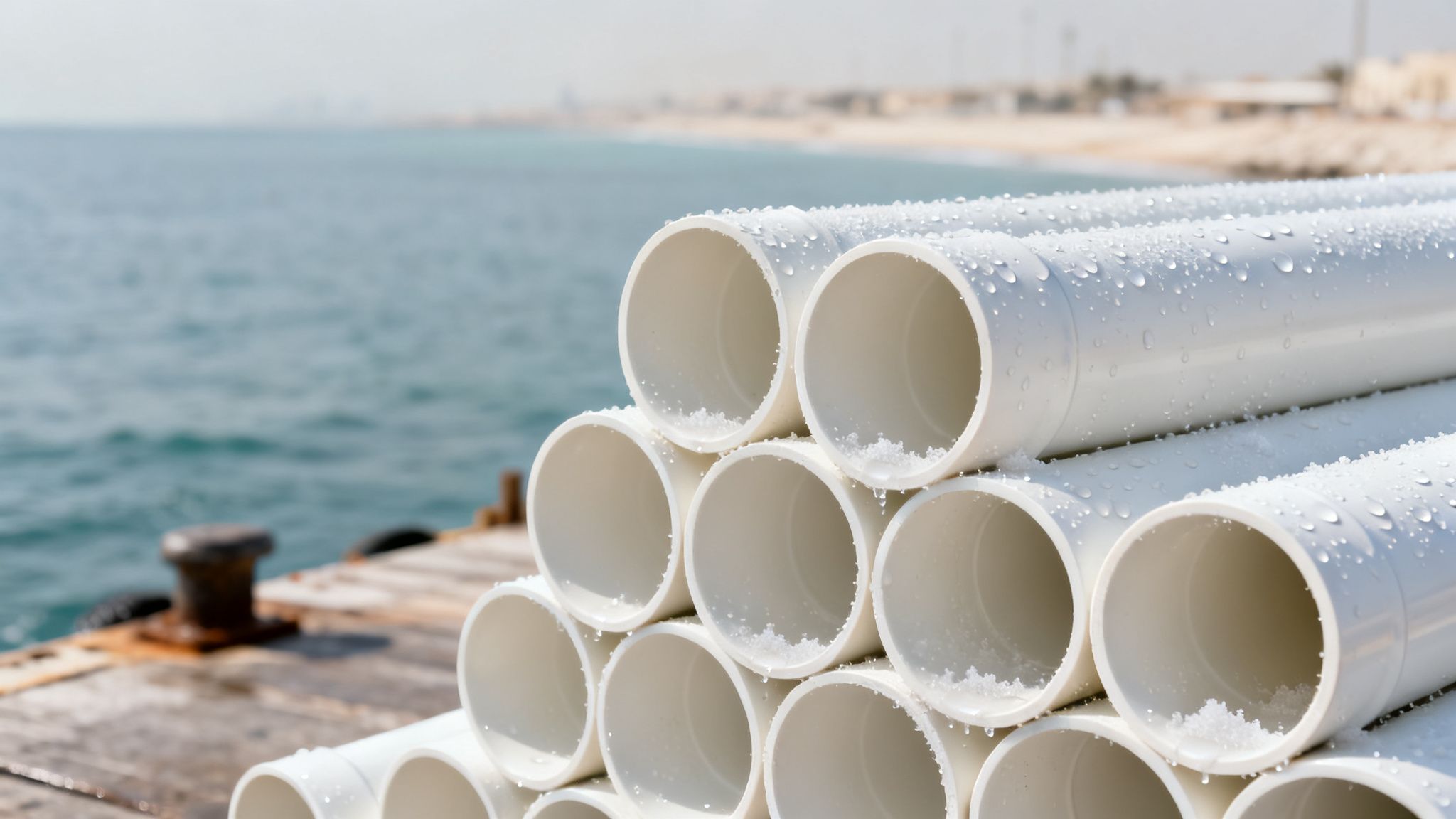
Look around at any major construction site in the UAE, and you'll find UPVC pipes. They are the unseen workhorses, the silent arteries that keep water flowing and waste moving. Their presence in everything from glittering residential towers to sprawling industrial zones isn't just a trend; it's a smart engineering choice.
So, why has UPVC become the go-to material for contractors and engineers across the region? It boils down to a powerful mix of resilience, cost-effectiveness, and sheer versatility that perfectly tackles the unique challenges of building in the UAE.
Why is UPVC suitable for the UAE climate?
The UAE environment is tough on building materials, and UPVC is uniquely suited to withstand it. In coastal hubs like Dubai and Sharjah, the combination of intense heat and high salinity in the air and soil is a recipe for corrosion. Metal pipes just can't keep up; they rust, weaken, and eventually fail, leading to leaks and expensive, disruptive repairs.
This is where UPVC (Unplasticised Polyvinyl Chloride) truly shines. It’s a material that is naturally immune to rust, corrosion, and chemical attack. It simply doesn't break down, ensuring a reliable, maintenance-free service life that lasts for decades. For any reputable supplier in Dubai, providing materials that can handle this environment is non-negotiable.
Beyond just saltwater, UPVC’s chemical resistance makes it a fantastic all-rounder. It can safely carry everything from clean drinking water to harsh industrial chemicals without any risk of degradation. This makes it a foundational product for any serious building materials distributor tackling sewerage, drainage, and industrial projects.
In the world of UAE engineering, you can't afford to take chances with materials. UPVC's proven resistance to corrosion and chemicals isn't just a 'nice-to-have' feature—it's an absolute must for creating infrastructure that's built to last.
What are the main benefits of using UPVC pipes?
The core benefits are simple but significant: exceptional durability, complete corrosion resistance, and a lightweight design that makes life easier on site. The inside of a UPVC pipe is also incredibly smooth, which means less friction, better flow, and a much lower chance of blockages over the years.
What really sets them apart, though, is their incredible strength-to-weight ratio. These pipes are tough and durable, yet they're a fraction of the weight of old-school materials like ductile iron or galvanised steel. This single characteristic creates a ripple effect of benefits across the entire project.
How do UPVC pipes save money and time?
Choosing UPVC is a smart move for the project budget, as its lightweight nature reduces both logistical and labour costs. While the pipes themselves are often more affordable upfront, the real cost savings come from logistics and labour. Lighter pipes mean you can ship more for less and move them around the site with ease.
This is where you see the biggest impact on the ground:
- Lower Labour Costs: You don't need a huge crew or heavy cranes to lift and position UPVC pipes. This speeds everything up.
- Faster Installation: Joining UPVC is straightforward. A simple solvent cement creates a permanent, leak-proof bond in minutes, without any welding or specialised equipment.
- Safer Work Sites: Less heavy lifting means a lower risk of injuries, which is a major win for site safety.
In the fast-paced world of UAE construction, meeting tight deadlines is everything. The efficiency of UPVC helps projects stay on schedule and on budget while upholding strict UAE construction standards.
What is the best pipe for hot water?
The best pipe for hot water is CPVC (Chlorinated Polyvinyl Chloride), as standard UPVC is not suitable for high temperatures. High temperatures can cause UPVC to soften and fail. CPVC is specifically engineered to handle the heat without losing its structural integrity.
When you add it all up, it’s easy to see why upvc pipes manufacturers in uae are so essential to the nation's growth. They provide a product that is perfectly tuned to the economic and environmental demands of the region, delivering durability and efficiency that will keep it the top choice for years to come.
Who Are the Leading UPVC Pipe Manufacturers in the UAE?
When you’re running a major construction project in the UAE, the name stamped on your UPVC pipes really matters. It’s more than just a brand; it’s a guarantee of quality, reliability, and—most importantly—compliance with strict local standards.
The market here is crowded, but a few key upvc pipes manufacturers in uae consistently stand out from the pack. These are the names contractors trust and specify time and time again. Understanding who they are and what makes them different is your first step to making a smart buying decision. It’s not about flashy marketing, but about their proven track record on massive UAE projects, their investment in quality control, and their ability to engineer products that can handle the region's demanding climate.
Who are the key players in the UAE market?
The key players in the UAE's UPVC pipe market are a core group of about 20-25 manufacturers, with industry giants like Cosmoplast, Hepworth, and National Plastics holding a dominant market share. This isn't surprising, given the nation's non-stop real estate and infrastructure boom, where construction is a major engine of the national GDP.
So, what makes these companies the go-to suppliers?
- Cosmoplast: A household name across the region, Cosmoplast offers an enormous range of products covering everything from simple drainage to high-pressure water supply systems. Their sheer scale allows them to service some of the biggest and most ambitious projects in Dubai and Abu Dhabi.
- Hepworth: With a rock-solid reputation built over decades, the Hepworth name is practically synonymous with quality, especially for soil, waste, and drainage systems. They are frequently specified in high-profile residential towers and municipal infrastructure projects.
- National Plastic: As a key player with a sharp focus on pressure pipes, National Plastic is a critical supplier for the country's agricultural irrigation and potable water networks. They’re a cornerstone of the UAE's essential infrastructure.
These manufacturers didn't get to the top by accident. They’ve earned their status by consistently delivering products that meet demanding UAE construction standards, making them a safe bet for any serious project.
What is the difference between PVC and uPVC pipes?
The big difference comes down to one thing: plasticisers. Standard PVC (Polyvinyl Chloride) has plasticisers added to make it softer and more flexible. On the other hand, uPVC (Unplasticised Polyvinyl Chloride) contains no plasticisers at all, which results in a much more rigid and durable pipe.
This rigidity is exactly why uPVC is the champion for pressure applications like water mains and drainage systems, where structural integrity is non-negotiable. It’s a crucial distinction when sourcing materials. For a closer look at the different types of PVC and where they’re used, check out our guide on PVC pipe suppliers in Dubai.
When you're sizing up manufacturers, don't just look at their product catalogue. Dig deeper. Look at their history in the region, their portfolio of completed projects, and their certifications. A manufacturer's long-term presence is often the best sign of their commitment to quality and customer support.
What is the role of a strategic building materials distributor?
A strategic building materials distributor acts as a central procurement hub, simplifying the sourcing process for contractors. While you could go directly to manufacturers, a specialised building materials distributor gives you a serious strategic advantage. A top-tier distributor isn't just a reseller; they are curators, stocking a vetted inventory from multiple leading brands.
Think about it. You might need pressure pipes from National Plastic, drainage fittings from Hepworth, and a dozen other plumbing supplies for the same project. Instead of juggling multiple orders, invoices, and delivery schedules, a distributor consolidates everything into one streamlined process. A great supplier in Dubai becomes your single point of contact, ensuring every last component is quality-assured and fully compliant.
Ultimately, this partnership is all about efficiency. The distributor handles the logistical headaches, manages inventory, and organises timely, site-direct deliveries, freeing you up to focus on the build itself. They also bring technical expertise to the table, helping you select the right product for the right application and ensuring you get the best of what the leading upvc pipes manufacturers in uae have to offer—all in one place.
How Do You Navigate UAE Construction Standards for Pipes?
Let’s be honest: dealing with UAE construction standards can feel like navigating a maze. But this isn’t just about ticking boxes for bureaucracy. For any contractor worth their salt, getting compliance right is the bedrock of a safe, legal, and ultimately profitable project.
When you’re talking about bodies like Dubai Municipality or the Abu Dhabi Quality and Conformity Council (QCC), their regulations are there for a reason. Cut corners with non-compliant pipes, and you're not just risking a slap on the wrist. You’re looking at catastrophic project delays, eye-watering fines, and a hit to your reputation that’s hard to come back from.
This is where a savvy supplier in Dubai becomes more than just a vendor; they become a critical partner. The good ones have already done the legwork, ensuring their entire inventory is pre-vetted against the UAE's tough requirements. That simple choice shields you from a world of risk before a single pipe even lands on your site.
Why do local standards matter so much?
Local standards matter because they guarantee that products are tested and proven to withstand the UAE's unique environmental conditions, ensuring project safety and longevity. Think of it this way: compliance is the common language everyone on a project—from the lead engineer to the crew on the ground—needs to speak fluently. When a UPVC pipe meets local standards, it’s not just a sticker. It’s a guarantee that the product has been rigorously tested to withstand the UAE's unique and demanding conditions, like our scorching temperatures and high soil salinity.
Using uncertified materials is like laying the foundations of a villa on sand. The immediate headache is a failed inspection, which brings your entire site to a grinding halt. But the long-term fallout is far worse. We're talking about potential system failures, leaks, and structural damage years down the line—all because the right materials weren't chosen from day one.
What are the key certifications to look for?
The key certifications to look for in the UAE are BS (British Standards), EN (European Norms), and ISO (International Organisation for Standardisation). These aren’t just random acronyms; they are internationally recognised benchmarks that local authorities use to guarantee quality and safety. Any reputable building materials distributor won’t just claim compliance—they’ll have the paperwork to prove it.
The stakes are high, especially in the sewerage and drainage sector, which accounts for over 40% of the UAE PVC pipes market in 2024. As urban hubs like Dubai expand, generating 1.2 million cubic meters of sewage daily, the demand for robust UPVC pipes is surging. This is driving innovation from top-tier firms like National Plastics and Shamo Plast, who are engineering products specifically to resist corrosion from harsh chemicals and desert conditions. You can dig deeper into the growth drivers in the UAE's plastic pipes market to understand the scale of this demand.
A crucial piece of advice: Verifying compliance is a non-negotiable step in your procurement process. Always, always demand the Certificate of Conformity or recent test reports before you sign off on a delivery. A supplier who is serious about quality will have these documents ready without you even having to ask.
Your Practical Compliance Checklist
To safeguard your project, you need a simple, repeatable process for checking every batch of UPVC pipes that arrives on-site. It's about more than just trusting your supplier; it's about verifying. A quality supplier in Dubai will not only expect this level of scrutiny but will also have their own internal quality checks in place.
Here’s a practical checklist to run through for every delivery. It’s a simple way to ensure nothing critical slips through the cracks.
UAE Pipe Standards Compliance Checklist for Contractors
This table is your on-the-ground guide for making sure the UPVC pipes you're about to install are fully compliant with the standards that matter here in the UAE.
| Verification Point | What to Look For | Why It Matters for Your Project |
|---|---|---|
| Pipe Markings | Look for permanent, clear markings printed directly on the pipe. This must include the manufacturer's name, pipe size, material (UPVC), pressure rating, and the specific standard it meets (e.g., BS EN 1401). | This is your first line of defence against incorrect or counterfeit products. If the markings are missing, smudged, or don't match your purchase order, it's a huge red flag. |
| Request Documentation | Ask your supplier for a Certificate of Conformity and third-party test reports for the specific batch you're receiving. Don't accept generic, outdated paperwork. | This is your official proof for municipal inspectors. It shows you’ve done your due diligence and protects you from liability if an issue arises down the line. |
| Physical Inspection | Do a walk-around and visually inspect the pipes. Look for any cracks, deep gouges, or strange deformities. The colour should be consistent, and the ends should be cleanly cut. | Pipes can get damaged in transit. A quick physical check ensures the pipe's structural integrity is intact, preventing costly leaks and system failures after installation. |
| Supplier Vetting | Work with a building materials distributor who has a proven track record supplying compliant materials to major projects across the UAE. Ask for references. | An established supplier’s reputation is on the line. They have robust quality control systems and strong ties with leading upvc pipes manufacturers in uae, ensuring you get reliable, certified products every time. |
Making these checks a standard part of your receiving process isn’t just good practice—it's essential for protecting your project's budget, timeline, and reputation in the UAE's competitive construction market.
How Can You Streamline UPVC Pipe Procurement and Logistics?
Even the best pipes from top-tier UPVC pipe manufacturers in UAE are worthless if they're not on-site when you need them. In the breakneck pace of UAE construction, logistics aren't an afterthought; they're the critical link that keeps your project on schedule and on budget. Getting your procurement right is a genuine strategic advantage, and it means looking well beyond the per-unit cost of a pipe.
The real win is in optimising your total project value. This is all about cutting down delays, minimising the need for on-site storage, and making sure your crew has the right materials exactly when they need them. Your choice of supply partner is central to this, and it usually boils down to two options: buying directly from a manufacturer or partnering with a specialist building materials distributor.
Is it better to buy direct or use a distributor?
Partnering with a distributor is often better as it streamlines the procurement of all required components, not just pipes, from a single point of contact. Going straight to the source might seem like the most direct route. You could land a great price on a bulk order of UPVC pipes, but what about all the other bits and pieces? The fittings, the valves, the adhesives, and other plumbing essentials? This approach often leaves you juggling multiple suppliers, a stack of different invoices, and several delivery schedules.
This is where a good distributor completely changes the game. A top-tier distributor becomes your central procurement hub. They bring all your needs under one roof, letting you source everything from pipes and fittings to tools and safety gear from a single, reliable point of contact. This isn't just about convenience; it's about pure operational efficiency.
The true value of a distributor lies in their ability to manage complexity on your behalf. They transform a chaotic procurement process into a predictable, reliable supply chain, directly contributing to your project's bottom line.
How does a distributor add value on the ground?
A distributor adds value by consolidating orders, managing inventory, and coordinating timely, phased deliveries to the construction site. Picture this: your plumbing team is geared up to start work on the fifth floor of a new high-rise in Dubai. They need a specific mix of Schedule 40 drainage pipes, some heavier Schedule 80 pressure fittings, and a particular type of solvent cement. If you sourced these from three different suppliers, a single delivery delay could bring the entire crew to a grinding halt, costing you thousands in wasted labour.
A skilled supplier in Dubai prevents this exact scenario. They maintain a deep inventory, ensuring they have the stock on hand across multiple product lines. More importantly, their logistics teams are pros at coordinating phased, on-time site deliveries that are tailored to your project’s unique timeline. This means you get what you need, when you need it, cutting out costly downtime and the headache of managing a massive on-site stockpile.
This decision tree clearly shows that the path to a successful project starts with ensuring your materials meet all the necessary compliance standards from day one.
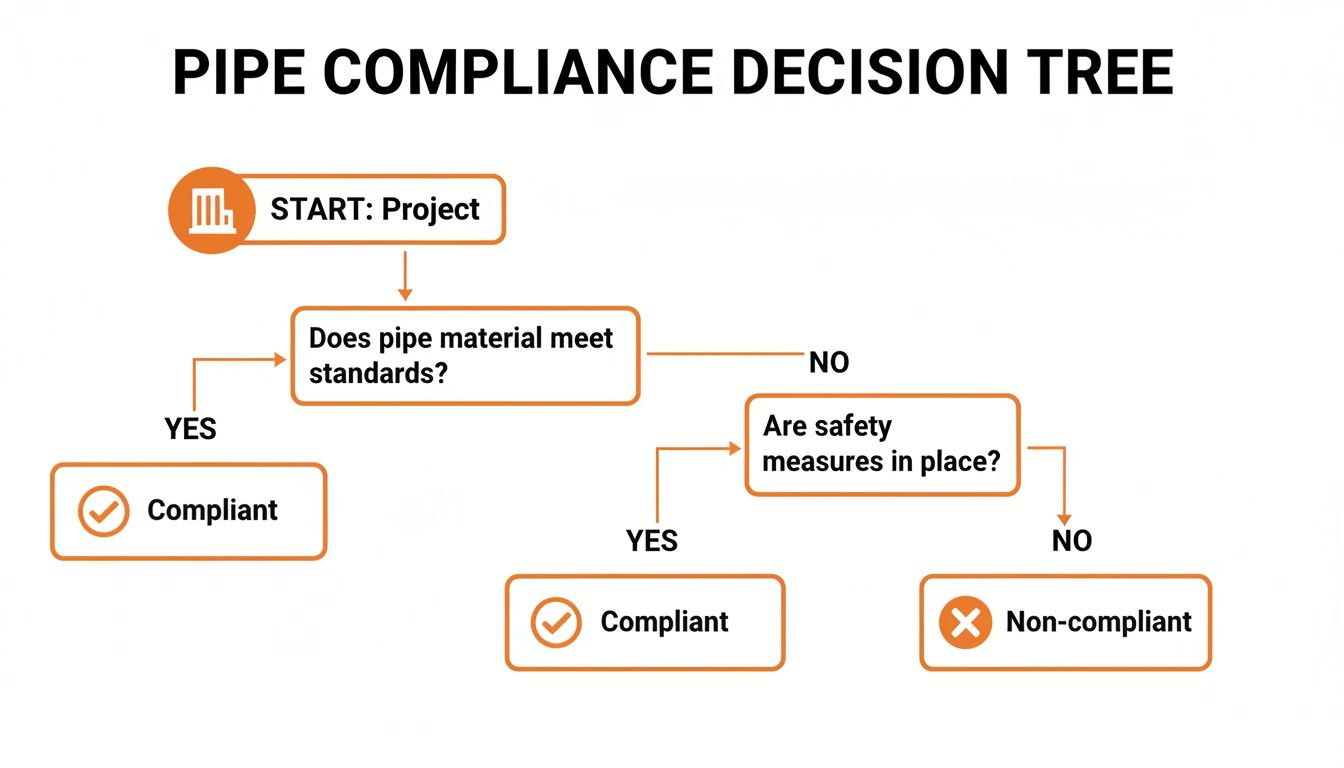
As you can see, starting a project with non-compliant materials is a recipe for delays, fines, and rework. It really highlights just how crucial a compliant and reliable supply chain is.
What makes a good logistics partner?
A good logistics partner offers deep inventory, flexible and reliable delivery, strong technical support, and consolidated sourcing options. When you're evaluating a supplier, try to shift your focus. Don't just ask for a price list; dig into their logistical capabilities. A great partner provides more than materials—they offer a service that simplifies your life. To further improve material management and shipping costs, it's also worth getting comfortable with mastering pipe volume calculation for various construction scenarios.
Here are a few key things to look for:
- Inventory Depth and Breadth: Can they supply all your plumbing needs, not just the big-ticket items? Do they carry enough stock of different sizes and schedules to avoid backorders?
- Delivery Flexibility and Reliability: Do they offer same-day or next-day delivery direct to your site? Can they handle phased drop-offs that match your construction schedule?
- Technical Support: Does their team actually know their stuff? Can they help you verify specs and make sure you're ordering the right product that meets UAE construction standards?
- Consolidated Sourcing: Can they help you track down those hard-to-find items, saving your procurement team from spending hours on the phone?
Choosing a partner who nails these points moves you from a simple buyer-seller transaction to a genuine strategic relationship. It ensures a seamless flow of materials to your site, turning logistics from a potential bottleneck into a powerful asset. For a deeper dive into streamlining your site operations, check out our post on improving construction logistics.
What Are the Best Practices for UPVC Pipe Installation and Maintenance?
Getting high-quality pipes from trusted UPVC pipes manufacturers in UAE is a fantastic start, but it's only half the battle. A project's real success—the kind that lasts for decades—is decided on-site, during installation. Get this part right, and you're building a system that will perform reliably, saving everyone from the headache of costly leaks and future repairs.
The advice here is specifically for the UAE's unique and demanding environment. Our intense heat and tough site conditions mean you can't just follow any old installation guide; you need techniques that are proven to work here.
Once the system is in, a smart maintenance plan is what keeps it running smoothly for the long haul. By mastering both the installation and the upkeep, you're not just protecting the plumbing; you're protecting the integrity of the entire building.
How should you handle and store UPVC pipes on-site?
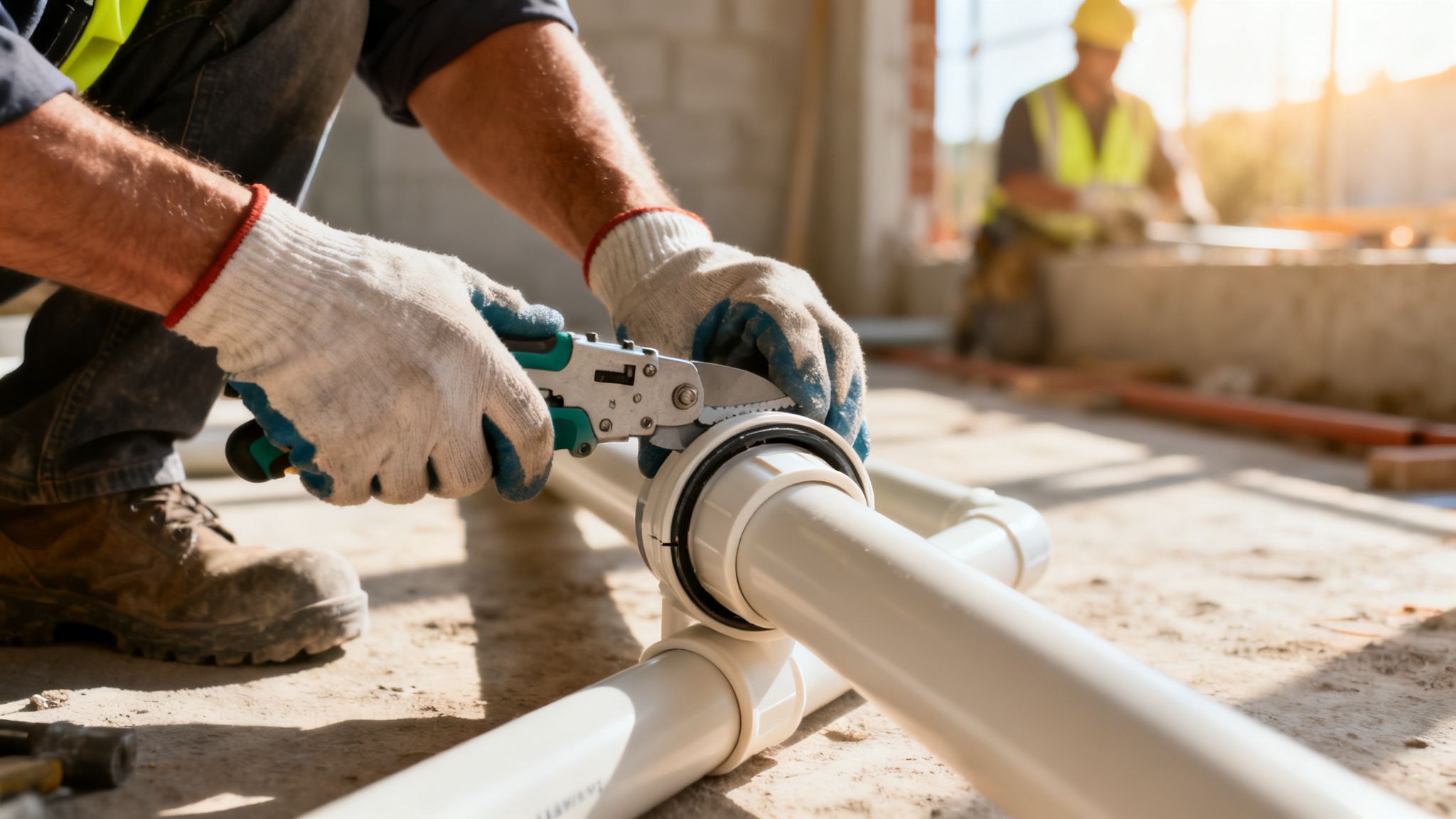
Proper handling involves storing pipes on flat, level ground to prevent warping, avoiding excessively high stacks, and protecting them from direct sunlight. Look, UPVC pipes are tough, but they aren't invincible. How you handle them from the moment they land on your site can make or break the final system. It's all about avoiding that unseen damage that causes problems down the line.
Most importantly, keep them covered and out of direct sunlight, especially during the peak summer months. That relentless UV exposure can weaken the material over time. Any decent supplier in Dubai will deliver them with these precautions already in mind.
What are the key steps for a flawless installation?
A bulletproof installation all comes down to being precise and sticking to the process. Cutting corners, especially with cutting or jointing, is the number one cause of future leaks—the kind that are a nightmare to fix once they're buried in a wall or under a slab. Following UAE construction standards isn't just about ticking a box for the inspector; it's about delivering quality work.
Stick to these critical steps for a secure, long-lasting installation:
- Clean, Square Cuts: This is non-negotiable. Use a proper pipe cutter or a fine-toothed saw to get a perfectly square cut. Anything less gives you a weak joint just waiting to fail under pressure.
- Deburring and Chamfering: Once cut, grab a deburring tool or a file to smooth the inside and outside edges. You'll want to create a slight bevel (a chamfer) on the outer edge. This helps the pipe slide into the fitting without shoving all the solvent cement out of the way.
- Solvent Cement Application: Use the correct solvent cement for your pipe's schedule and size. Apply a thin, even coat to the outside of the pipe end and a slightly heavier one to the inside of the fitting.
- Joining and Curing: Don't hesitate. Immediately push the pipe into the fitting with a small twisting motion until it's all the way in. You need to hold it firmly in place for at least 30 seconds to let that chemical weld start to set. Always check the manufacturer’s guidelines for the full curing time before you even think about pressure testing the system.
Remember, solvent cement isn't glue. It's a chemical process that actually fuses the pipe and fitting into one solid piece of plastic. A proper joint is as strong as the pipe itself, giving you a leak-proof connection for life.
What long-term maintenance is required for UPVC systems?
One of the best things about UPVC piping is how little maintenance it needs once installed. But for facility managers, a few simple, proactive checks can stretch the system's life out for decades.
Every so often, take a walk and inspect any visible pipe runs. You're looking for any signs of physical damage or stress, especially around the joints. For drainage systems, a regular flush-out can prevent annoying sediment build-up.
When you work with a building materials distributor that offers technical support, they can help you create a maintenance schedule tailored to your building, whether it's a residential tower or an industrial plant. This simple, proactive approach keeps the system performing exactly as it should, safeguarding your entire building's infrastructure.
Frequently Asked Questions About UPVC Pipes in the UAE
Got questions? You're not alone. Here are some of the most common queries we hear from contractors and engineers on the ground, with straight-to-the-point answers to help you on your next project.
What Is the Best Pipe for Hot Water Supply in the UAE?
That's a common point of confusion. Standard UPVC pipes are not built for hot water – they can soften and fail. For any hot water system, you need to switch to Chlorinated Polyvinyl Chloride (CPVC) pipes. CPVC is specifically engineered to handle the higher temperatures common in the UAE without breaking a sweat.
Any good supplier in Dubai worth their salt will carry a full range of both UPVC for cold water and CPVC for hot, so you can get everything you need from one place.
Can UPVC Pipes Be Used for Underground Drainage in Dubai?
Absolutely. In fact, heavy-duty UPVC is the go-to material for underground drainage and sewerage systems right across Dubai. The key is to make sure you’re using pipes that meet Dubai Municipality standards for crush resistance. They need to be tough enough to handle the immense pressure from the soil above and last for decades without issues.
Quick tip: For critical infrastructure like underground drainage, never take a supplier's word for it. Always ask for the product's compliance certificate. This small step saves you from massive headaches and ensures you’re aligned with mandatory UAE construction standards.
How Do I Choose the Right UPVC Pipe Thickness?
The thickness you need—often called the 'schedule'—comes down to one thing: water pressure. It’s a simple rule of thumb. High-pressure lines, like the main water supply, need a thicker wall (think Schedule 80). For low-pressure jobs like drainage, a thinner wall (like Schedule 40) will do the job just fine.
When in doubt, always fall back on your project’s engineering plans. Or better yet, have a quick chat with a technical expert at your building materials distributor; they can point you in the right direction.
Which Manufacturers Are Approved by Dubai Municipality?
You’ll see a few big names pop up again and again—Cosmoplast, Hepworth, and National Plastics are some of the leading upvc pipes manufacturers in uae known for consistently meeting or beating Dubai Municipality standards.
But remember, approval can be product-specific. It’s on you to double-check that the particular pipe you’re buying has the right certification. Your supplier must provide all the necessary paperwork. A little due diligence here makes the inspection process a whole lot smoother.
When you need a complete inventory of municipality-approved UPVC and CPVC pipes from the UAE's most trusted manufacturers, Yasu Trading Co. LLC has you covered. We offer the technical support and reliable site-direct delivery you need to keep your project moving forward.
See our full range of building materials at https://yasutrading.com.