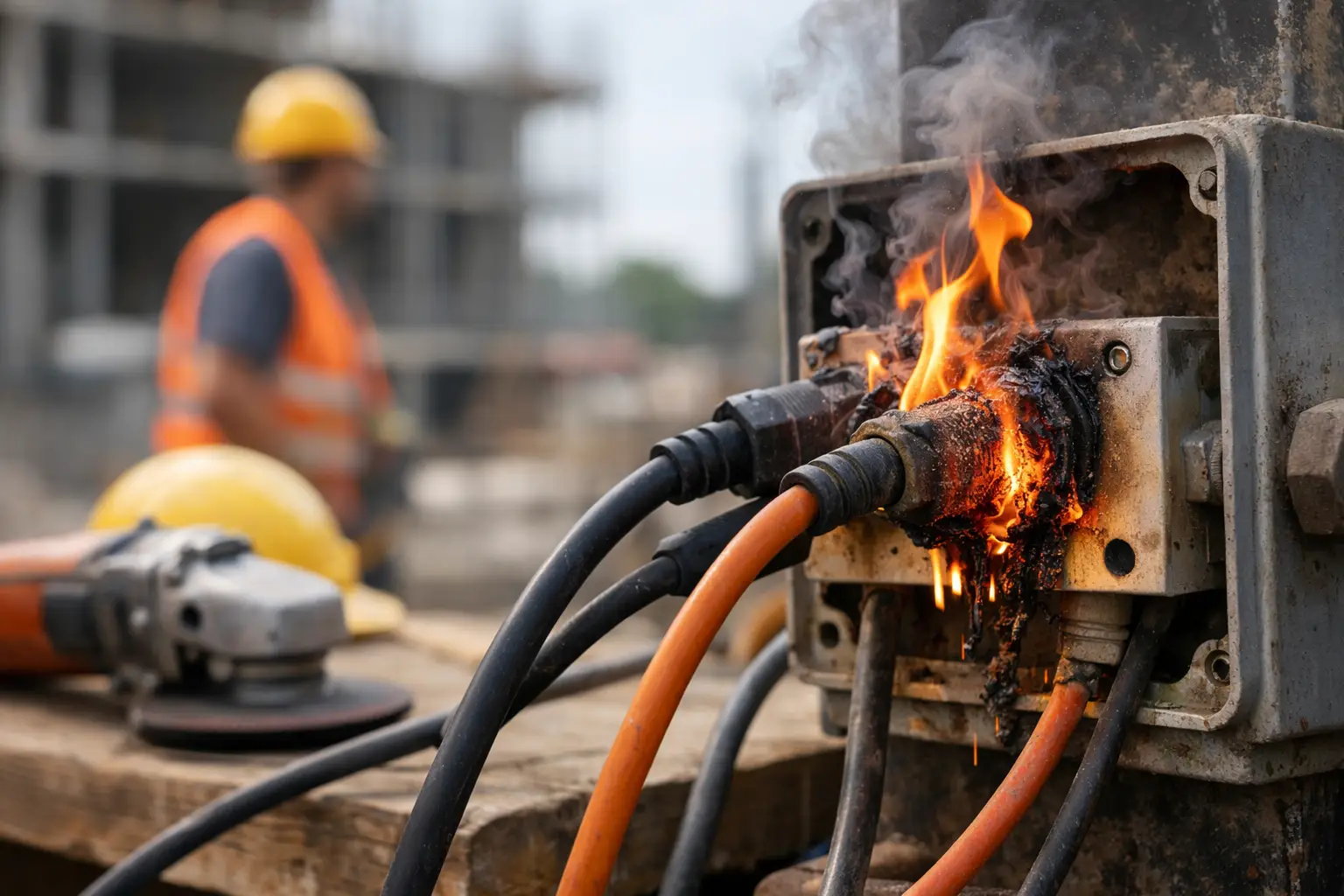
What Causes Electrical Overheating on Jobsites?
A distribution board that feels hot, a burnt odor near a panel, or cable insulation that has started to discolor is not a minor maintenance issue. What causes electrical overheating is usually a combination of excess current, resistance at a connection, unsuitable equipment, or installation conditions that prevent heat from escaping. On an active construction site, those conditions can turn into equipment damage, failed inspections, fire risk, and avoidable schedule pressure.
For contractors and MEP teams, the response must be practical: isolate the affected circuit where safe to do so, have a qualified electrician investigate, and replace components with products that match the approved load, environment, and project specification. Treating heat as a warning signal rather than an inconvenience protects people and keeps handover work moving.
What Causes Electrical Overheating on a Jobsite?
Electrical systems naturally generate some heat when they carry current. The problem begins when heat production exceeds what the conductor, connection, protective device, enclosure, or surrounding air can safely handle. As temperature rises, insulation degrades, terminals lose their grip, and resistance can increase further. This creates a cycle in which a small defect becomes a serious failure.
The source is not always visible. A cable may appear intact while a loose lug inside a panel is heating under load. A breaker may not trip if the issue is a high-resistance connection rather than a clear overcurrent condition. That is why thermal inspections, correct testing, and documented maintenance matter on temporary and permanent installations alike.
Overloaded Circuits and Continuous Loads
Overloading is one of the most common causes. It happens when a circuit supplies more current than its cable, breaker, terminals, or connected equipment is designed to carry. On jobsites, this often follows an apparently simple decision: adding another welder, pump, portable AC unit, tower light, or power tool to an already busy temporary distribution board.
Continuous loads deserve special attention because the circuit remains hot for extended periods. Even when the breaker has not tripped, repeated operation near the system's practical limit accelerates insulation aging and weakens connections. Load calculations should account for actual operating demand, diversity where justified by the design, motor starting current, and planned future use. Guesswork at the temporary-power stage often becomes an urgent rectification item later.
Loose, Corroded, or Poorly Terminated Connections
A loose connection creates resistance. Resistance creates localized heat. This is why terminals, lugs, busbars, switches, sockets, and breaker connections can overheat even when the cable itself is correctly sized.
Poor workmanship is one cause, but jobsite conditions also play a role. Vibration from equipment, repeated panel access, copper conductor creep, moisture, dust, and incompatible connectors can compromise a connection over time. Conductors must be stripped to the correct length, fully seated, and tightened to the manufacturer's torque requirement using appropriate tools. Re-torquing without a defined procedure can be just as problematic as leaving a connection loose.
For critical distribution boards and high-load equipment, a thermal scan under normal operating load can identify developing hot spots before there is visible damage. The findings should lead to corrective work by competent electrical personnel, not merely a tighter inspection interval.
Undersized, Damaged, or Incorrectly Installed Cables
Cable selection is about more than conductor cross-section. The cable must be suitable for the expected current, installation method, grouping, ambient temperature, voltage drop requirements, and fault conditions. A cable that is adequate in free air may overheat when bundled tightly with other loaded cables, enclosed in trunking, routed through insulation, or installed in a hot plant area.
Physical damage introduces another risk. Crushed cables, cuts in insulation, poor bends, unsupported runs, and exposed temporary leads may cause localized heating or short circuits. Extension leads are particularly vulnerable when they are coiled while carrying heavy loads. The coil retains heat, reducing the lead's ability to dissipate it.
Use approved electrical components, cable accessories, conduit, trunking, glands, and terminations that are compatible with the installation. Substituting a lower-rated accessory to solve an urgent availability issue can create a far more expensive delay when testing or inspection identifies the defect.
Equipment That Does Not Match the Load or Environment
A circuit may be correctly installed yet still overheat because the connected equipment is unsuitable. Motors can draw excessive current when bearings fail, ventilation is blocked, voltage is unstable, or mechanical loads increase. A power tool operating with a damaged lead, worn brushes, or blocked cooling vents can also run hot and place additional demand on the supply.
Enclosures matter as well. A panel installed in direct sun, near process heat, or in a poorly ventilated room may operate above its intended ambient temperature. Dust and construction debris reduce cooling around fans and heat sinks. In wet, corrosive, or dusty areas, the enclosure rating and cable entry method must match the site environment while still allowing equipment to manage heat as designed.
Faulty Protective Devices and Poor Coordination
Breakers, fuses, residual current devices, contactors, and isolators are safety-critical components, not generic commodities. A protective device that is incorrectly rated, damaged, counterfeit, poorly maintained, or incompatible with the installation may fail to provide the intended protection.
Protection also needs coordination. If a downstream fault is not cleared quickly by the correct device, upstream equipment and cables may be exposed to excessive thermal stress. Design approval, test records, fault-level assessments, and manufacturer data all affect whether the installation will perform safely under abnormal conditions. This is particularly relevant in multi-board commercial installations where modifications are made as fit-out work progresses.
Harmonics, Unbalanced Loads, and Neutral Overheating
Modern projects use LED drivers, variable-speed drives, IT equipment, UPS systems, chargers, and other electronic loads. These can introduce harmonics that increase heating in conductors and transformers. On three-phase systems, uneven single-phase loading can also produce excessive neutral current.
This issue cannot be diagnosed by visual inspection alone. A qualified team may need to measure current on phases and neutral, review load profiles, and verify the design assumptions. The remedy depends on the system: balancing circuits may help in one installation, while filtering, revised conductor sizing, or equipment changes may be required in another.
Site Controls That Prevent Overheating
Electrical overheating is best managed before energization and controlled throughout construction. The following actions are practical on projects with temporary power, phased fit-outs, and permanent MEP installations:
- Confirm circuit loading against approved drawings and actual connected equipment before adding high-demand tools or plant.
- Use correctly rated cables, breakers, sockets, glands, distribution boards, and accessories from authorized manufacturers.
- Inspect temporary leads, plugs, panel terminations, and cable routes routinely, especially after relocation, weather exposure, or heavy site activity.
- Keep distribution boards closed, clean, ventilated, and protected from water, dust, impact, and unauthorized alterations.
- Record testing, torque checks, thermal findings, and corrective actions so that recurring issues are not missed during handover.
- Remove damaged electrical components from service rather than relying on tape repairs, temporary bypasses, or unapproved substitutions.
The trade-off is straightforward. Better-rated materials and planned inspections require budget and coordination upfront, but they cost far less than damaged switchgear, emergency shutdowns, rework, or a delayed authority inspection.
Procurement Checks Before Materials Reach the Site
Procurement teams can prevent many overheating risks by checking specification alignment before issuing a purchase order. Confirm the manufacturer, voltage rating, current rating, breaking capacity where applicable, enclosure protection, conductor material, temperature rating, and required approvals. For cables and accessories, verify the installation method and whether derating factors have already been considered by the electrical designer.
Material traceability is equally valuable. Branded, municipality-compliant products supported by manufacturer documentation reduce uncertainty during inspection and warranty discussions. When a project needs electrical components, power tools, cable management accessories, or fire and safety equipment quickly, consolidated sourcing should not mean compromised technical selection. It should mean the right product reaches the right workfront without creating a specification gap.
Yasu Trading Co. LLC supports contractors with jobsite-ready electrical and construction materials, helping procurement teams align urgent requirements with approved project specifications and delivery schedules.
When Heat Requires Immediate Escalation
A hot electrical smell, smoke, sparking, melted insulation, repeated breaker trips, buzzing from a panel, or a visibly discolored terminal requires immediate attention. Do not continue operating the equipment to finish a shift or meet a short-term target. Isolate the supply if it can be done safely, keep unauthorized personnel away, and involve a qualified electrician and site safety team.
After the immediate fault is addressed, investigate the cause rather than replacing only the damaged part. A burnt lug may point to poor torque, but it may also reveal sustained overload, incorrect conductor sizing, failed equipment, or unsuitable installation conditions. The repair is complete only when the underlying condition has been verified and corrected.
Electrical heat is often the first visible sign that capacity, workmanship, or material selection has fallen out of line with site reality. Address it early, specify carefully, and keep the installation ready for safe operation long after the construction crew leaves.