What Is MEP in Construction a Guide for UAE Projects
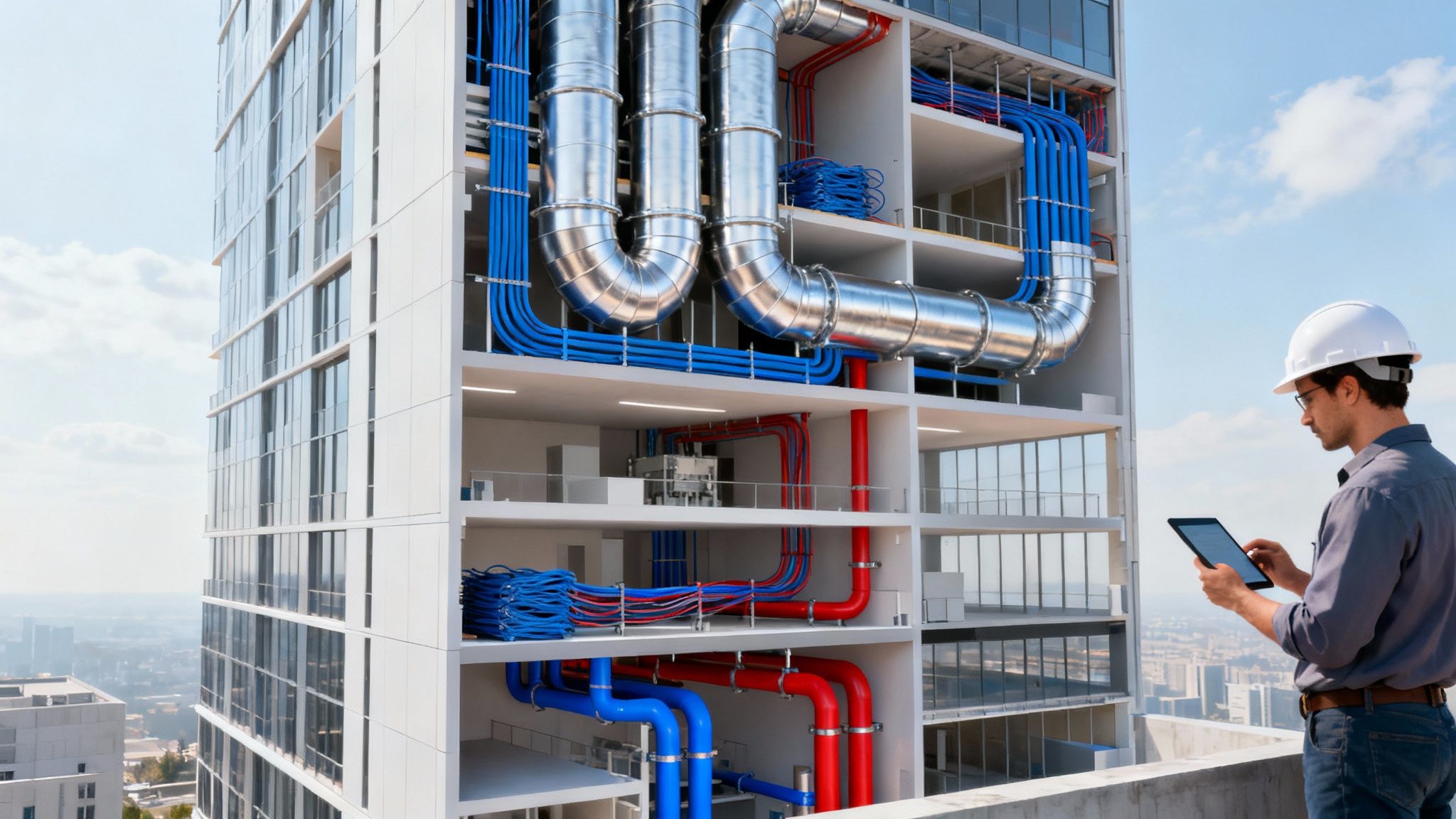
MEP stands for Mechanical, Electrical, and Plumbing – the three critical systems that make a building more than just a concrete and steel shell. They're the hidden networks that bring a structure to life, making it comfortable, safe, and functional for everyone inside. This is especially true in the demanding construction landscape of the UAE.
What Are the Lifeblood Of Modern Buildings?
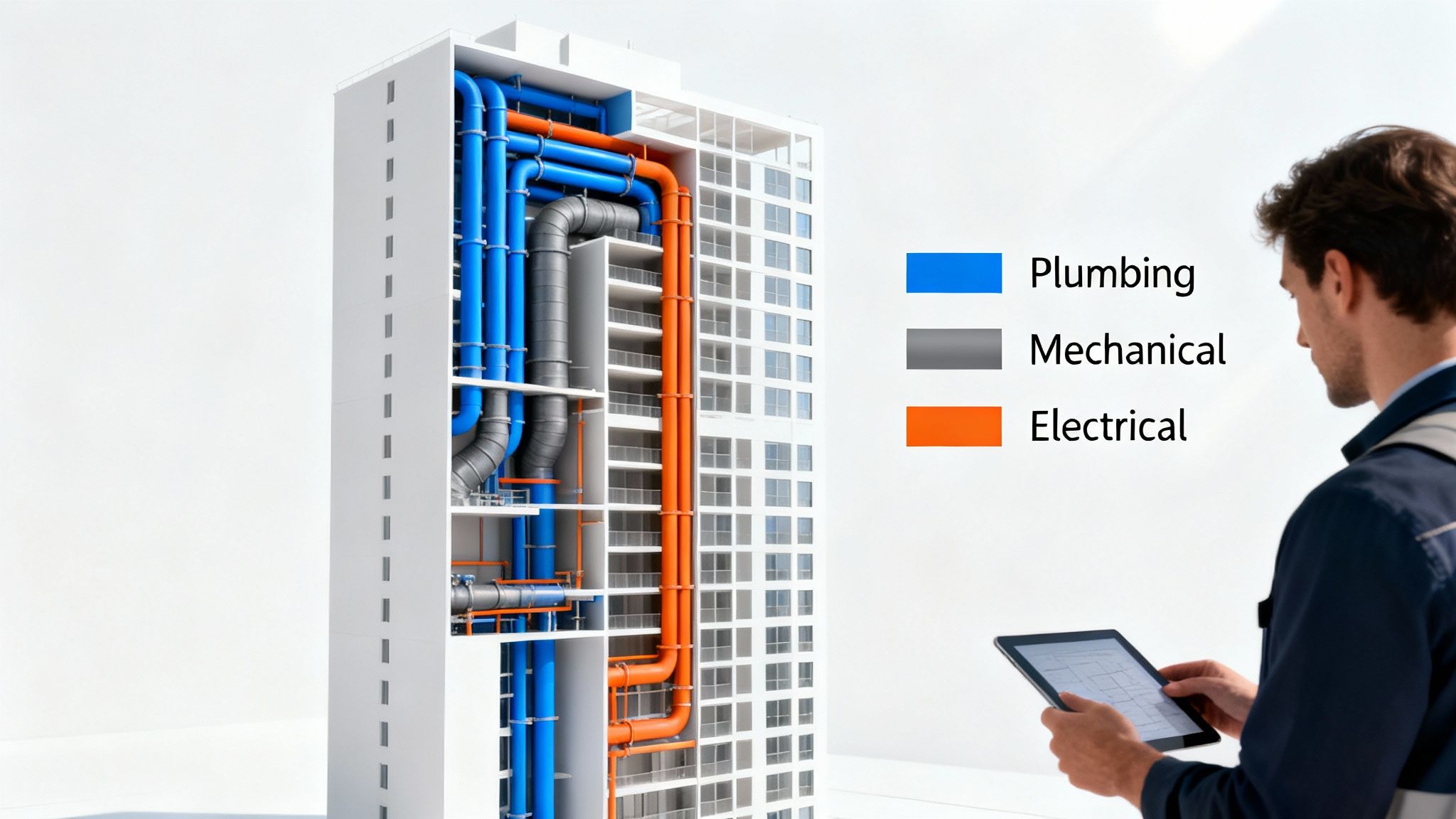
The MEP systems are the vital organs of a building—the circulatory, nervous, and respiratory systems working tirelessly behind the scenes. If the structure is the skeleton, these systems are what make it a living, breathing entity.
Tucked away inside walls, above ceilings, and below floors, these intricate networks are completely essential. The air conditioning that makes life comfortable in the Dubai heat, the power socket that charges your phone, the tap you turn on for water—none of it would work without well-designed MEP systems.
To really get to grips with what MEP entails, let's break down each discipline and what it covers.
The Three Pillars Of MEP At A Glance
| Discipline | Primary Function | Common Components & Materials |
|---|---|---|
| Mechanical (M) | Manages air quality, temperature, and ventilation to create a comfortable and healthy indoor environment. | HVAC units, chillers, ducts, fans, thermostats, insulation, fire dampers. |
| Electrical (E) | Distributes power safely throughout the building for lighting, equipment, and essential low-voltage systems. | Switchgears, transformers, cabling, conduits, light fixtures, outlets, fire alarms. |
| Plumbing (P) | Controls the flow of water and gas, ensuring a clean supply and safe removal of waste. | Pipes (copper, PVC, PEX), pumps, water heaters, sanitary fixtures, drainage systems. |
Each of these fields is a specialisation in its own right, but their magic truly happens when they work together seamlessly.
The successful integration of these three disciplines is what transforms a static structure into a dynamic and functional environment. Proper MEP design prevents system clashes, optimises performance, and ensures the long-term sustainability of the asset.
Why Is MEP Such a Major Part of Any Project?
The sheer importance of MEP is often reflected in the project budget. In many of Dubai's high-rise developments, MEP systems can account for as much as 40% of the total construction cost.
This significant investment underscores just how crucial it is to get it right from the very beginning. It demands meticulous planning and sourcing from a reliable building materials distributor. Choosing the right MEP supplier in Dubai is key to ensuring every component is compliant with local municipality standards and, just as importantly, arrives on-site when you need it.
You can explore a deeper dive into these systems and their impact on construction projects to understand their full scope.
What Are Mechanical Systems in UAE Buildings?
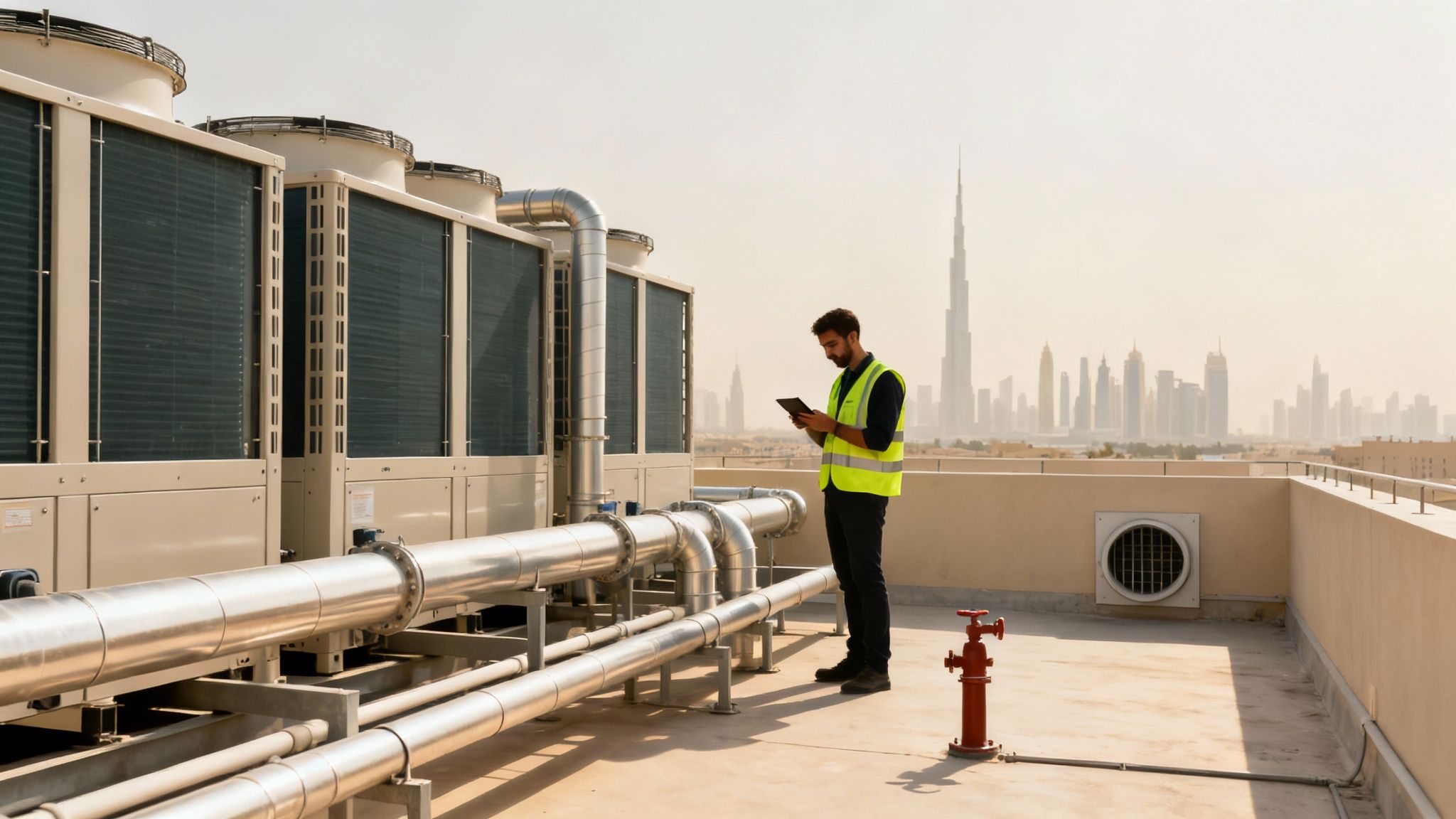
Mechanical systems, the 'M' in MEP, are the very lungs of a building, responsible for everything that makes the indoor environment comfortable and safe—from air quality and temperature to fire protection. When you ask, "what is MEP in construction?", the 'M' is probably the part people feel the most, especially here in the UAE.
In a place known for its blistering summer heat, Heating, Ventilation, and Air Conditioning (HVAC) systems aren't just a nice-to-have; they're essential for modern life. But they do more than just cool the air. A well-designed HVAC system constantly circulates fresh air, filtering out the dust and pollutants that are part of city living, creating a healthier space for everyone inside.
The sheer scale of these systems can be staggering and varies hugely with the project. A sprawling villa in Jumeirah might have a few powerful split or ducted units, but a skyscraper in Downtown Dubai will need a colossal central chiller plant pumping cooled water throughout the entire building. No matter the size, strict adherence to UAE construction standards is non-negotiable to guarantee both energy efficiency and occupant safety.
What Is the Most Common HVAC System in Dubai High-Rises?
Chiller systems are the go-to HVAC solution for large-scale commercial buildings and residential towers in Dubai. They use a central plant to cool water, which is then piped to air handling units on every floor, providing an incredibly efficient way to deliver consistent cooling across massive spaces.
Beyond keeping things cool, mechanical systems are also a building's first line of defence in a fire. This is another area where working with a trusted building materials distributor is absolutely crucial.
These integrated fire safety measures are mission-critical mechanical components:
- Automated Sprinkler Systems: A network of pipes and sprinkler heads that are designed to activate automatically at high temperatures, dousing a fire before it has a chance to spread.
- Smoke Ventilation Systems: If a fire does break out, these systems use powerful fans and dedicated ductwork to pull smoke out of the building. This keeps escape routes clear and improves visibility for emergency services.
Sourcing and installing components that meet all municipality regulations is paramount. A system that fails an inspection can bring a project to a screeching halt, costing time and money. Partnering with a knowledgeable supplier in Dubai ensures every single valve, duct, and damper meets the required safety specifications from day one.
The hidden backbone of any HVAC system is its ductwork—the complex network of passages that carries conditioned air everywhere it needs to go. To really grasp how these mechanical systems come together, it’s helpful to understand the fundamentals, like the proper installation of ductwork. From choosing the right materials to sealing every joint perfectly, quality installation is what makes the whole system perform efficiently.
What Are the Core Electrical Systems in Construction?
The electrical system—the ‘E’ in MEP—is the building’s central nervous system. It’s the intricate network of wires, circuits, and equipment that brings a structure to life, powering everything from the basement lights to the penthouse air conditioning.
But it’s so much more than just flipping a switch. This system covers the main power distribution grid that connects to the city’s supply, right down to the low-voltage wiring for your internet, CCTV, and critical fire alarm systems. Getting this part right isn't just about convenience; it's fundamental to safety and operational reliability.
Here in the UAE, all electrical work is heavily regulated by authorities like the Dubai Electricity and Water Authority (DEWA). These rules are strict and for good reason—they dictate everything from the specific grade of wiring and the type of conduits used to protect it, to the capacity of circuit breakers needed to manage high electrical loads safely.
What Is the Most Important Part of an Electrical System?
The power distribution system is the most important part, acting as the backbone of the building's electrical network. This includes the main switchgear and transformers that safely step down high-voltage power from the grid to a usable level for the entire building.
This is where your choice of components really matters. A good supplier in Dubai won’t just sell you parts; they'll guide you in sourcing materials that are correctly rated and meet all the local standards. This kind of partnership is invaluable for contractors, helping them sidestep the expensive mistake of installing non-compliant equipment that's guaranteed to fail inspection.
A building's electrical system is only as strong as its weakest link. Using substandard circuit breakers or undersized cabling to cut costs is a false economy that introduces significant fire risks and can lead to catastrophic failures.
Don't forget that electrical systems are a huge driver of a building's long-term running costs. In the UAE's commercial buildings, MEP systems are responsible for a massive 60% of operational energy use, and the electrical components alone make up 45% of that. The numbers also show that poor MEP electrical planning is behind 22% of all project rework costs, which tells you just how much money is on the line. You can find out more about how quality components can improve project outcomes from a top building materials distributor.
Making smart choices upfront—like installing energy-efficient lighting, transformers, and control systems—is essential. It's not just about meeting UAE construction standards or ticking a box for a green building certification; it’s about delivering real, tangible savings on utility bills for the entire life of the building. A forward-thinking electrical design pays for itself many times over.
What Are the Essential Plumbing Systems and Materials?
Plumbing, the ‘P’ in MEP, is the lifeblood of any building, a complex web of pipes and fixtures managing everything to do with water. It brings clean, safe water to your taps and showers, and just as importantly, it carries wastewater and sewage away safely.
Think of it as the building’s circulatory system. Get it right, and the building is healthy and habitable. Get it wrong, and you’re looking at serious public health risks and a heap of regulatory trouble.
Plumbing often goes beyond just water, too. It can include the pipework for natural gas, feeding kitchens and heating systems. A top-notch plumbing installation boils down to two things: using the right materials for the job and making sure every single connection is flawless. Even a pinhole leak can cause devastating water damage over time, which is why your choice of building materials distributor is one of the most important decisions you'll make.
The quality of the plumbing is a direct reflection of the quality of the entire project. For a closer look at the nuts and bolts of water supply and waste removal, it’s worth exploring comprehensive plumbing services.
What Is the Best Pipe for Hot Water in the UAE?
PPR (Polypropylene Random Copolymer) is widely considered the best pipe for hot water in the UAE. Its excellent heat resistance and ability to withstand the region's specific water chemistry make it the go-to choice for seasoned contractors.
Choosing the right pipe isn't a small decision here. With our high ambient temperatures and the unique mineral content in the water, the material you select will directly determine how long the system lasts and how well it performs.
Let’s break down the main contenders:
- PPR Pipes: These are incredibly popular for a reason. They don’t degrade under high temperatures, they won't corrode, and their smooth inner walls mean less scale build-up—a huge problem in this part of the world.
- PEX Pipes: The big advantage of PEX (Cross-linked Polyethylene) is its flexibility. It makes installations quicker and easier, especially when you’re navigating tight spaces or complex designs. It’s also tough against chlorine and scale.
- Copper Pipes: Copper is the classic, premium choice. It's exceptionally durable and naturally antimicrobial. The downside? It's more expensive and demands highly skilled technicians to solder the joints correctly.
Picking the right pipe is more than just a technical tick-box; it’s a long-term investment in the health of the building. A specialist supplier in Dubai can ensure you get certified materials that comply with UAE construction standards, giving you a durable, leak-free system you can count on.
Why Is Drainage Management So Important?
Effective drainage is non-negotiable because it prevents serious health hazards, stops leaks from causing structural damage, and ensures compliance with Dubai Municipality regulations. A well-designed drainage system is engineered to handle maximum flow without ever backing up or blocking.
This means getting the details right: precise gradients, correctly placed vents for air pressure, and easy access points for future maintenance. If you cut corners here, you risk failing inspections, facing expensive rework, and handing over a building with chronic problems. For any developer, a solid, compliant plumbing network is a hallmark of a high-quality asset built to last.
How Are MEP Systems Coordinated on a Project?
MEP coordination is the art of preventing chaos on a construction site by ensuring all systems fit and function together without conflict. It is a master plan for the building's hidden networks of pipes, cables, and ducts, where every square centimetre of space in ceilings and walls is prime real estate.
This is where modern technology really shines. MEP engineers now use powerful tools like Building Information Modelling (BIM) to create a detailed, 3D digital version of the entire project. This isn't just a simple drawing; it's a data-rich model where every single pipe, duct, and electrical conduit is mapped out with incredible precision.
Building virtually first allows teams to see exactly how all the systems will fit together in the real world. They can spot potential "clashes"—for instance, where a huge air duct is on a collision course with a major plumbing line—long before a single worker even steps on site. Finding and fixing these conflicts in the digital model saves a massive amount of time and money that would otherwise be wasted on costly rework later on.
This simple workflow shows how technology helps identify and resolve these conflicts before they become expensive on-site problems.
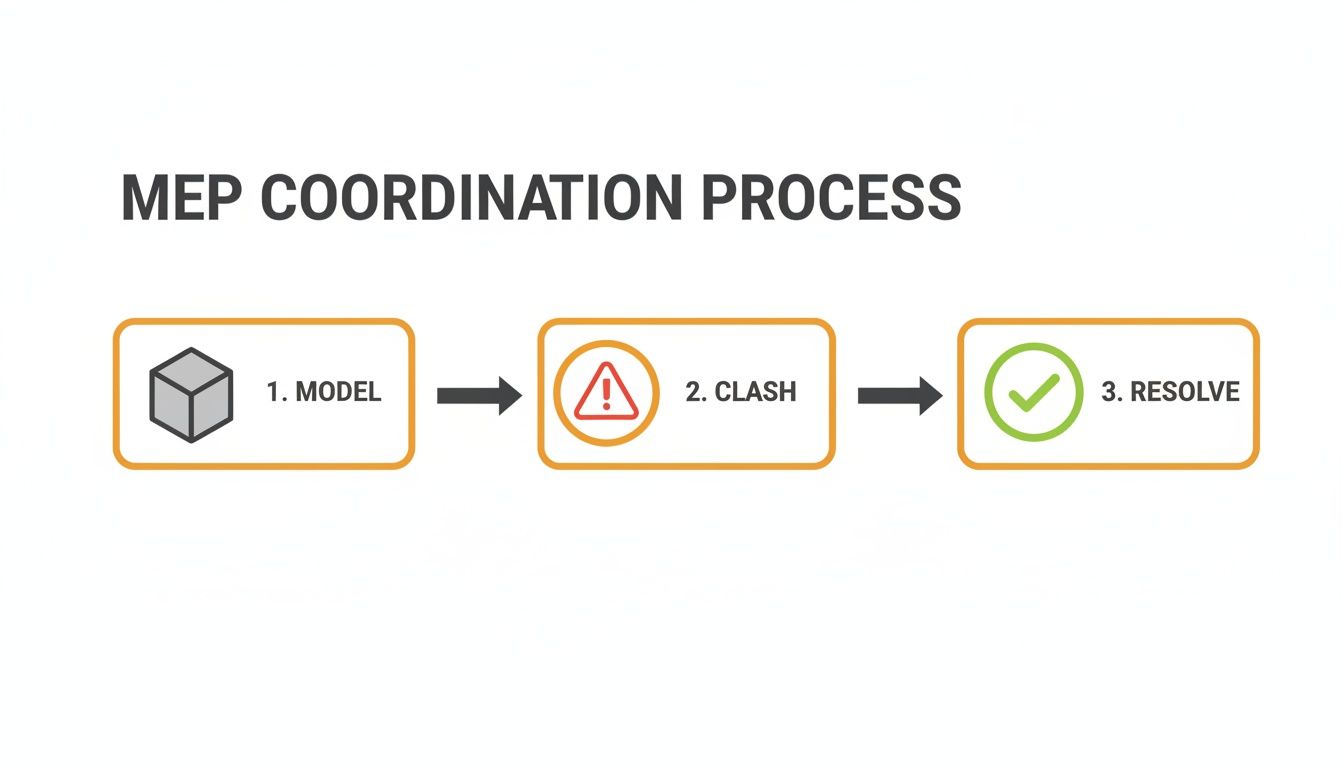
The process flows from creating the digital model to running automated clash detection and, finally, to collaborative problem-solving, which is key to preventing delays during construction.
What Is the Main Goal of MEP Coordination?
The main goal of MEP coordination is to ensure all mechanical, electrical, and plumbing systems are installed correctly and efficiently without interfering with each other or the building's structure. At its core, it is about proactive problem-solving to protect the project's budget and timeline.
The table below breaks down how coordination activities align with each major project stage, from initial design concepts right through to the final installation.
MEP Coordination Stages And Key Objectives
| Project Stage | Key MEP Coordination Activity | Primary Objective |
|---|---|---|
| Design & Pre-Construction | Developing the coordinated BIM model and running initial clash detection. | Identify and resolve major system conflicts before procurement or construction begins. |
| Procurement & Submittals | Using the model to create accurate material take-offs and review supplier submittals. | Ensure the correct, specified materials are ordered and align with the coordinated design. |
| Installation & On-Site | Creating installation-ready shop drawings from the model for field teams. | Provide clear, clash-free instructions to installers, minimising on-site modifications. |
This structured approach shows how coordination isn't a single event but an ongoing process that connects the design office to the construction site.
A successful coordination process is also deeply tied to smart procurement and logistics. The BIM model is used to generate highly precise material lists, helping contractors order the exact quantities they need, no more, no less. This is where having a reliable supplier in Dubai becomes a critical partnership. A good supplier ensures that the specified, compliant materials are delivered to the site right when they are needed for installation, keeping the project moving smoothly from the digital plan to the physical build. You can find out more about how a well-managed supply chain is the backbone of successful projects by exploring guides on sourcing MEP supplies in Dubai.
Ultimately, coordination transforms the complex question of what is MEP in construction from a potential source of conflict into a highly organised, collaborative process. It's the essential bridge between design and reality, ensuring a building's vital systems work in harmony.
How Do You Solve Common MEP Challenges in the UAE?
Getting an MEP project over the line in the UAE is about more than just technical know-how; it's a masterclass in navigating regional hurdles. Challenges like complex authority approvals and supply chain snags can throw your timeline and budget into disarray if you're not prepared.
To deliver a project successfully, you have to see these issues coming and have practical solutions in your back pocket. The usual suspects? Sourcing compliant materials on time, finding a skilled workforce, and making absolutely sure that every single component and installation method meets the demanding UAE construction standards.
How Can You Overcome Procurement Delays?
One of the smartest moves to overcome procurement delays is to partner with a well-stocked building materials distributor from the start. A reliable partner acts as a single point of contact, consolidating orders and using their established logistics network to ensure materials arrive on-site exactly when needed.
This strategy solves a few headaches at once. Instead of trying to coordinate with a dozen different vendors, a single supplier in Dubai can handle everything from specialised fire safety valves to specific grades of electrical cabling. Their massive inventory is your safety net against sudden market shortages, preventing those painful and costly delays.
By centralising your procurement with a trusted distributor, you're not just buying materials—you're buying an advantage. It cleans up your logistics, slashes the administrative burden, and gives you a team that knows the local sourcing game inside and out. They're the ones who can find those hard-to-get, compliant items when you need them most.
How Do You Navigate Regulatory Hurdles and Supply Chains?
Navigating regulatory hurdles and supply chain risks is best done through a strong partnership with an experienced local supplier. Working with a supplier who knows the requirements from authorities like Dubai Municipality and DEWA can make the documentation and submittal process surprisingly smooth.
They ensure every product they deliver arrives with the correct certifications, stopping rejections before they can halt your progress. A seasoned supplier also acts as your shield against supply chain risks. They have relationships with a wide network of manufacturers, which means they have multiple ways to source materials if one channel suddenly dries up. This kind of logistical agility is worth its weight in gold, especially on projects with non-negotiable deadlines. To see how being proactive protects your project, you can learn more about the importance of preventive maintenance in MEP and how it all ties back to sourcing quality materials.
MEP FAQs: Your Questions Answered
Let's clear up a few common questions we hear from contractors and developers on the ground. Here are some quick, practical answers to help you navigate the world of MEP in the UAE.
What’s the Difference Between MEP and HVAC?
The difference is that HVAC is a sub-discipline of MEP. HVAC (Heating, Ventilation, and Air Conditioning) is just one part of the 'Mechanical' systems, whereas MEP is the acronym for all three major disciplines: Mechanical, Electrical, and Plumbing.
Think of MEP as the building's entire nervous, circulatory, and respiratory system combined, while HVAC is the critical air-breathing component.
Why Is MEP Such a Big Deal in Dubai?
In Dubai, MEP is a big deal because the extreme climate makes high-performance air conditioning (Mechanical) non-negotiable. The city’s ambitious, smart skyscrapers also demand incredibly complex Electrical infrastructures to function.
Add to that the strict government regulations on health, safety, and water conservation, and you see why compliant, efficient Plumbing is vital. MEP is truly the backbone of all modern UAE construction.
Around here, a project's success is often measured by how well its MEP is executed. Getting these systems right isn't just a box-ticking exercise; it's fundamental to the building's value, safety, and operational costs for years to come.
How Do You Choose the Right MEP Supplier in the UAE?
To choose the right supplier, look for a partner with a solid reputation, a deep inventory of products that meet local authority standards, and reliable logistics. Don't just look for a vendor; find a true partner.
A great MEP supplier in Dubai won't just sell you parts. They’ll offer technical advice on material selection and help you consolidate your orders, saving you precious time and protecting you from those dreaded project delays.
What Exactly Are MEP Drawings?
MEP drawings are highly detailed technical blueprints that serve as the project’s playbook. They map out the exact location of every single duct, wire, pipe, and fixture in the building.
They are absolutely essential for the installation teams and for making sure the different trades don’t clash on site. When you partner with a skilled building materials distributor, you can be confident that the components specified on those drawings are the exact ones you’ll get.
For over 20 years, contractors across the Emirates have trusted Yasu Trading Co. LLC as their one-stop partner for municipality-compliant MEP supplies. With a vast inventory and expert support, we ensure your project stays on schedule and on budget. Explore our complete range of products and streamline your procurement by visiting yasutrading.com.