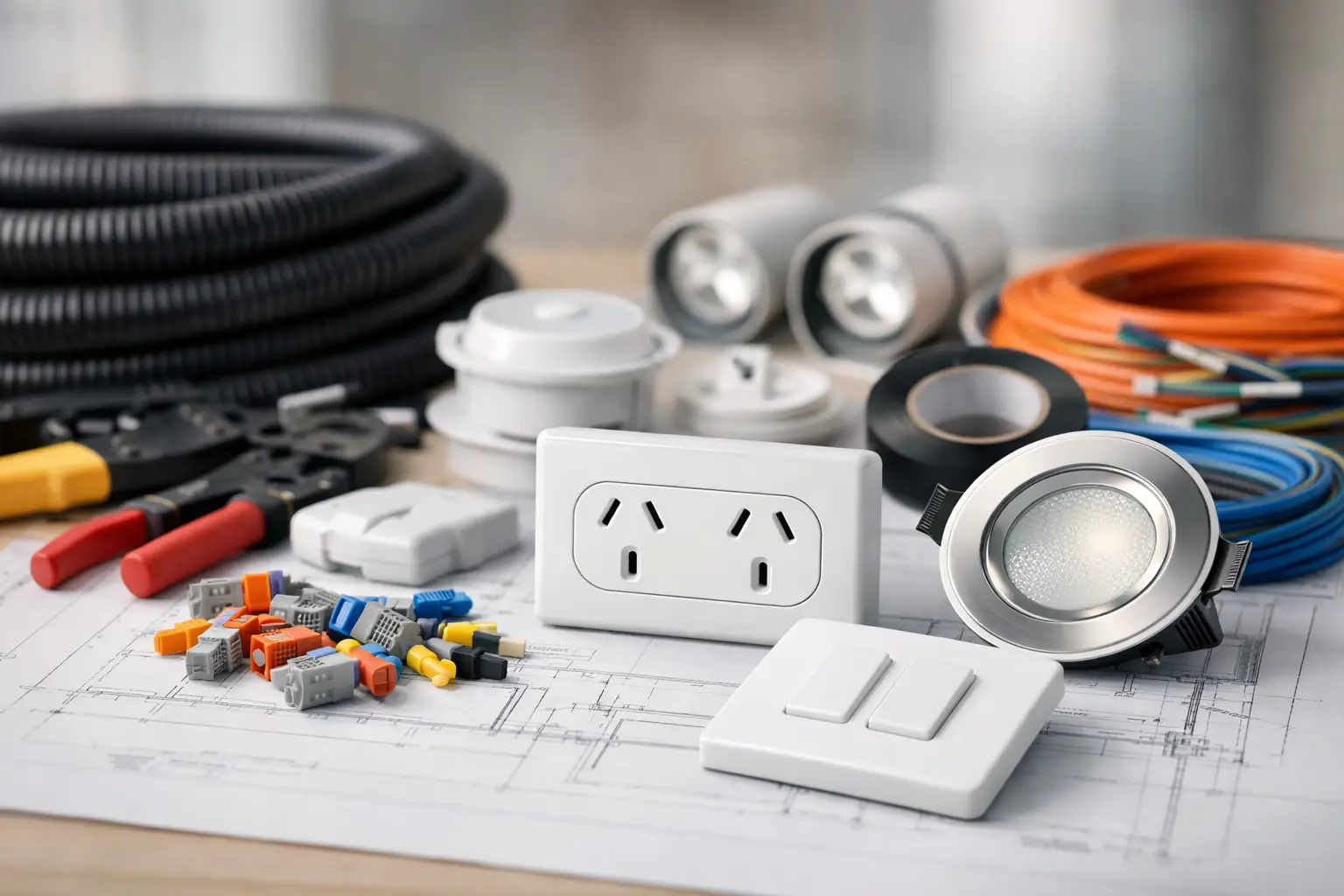
Best Electrical Accessories for Fitout Projects
A fitout can be held up by a missing socket faceplate as easily as by a delayed distribution board. The best electrical accessories for fitout work are not simply the lowest-priced items on a schedule. They are compatible with the approved design, suitable for the intended load and environment, compliant with project requirements, and available in sufficient quantities when each workfront is ready.
For contractors and MEP procurement teams, accessories deserve the same control applied to cables, breakers, and lighting. They are the visible finish of the electrical installation, but they also affect safety, inspection readiness, commissioning, and handover. A disciplined selection process prevents mixed finishes, unsuitable ratings, late substitutions, and repeat site visits.
Start With the Fitout Specification, Not the Catalog
Electrical accessories must follow the approved material submittal, consultant specifications, and authority requirements for the project. Before requesting prices, confirm the required brand or approved equivalent, accessory range, color and plate finish, voltage and current rating, ingress protection rating, and installation method.
A commercial office, hospitality project, retail unit, villa, and industrial facility may all use different accessories even when the drawing symbols look similar. A white molded plate may be acceptable in a back-of-house room, while a brushed metal finish is required in client-facing areas. Wet areas may require higher ingress protection, while service rooms may need heavy-duty industrial outlets and isolators.
The specification should also identify whether accessories are supplied as complete units or as modular components. Modular systems can give designers flexibility with combinations of switches, socket outlets, data points, and blank modules. They also require tighter control of frames, grids, modules, and cover plates. Ordering one part without its matching component creates avoidable installation delays.
Best Electrical Accessories for Fitout Packages
A complete procurement package should cover every point where power, control, containment, or low-voltage services terminate. The following categories typically have the highest impact on installation progress and finished quality.
Switches, Sockets, and Faceplates
Switches and socket outlets are among the most visible accessories in a completed fitout. Select them by application first, then by finish. General lighting switches, intermediate switches, dimmer controls, switched socket outlets, USB charging sockets, and dedicated appliance outlets all have different uses.
For UAE fitouts, verify that socket configuration, shutter requirements, current rating, and plug compatibility match the approved design. Do not assume a decorative range has the same electrical rating as a standard commercial range. For high-use spaces such as meeting rooms, hotel rooms, and retail counters, durable mechanisms and secure terminal connections matter more than a marginal unit-cost saving.
Keep plates and modules from one approved range wherever possible. Mixing ranges can produce mismatched whites, different profile depths, and poor alignment across a finished wall. It also complicates replacement stock for the facilities team after handover.
Data, Telephone, and AV Outlets
Fitout programs increasingly depend on low-voltage connectivity. Data outlets, keystone modules, telephone outlets, HDMI plates, USB modules, and blanking plates should be coordinated with the ICT and AV drawings before purchase.
The electrical accessory is only one part of the data point. Confirm the required category rating, labeling plan, back box depth, cable bend space, and faceplate format. A premium-looking outlet does not correct poor cable management or an incompatible module. For offices and hospitality projects, order a controlled quantity of spare modules and plates to support last-minute workstation changes without changing the finished appearance.
Isolators, Connection Units, and Appliance Controls
Air-conditioning equipment, water heaters, kitchen appliances, extract fans, and fixed equipment require proper local isolation and connection. These accessories are safety-critical and must match the equipment load, location, and maintenance access requirements.
Weather-exposed condensing units, plant rooms, and wet service areas may need accessories with an appropriate ingress protection rating. A standard indoor isolator installed in an exposed location can lead to early failure and unnecessary maintenance calls. Check whether the required isolator is switched, lockable, rated for the equipment duty, and supplied with the correct enclosure.
Fused connection units are also often missed in takeoffs. They are commonly needed for controlled appliance connections and should be specified with the appropriate fuse arrangement and plate finish. Confirm quantities against the final equipment schedule, not only the first electrical drawing issue.
Containment Accessories and Termination Hardware
Electrical installation quality depends on what happens behind the faceplate as much as what is visible at handover. Back boxes, adaptable boxes, junction boxes, conduit fittings, trunking accessories, cable glands, saddles, clips, and flexible conduit fittings keep wiring protected and properly supported.
These items are frequently treated as small consumables, which makes them vulnerable to under-ordering. Yet a missing gland, inspection box, or trunking bend can stop a team working across an entire zone. Include containment accessories in the same release schedule as conduits, trunking, and cables, with allowances based on actual routing and termination counts.
Match material to environment. Galvanized metal, PVC, nylon, and brass components each have suitable applications. Consider corrosion exposure, UV conditions, mechanical protection, cable type, enclosure entry, and fire-performance requirements where applicable. The right gland size must suit the actual cable outside diameter, not a nominal assumption from a generic bill of quantities.
Floor Boxes and Desk-Level Power
Modern offices, training rooms, retail counters, and open-plan spaces often need power and data away from walls. Floor boxes and desk-level power accessories should be chosen early because they affect screed coordination, flooring thickness, furniture layouts, and cable routes.
Confirm the floor finish, load rating, lid style, module arrangement, and access direction. A floor box that works under carpet may not suit tiled flooring or a raised access floor. Coordinate locations with furniture drawings before slab or screed works are completed. Moving floor points later is expensive, disruptive, and usually visible in the finish.
Control Quality With a Sample Board
For design-led fitouts, a sample board is a practical procurement control. It should include the proposed switches, socket outlets, data plates, dimmers, isolators where visible, and the intended plate finish. The consultant, interior designer, main contractor, and client representative can approve the appearance and module arrangement before bulk ordering.
This step is particularly valuable when several trades share the same wall plate. Electrical, data, AV, access control, and building management system points need a coordinated layout. Without a sample board, the final result can look improvised even if every individual component is technically acceptable.
Approval should cover more than appearance. Check that plates sit flat, screws are concealed where required, labels are practical, and modules operate correctly. Record the approved range and part numbers. A verbal approval is not enough protection when substitutions are proposed later in the project.
Avoid the Procurement Failures That Delay Fitout Work
The most common electrical accessory problem is fragmented buying. One supplier provides switches, another provides boxes, a third supplies glands, and the site team fills gaps from local retail stock. The result can be inconsistent quality, missing compatibility parts, uncertain warranties, and a time-consuming reconciliation process.
Consolidated procurement improves control, but only when the supplier validates the material schedule. Ask for a line-by-line review that identifies accessories requiring matching components, long-lead finishes, and items tied to equipment schedules. A project quotation should clearly separate approved brands, alternatives, and exclusions so the site team does not discover a gap after installation starts.
Do not release the full quantity too early if layouts are still changing. For large projects, a phased call-off plan can protect cash flow and storage space while keeping approved stock allocated. Release first-fix containment and boxes ahead of wall closures, then finalize visible plates and modules after room data, furniture layouts, and interior finishes are locked.
Site delivery also matters. Small accessories are easy to overlook in logistics planning, but they are often urgent. Group materials by floor, zone, or work package, label cartons clearly, and verify quantities at delivery. This helps supervisors issue materials to crews without opening multiple mixed boxes and losing control of spare stock.
Build a Fitout Accessory Schedule That Works on Site
A usable schedule should not be a list of generic descriptions such as “socket outlet” or “junction box.” Include the exact part description, approved manufacturer, finish, rating, mounting type, related components, drawing reference, location, required quantity, spare quantity, and planned delivery phase.
For example, a socket point may require a socket module, mounting grid, cover plate, metal back box, screws, gland or conduit entry fitting, and identification label. Treating it as one line item risks an incomplete installation kit. The same approach applies to data points, floor boxes, and local isolators.
Before each release, compare the schedule against current drawings, reflected ceiling plans, equipment schedules, and interior layouts. This takes less time than correcting finished walls or revisiting rooms after furniture installation. It also gives procurement teams a reliable basis for project-based pricing and inventory allocation.
Yasu Trading Co. LLC supports contractors with jobsite-ready electrical accessories, coordinated MEP supply, and rapid dispatch for urgent fitout requirements. When a project needs a custom package, provide the approved schedule, drawings, and delivery sequence early enough to verify compatibility and secure the required stock.
The best result is not a wall full of accessories that merely look complete. It is a controlled, compliant installation that passes inspection, supports the end user, and leaves the site team free to move to the next workfront on schedule.