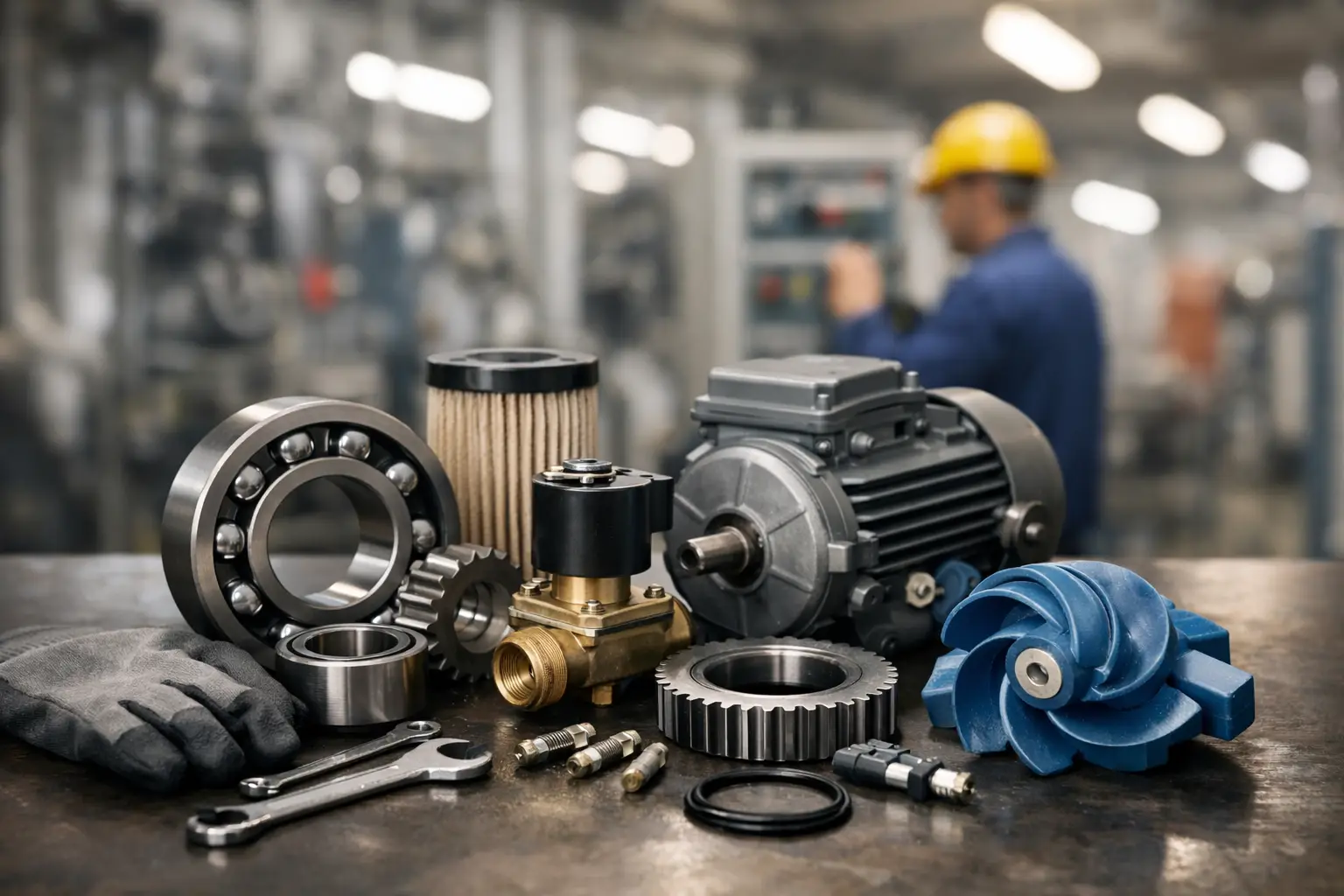
Facility Maintenance Spares That Prevent Downtime
A failed valve cartridge, tripped breaker, worn pump seal, or damaged door closer can turn a routine maintenance call into an operational disruption. Facility maintenance spares give maintenance teams the parts needed to restore critical building systems quickly, without waiting for emergency sourcing, substitute approvals, or a delayed delivery.
For facilities managers, MEP contractors, and procurement teams, the objective is not to store every possible item. It is to hold the right approved parts at the right service level. A disciplined spares plan protects occupancy, safety, compliance, and maintenance budgets - particularly across properties where HVAC, water, electrical, fire safety, and access systems operate continuously.
What Facility Maintenance Spares Should Cover
Maintenance inventory should follow the systems that create the greatest operational and safety risk when they fail. The priority differs between a residential tower, hotel, retail center, warehouse, hospital, or industrial facility, but the selection process is consistent: identify critical assets, assess failure patterns, confirm approved specifications, and maintain practical replenishment levels.
Plumbing and water-system parts
Water leaks and drainage failures need fast action. Core plumbing pipes and fittings, isolation valves, flexible connectors, washers, cartridges, traps, drain components, PTFE tape, and repair clamps are common fast-moving spares. For booster sets and transfer pumps, teams may also require mechanical seals, pressure switches, gauges, non-return valves, and compatible couplings.
Compatibility matters more than a low unit price. A valve or fitting with the wrong size, pressure rating, thread type, or material can create a second repair call. Facilities should record the manufacturer, model, connection size, and approved material for recurring assets. This reduces guesswork when a technician needs a replacement under time pressure.
Electrical and lighting replacements
Electrical spares should support both routine corrective work and safe isolation during faults. Typical holdings include circuit breakers, contactors, relays, fuses, terminal blocks, cable glands, switches, sockets, junction boxes, LED lamps, drivers, and emergency lighting components.
Not every electrical item should be treated as interchangeable. Breaker ratings, breaking capacity, pole configuration, panel compatibility, and manufacturer requirements must match the installation. For emergency circuits and life-safety equipment, use approved, municipality-compliant materials and preserve traceability through proper labeling and purchase records.
Hardware, doors, and fit-out repairs
A building can remain technically functional while still failing its occupants through damaged access hardware, loose fixtures, or unusable washrooms. Keep practical quantities of hinges, locks, cylinders, door closers, handles, fasteners, anchors, sealants, adhesives, silicone, touch-up paint accessories, and sanitary ware repair components.
These parts are inexpensive compared with the disruption caused by an inaccessible restroom, unsecured service room, or failed fire-rated door closer. The key is to stock standardized components where possible. A facility with five different door closer types will carry more inventory and face slower repairs than one with controlled specifications.
Safety-critical consumables and components
Fire and safety equipment requires a different level of control. Fire extinguishers, hose-reel items, signs, emergency lights, detector bases, call points, and related accessories must be selected according to the installed system, building approvals, and maintenance requirements. Avoid substituting a visually similar item without technical verification.
For safety-related stock, maintain a clear record of expiry dates, service intervals, batch details where applicable, and storage conditions. A spare that has degraded in storage is not a reliable spare.
How to Set the Right Stock Level
Overstocking locks cash into slow-moving items. Understocking creates urgent purchase orders, technician idle time, and tenant complaints. The correct level depends on the asset's criticality, the part's lead time, the likelihood of failure, and the consequence of downtime.
A useful approach is to classify items as critical, operational, or routine. Critical spares are parts that can stop a life-safety system, essential utility, key production activity, or major tenant operation. These should be readily available on-site or through a supplier with confirmed rapid dispatch. Operational spares affect comfort, access, or service continuity and usually justify a modest site stock. Routine items can often be purchased as needed if delivery is dependable.
For each frequently used part, set a minimum level and reorder point. The reorder point should account for average usage during supplier lead time, plus a buffer for unexpected failures. Review this data quarterly rather than relying only on the maintenance team's memory. Repeated emergency purchases are usually a sign that a part belongs in planned stock.
Standardization Reduces Both Cost and Delay
The most efficient facilities do not manage spares item by item alone. They standardize equipment and components across sites where practical. Selecting compatible lamps, valves, switches, fasteners, sealants, and hand tools reduces SKU count and makes it easier for technicians to carry the right material.
Standardization does have limits. Replacing an approved component solely to simplify inventory may affect warranty, system performance, or compliance. The better decision is to standardize during planned renovation, fit-out, and replacement cycles, after checking technical requirements. For existing critical equipment, maintain manufacturer-approved spares until a controlled upgrade is completed.
A clear approved-material register is particularly valuable for multi-site operators. It should identify the product description, brand, model, technical rating, intended system, approved alternative if one exists, supplier reference, and storage location. This prevents field teams from fitting unverified alternatives during urgent work.
Store Spares So They Are Usable When Needed
A well-stocked store room can still fail a maintenance team if parts cannot be found or have deteriorated. Organize inventory by system and location, label bins clearly, and keep frequently used items accessible. Technicians should be able to identify a part, quantity, and compatible asset without opening multiple boxes.
Environmental conditions also matter. Keep electrical components dry and protected from dust. Store sealants, adhesives, paints, batteries, and rubber seals within manufacturer-recommended conditions and check expiration dates. Heavy fittings and tools need safe shelving, while small fasteners and electrical accessories need compartmentalized storage to prevent mixed stock.
Cycle counts are more useful than an annual stocktake alone. A short monthly review of critical and fast-moving items catches discrepancies before an emergency. It also exposes dead stock - parts for equipment that has been replaced, discontinued, or no longer maintained on-site.
Build Procurement Around Response Time, Not Just Price
A maintenance spare has value only if its specification is correct and it arrives before the failure becomes costly. Procurement teams should evaluate suppliers on stock availability, product authenticity, technical guidance, warranty support, order accuracy, and delivery reliability alongside wholesale pricing.
For planned maintenance, bulk purchasing can reduce cost and improve stock consistency. For breakdown work, a supplier with inventory-backed same-day or next-day site delivery can be more valuable than a nominally cheaper source with uncertain availability. This is especially relevant when teams support occupied properties across Dubai, Sharjah, Abu Dhabi, Fujairah, and Ras Al Khaimah.
Consolidating plumbing, electrical, tools, fasteners, sealants, paint accessories, sanitary ware, and safety requirements with one capable B2B supplier also reduces administrative workload. Fewer purchase orders, fewer vendor follow-ups, and clearer delivery coordination give facility teams more time to manage the work itself. Yasu Trading Co. LLC supports this model with jobsite-ready materials, project-based quoting, and technical product guidance for professional buyers.
A Practical Review for Every Maintenance Team
Before approving the next spares order, review the last six to twelve months of corrective maintenance tickets. Look for repeat failures, urgent purchases, delayed repairs, and technician requests for items that were unavailable. Then compare those records against current inventory, approved specifications, and supplier lead times.
The goal is not a larger store room. It is a maintenance operation that can respond decisively when an essential component fails. The right part, correctly specified and ready to dispatch, protects far more than a repair budget - it protects the facility's ability to keep working.