A Contractor's Guide to GI Electrical Conduits in the UAE
GI electrical conduits are essentially steel or iron tubes that have been treated to protect and route a building's electrical wiring. What makes them special is their zinc coating, which provides a tough barrier against corrosion. This galvanisation process is precisely why they've become the gold standard for long-term safety and durability, especially in the demanding construction environments we see across the UAE.
Why Are GI Conduits Essential for UAE Construction?
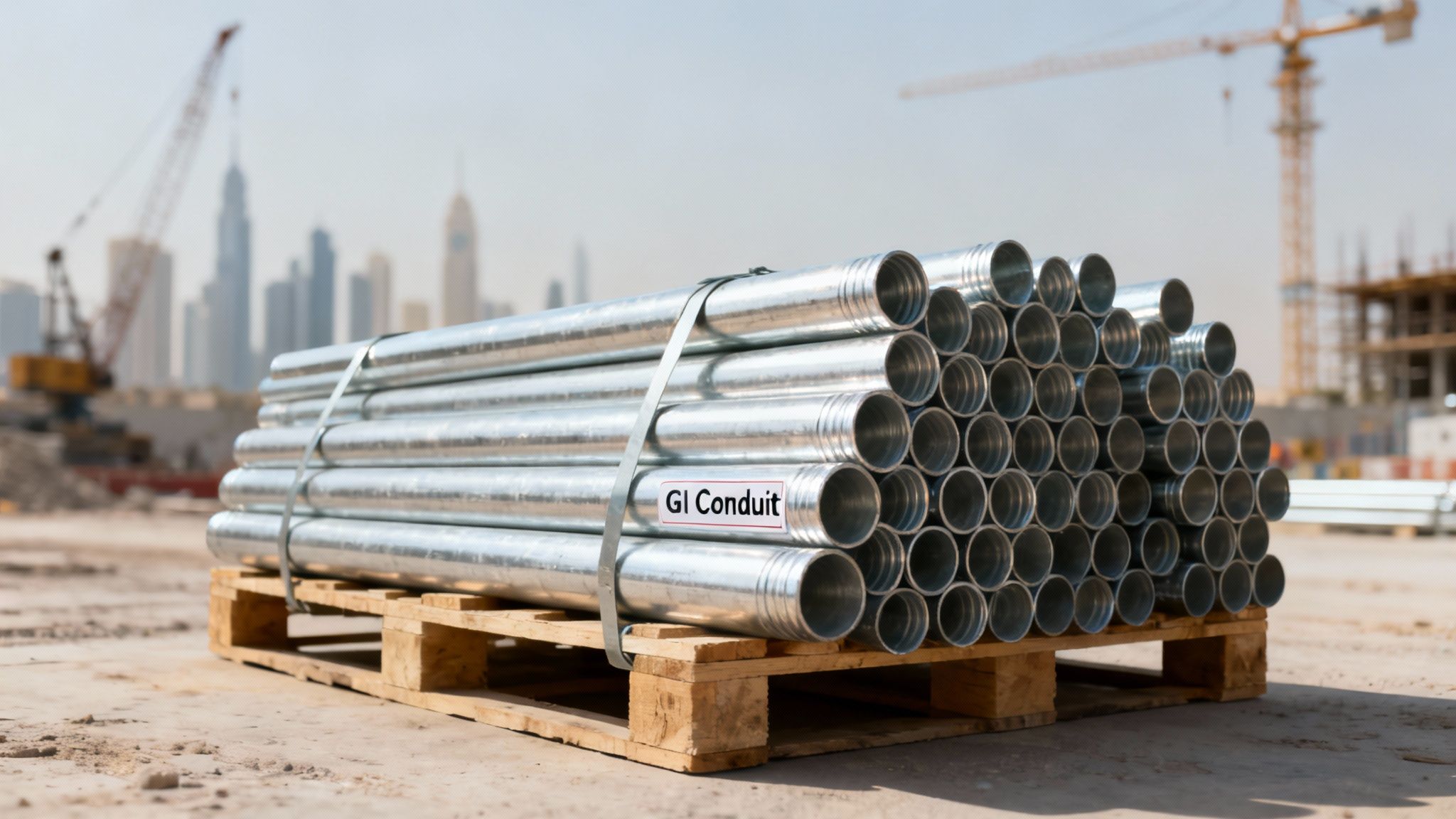
Think of a building's electrical system like its central nervous system. The wires are the nerves, carrying essential power and data. In that case, GI electrical conduits are the protective backbone, shielding those critical pathways from all sorts of threats.
This guide is for the contractors, engineers, and facility managers on the ground who have to navigate the complex world of building materials. It’s a complete resource to understand why galvanised iron conduits aren't just a good choice, but often a mandatory requirement under UAE construction standards.
What Is the Purpose of a GI Conduit?
A GI conduit's primary purpose is to provide unmatched physical and environmental protection for electrical wiring. This rugged housing defends wires against impact, moisture, chemicals, and fire, ensuring the entire electrical system remains safe and operational for decades.
For any project in Dubai or Abu Dhabi, getting the material selection right is critical for both compliance and longevity. This guide will walk you through everything you need to know, from the technical specs to sourcing from a trusted building materials distributor.
For any major construction project, the choice of conduit material directly impacts the building's safety, operational reliability, and total cost of ownership over its lifespan. High-quality, compliant GI conduits are a foundational investment in asset protection.
As a leading supplier in Dubai since 2002, we've seen firsthand the challenges faced on-site. We've put this resource together to help you make informed decisions, ensuring your electrical installations are not only durable but also fully compliant with local regulations like DEWA standards, and built to withstand the region's unique climate.
What Exactly Are GI Electrical Conduits?
GI electrical conduits are the protective armour for a building's electrical nervous system. They are tough steel tubes that have undergone galvanisation, which is the process of coating them in a protective layer of zinc.
This zinc shield is what gives them their muscle. It acts as a sacrificial barrier, stopping the steel underneath from rusting when it comes into contact with moisture and air. In a place like the UAE, with its humid coastal climate, this kind of corrosion resistance isn't just a nice-to-have; it's a critical requirement under local UAE construction standards.
By creating this tough outer shell, GI conduits keep the delicate electrical wires inside safe from all sorts of trouble, whether it's an accidental impact, moisture getting in, or even fire. This is fundamental to ensuring the long-term safety and reliability of any building's electrical setup.
What is the real advantage of the zinc coating?
The zinc coating offers a powerful, two-pronged defence for the steel conduit. First, it creates a physical barrier against rust-causing elements. Second, it provides 'cathodic protection,' meaning that even if the conduit is scratched, the zinc around the scratch will corrode first, sacrificing itself to protect the steel pipe.
This dual-action protection is precisely what makes GI electrical conduits so incredibly durable. It’s an active electrochemical process that massively extends the life of the entire system, a crucial factor for any reputable building materials distributor staking their name on quality.
Investing in high-quality, municipality-approved GI conduits is really an investment in a building's long-term safety and function. Their ability to fight off degradation means the electrical infrastructure stays secure for decades, cutting down on future headaches and costly repairs.
It's no surprise they're a common sight in the UAE's massive construction sector. In fact, the Middle East & Africa electrical conduit market hit a revenue of USD 366.2 million, and rigid conduits like GI were the biggest piece of that pie. With all the mega-projects underway, that market is expected to grow to USD 519.2 million by 2033. You can dig deeper into the numbers on the electrical conduit market growth in the MEA region on grandviewresearch.com.
Why are GI conduits a standard in modern construction?
GI electrical conduits are a standard in modern construction because they excel in safety, durability, and compliance. Their exceptional strength and protective qualities make them a preferred choice for architects and developers who need to construct long-lasting, reliable buildings.
When you're sourcing from a trusted supplier in Dubai, you're not just buying a piece of pipe; you're getting a critical safety component. These conduits give contractors and property owners the confidence that a building's electrical system can stand up to whatever the environment—and time—throws at it.
Why Should You Choose GI Conduits Over PVC or EMT?
When mapping out an electrical system in the UAE, the type of conduit chosen is a decision that impacts the project for decades. While alternatives like PVC (Polyvinyl Chloride) and EMT (Electrical Metallic Tubing) are available, GI electrical conduits provide a level of robust protection often required by UAE construction standards. This choice is not just about initial cost but about selecting the right armour for your electrical wiring.
For contractors and MEP specialists, the practical differences are what truly matter. GI conduits simply outperform in key areas: unmatched physical strength, built-in fire resistance, and rock-solid grounding. Let's dig into why they remain the go-to for so many critical infrastructure projects across the region.
What is the core advantage of GI conduits?
The core advantage of GI conduit is its exceptional strength and durability. Unlike PVC, which can become brittle and crack under impact, galvanised iron forms a formidable barrier, protecting wiring from impacts, crushing, and accidental penetration on a busy site.
This raw toughness makes GI the obvious choice for exposed installations, demanding industrial settings, and even areas with constant foot traffic. Its rigidity guarantees that the conductors inside stay safe and sound for the long haul, a non-negotiable factor for any reputable building materials distributor staking their name on quality.
This infographic neatly sums up the protective trifecta that defines GI conduits.
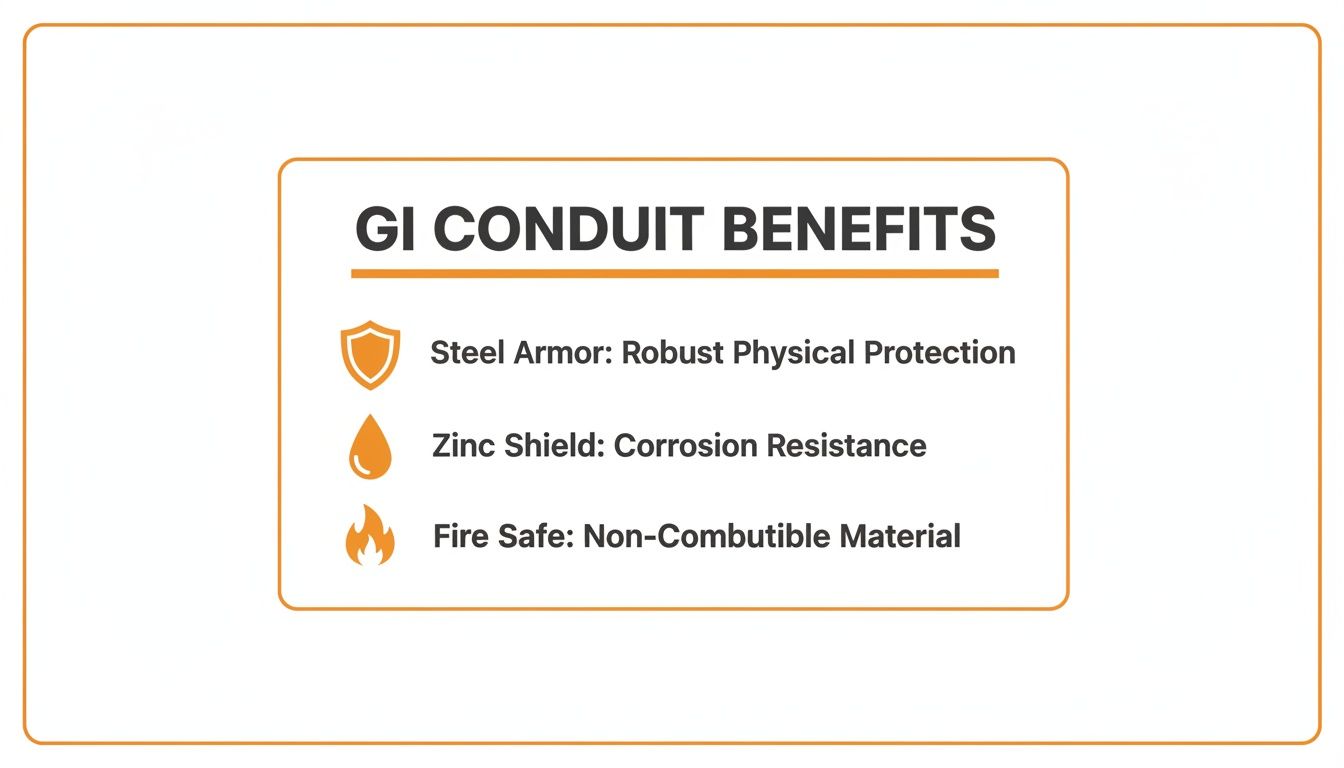
It’s this powerful combination of steel’s muscle, zinc’s anti-corrosion shield, and inherent fire safety that makes GI such a complete solution for protecting critical electrical assets.
How Does GI Stack Up Against PVC and EMT?
Rigid GI conduits are the backbone of heavy-duty projects, even with a growing niche for flexible conduits. Market data confirms that rigid GI is essential for over 70% of structural installations. The safety stats are just as telling: GI's non-flammable nature leads to 40% fewer failures in high-stress tests compared to PVC. For a closer look at the market, you can explore regional trends in electrical conduit usage on cognitivemarketresearch.com.
Let's break down the head-to-head comparison.
GI vs PVC vs EMT Conduits: A Head-to-Head Comparison for UAE Projects
This table lays out the key differences between the three main conduit types, helping contractors and engineers make an informed choice based on the specific demands of their projects in the UAE.
| Feature | GI (Galvanized Iron) Conduit | PVC Conduit | EMT (Electrical Metallic Tubing) |
|---|---|---|---|
| Physical Strength | Excellent. Highly resistant to impact, crushing, and penetration. Ideal for exposed areas. | Fair. Prone to cracking and breaking under heavy impact, especially in cold or UV-exposed conditions. | Good. Thinner than GI, offering moderate protection but can be dented or crushed more easily. |
| Fire Resistance | Excellent. Non-combustible material that does not contribute to fire spread or emit toxic fumes. | Poor. Can burn and release hazardous, toxic smoke (e.g., hydrogen chloride), posing a life safety risk. | Excellent. Non-combustible, providing a high level of fire safety similar to GI. |
| Corrosion Resistance | Very Good. The zinc coating provides robust protection against rust and corrosion. | Excellent. Inherently immune to rust and corrosion from moisture and many chemicals. | Fair to Good. Galvanised, but the thinner walls offer less long-term protection than GI. |
| Grounding | Excellent. The metal conduit itself serves as a reliable equipment grounding conductor. | N/A. Non-conductive, requiring a separate grounding wire to be installed inside the conduit. | Good. Can be used for grounding, but fittings must be secure to ensure continuity. |
| Best-Use Scenarios | Industrial facilities, commercial high-rises, hospitals, outdoor installations, hazardous locations. | Residential wiring, underground runs (where encased in concrete), and corrosive environments. | Exposed indoor commercial applications, branch circuit wiring where less physical abuse is expected. |
As the table shows, each material has its place, but for high-stakes environments where physical protection and fire safety are paramount, GI conduit is clearly in a class of its own.
For any project where long-term safety and reliability are non-negotiable—think commercial towers, hospitals, and industrial plants—GI electrical conduits provide a level of assurance that plastic or lighter-weight metals simply can't match.
Ultimately, picking the right material is a strategic call. As a trusted supplier in Dubai, we've seen how these initial decisions can make or break a project's long-term success. Investing in the superior protection of GI conduits is an investment in compliance, reduced maintenance, and the fundamental safety of a building's entire electrical infrastructure.
How Do You Select the Right GI Conduit for Your Project?
Choosing the right GI electrical conduit in the UAE is a critical engineering decision. The correct choice ensures safety, compliance, and decades of reliable performance, while an incorrect one can lead to failed inspections, project delays, and costly rework. A structured, thoughtful approach is essential for any serious contractor or engineer.
The first step is to assess the environment. Where will the conduit be installed? Will it be exposed to outdoor sun and humidity, buried in a concrete slab, or run through a busy industrial zone with potential for impacts? Each scenario demands a specific level of protection, which determines the necessary wall thickness and galvanisation quality to combat physical damage and corrosion.
What Is the Best GI Conduit for High-Risk Areas?
For high-risk environments like industrial plants or outdoor installations, Class 4 GI conduits are the required and best choice. Their thicker steel walls and heavier zinc coating provide maximum mechanical strength and corrosion defence, aligning with stringent UAE construction standards.
This focus on matching the product to the risk is a big part of why GI conduit dominates the market. As regulations push for ever-safer building materials, galvanised iron has become a cornerstone of modern construction. The regional market for conduits, which was valued at USD 582.15 million, is expected to swell to USD 868.54 million by 2032, and rigid GI conduits account for over 60% of that. Their sheer strength is also critical for meeting seismic codes. For the asset owners, choosing a product with a 25-year lifespan like GI can slash long-term maintenance costs by up to 35%. You can dig deeper into these market projections for electrical conduits on credenceresearch.com.
How Do You Match Conduit Size and Class to Your Application?
Once the environment is assessed, you need to determine the right specifications. This involves selecting the correct diameter and wall thickness (Class) for the application.
Diameter (20mm, 25mm, etc.): The conduit's diameter is determined by the number and size of the wires it must contain. You must choose a size that allows for smooth cable pulling without damaging insulation and provides enough empty space (fill capacity) to prevent heat build-up. Overfilling a conduit is a serious fire hazard and a common reason for failed inspections.
Wall Thickness (Class 3 vs. Class 4): This is a critical choice.
- Class 3: This is a medium-duty option suitable for most indoor commercial applications where the conduit is not exposed to heavy impacts.
- Class 4: This is the heavy-duty standard, with a thicker wall essential for industrial sites, all outdoor installations, and any location requiring maximum physical protection.
When in doubt, always double-check the project specifications or have a word with your supplier in Dubai. Honestly, upgrading to Class 4, even if it’s not strictly mandatory for a specific area, is often a smart investment. It adds a layer of security and buys you peace of mind for the entire electrical system.
In the end, selecting the right GI electrical conduit is a balancing act between meeting the project's performance needs and satisfying the local regulations. If you methodically assess the application, select the right size and class, and work with a knowledgeable building materials distributor, you’re setting yourself up for an electrical system that's not just compliant, but truly robust and built to last.
What Are the Key Installation and Maintenance Practices?
Choosing the right GI electrical conduit is only half the job. The real measure of a system's safety and longevity comes down to the quality of the installation. Even the best conduit in the world can be let down by sloppy workmanship, which often leads to failed inspections, safety hazards, and expensive do-overs.
This is why getting the fundamentals right is so important: clean cutting, smooth bending, and secure connections. Each step is critical. Using the proper tools and accessories—from reamers and benders to certified couplings and junction boxes—isn't just about a neat finish. It's about protecting the wires inside from damage and ensuring the whole system stands the test of time, fully meeting UAE construction standards.
What Are the Essential Steps for Conduit Installation?
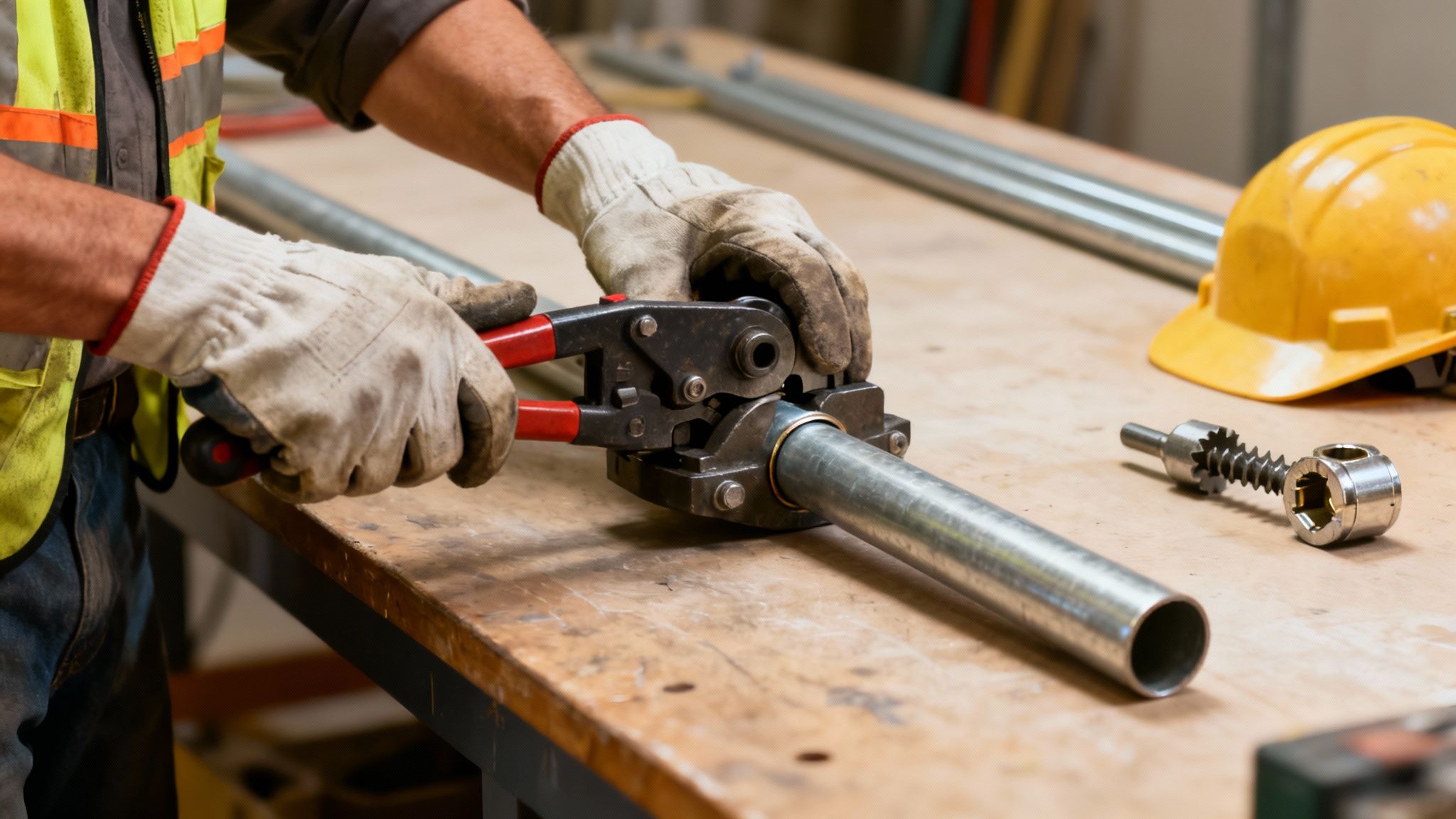
A professional installation involves careful cutting, reaming, bending, and securing of conduits. After cutting a conduit, the inside edge must be reamed to remove sharp burrs that could strip wire insulation during pulling and cause a short circuit.
When routing conduit around corners, a proper pipe bender is essential to create smooth, gentle curves without kinking or flattening the pipe, which weakens the conduit and obstructs wire pulling. Finally, all connection points must be tight and secure. Loose fittings can vibrate loose, compromising the system's integrity and breaking the continuous grounding path that the metal conduit provides.
For a deeper dive, you can check out our comprehensive guide on electrical conduit installation to truly master these techniques.
How Should You Maintain GI Conduits Long-Term?
For facility managers, ongoing maintenance is crucial for electrical infrastructure safety. While GI conduits are durable, they require regular checks for physical impacts or corrosion in harsh environments.
A proactive maintenance schedule is far more cost-effective than reactive repairs. Regular visual inspections can identify potential issues like corrosion spots or damaged sections before they escalate into serious safety risks or system failures.
A straightforward but effective maintenance plan should include these checks:
- Periodic Visual Inspections: Walk the conduit runs at least once a year. Pay close attention to fittings and support points, as these are common spots where moisture can gather and rust can start.
- Check for Physical Damage: Keep an eye out for any dents, crushed sections, or loose supports, particularly in busy industrial areas or places with heavy traffic.
- Verify Grounding Continuity: It's good practice to periodically test the electrical continuity of the grounding path to ensure all safety features are working as they should.
Starting with high-quality materials from a trusted supplier in Dubai sets you up for success. But it's the diligent installation and consistent maintenance that truly ensures long-term performance. As a leading building materials distributor, we know from experience that these practices are what turn a good product into a great, lasting electrical system.
Your GI Conduit Procurement Checklist
Getting the right materials to the site on time is where the rubber meets the road for any project. If you're a procurement officer or a project manager, you know that a solid vetting process for your suppliers is non-negotiable.
Think of this checklist as your framework for evaluating any potential GI conduit supplier in Dubai or the wider UAE. It's about finding a partner who doesn't just sell you a product but delivers on quality, reliability, and timelines.
A strong relationship with a dependable building materials distributor is your best insurance against costly delays and headaches, keeping your entire construction schedule humming along smoothly.
What Certifications Should You Verify?
A credible supplier must provide manufacturer certifications proving their GI electrical conduits meet international and local standards. This includes documentation for UL listings, BS EN compliance, and alignment with UAE construction standards.
This step is your first defence against subpar materials that could compromise your entire installation. But don't just stop at the certificates.
A supplier with a deep and consistent inventory is a partner who can shield your project from the supply chain hiccups we all know are inevitable. Make it a point to ask about their on-hand stock levels for the most common sizes, like 20mm and 25mm Class 4 conduits. The answer will tell you a lot about their reliability.
How Do You Assess Supplier Capabilities and Logistics?
A supplier's operational strength is just as crucial as product quality. Investigate their warranties, inventory depth, and logistical capabilities to ensure a smooth procurement experience.
Here’s a practical checklist to run through when you're talking to a potential supplier:
- Product Warranties: What kind of manufacturer's warranty comes with their GI conduits? A strong warranty isn't just a piece of paper; it’s a vote of confidence in the product's quality and your safety net if defects show up down the line.
- Inventory and Availability: Ask them point-blank: can you handle a large-volume order for a major project without breaking a sweat? You need to know they have enough stock to prevent your project from grinding to a halt.
- Logistical Competence: How sharp are their delivery logistics? Find out if they offer next-day or even same-day delivery to your sites in Dubai, Abu Dhabi, or Sharjah. For the fast-paced construction world, efficient, reliable delivery is a must-have.
By systematically working through these questions, you can move beyond just finding a vendor and instead select a supplier in Dubai who acts as a genuine partner in your project's success.
For more on this topic, check out our guide on choosing electrical equipment suppliers in the UAE.
Your Top Questions About GI Conduits Answered
When you're on site or deep in the project planning stages, practical questions about GI electrical conduits always come up. Getting the right answers is key to making sure your installation is not just compliant and safe, but built to last. Here are the straight answers to the questions we hear most often from project managers and engineers across the UAE.
What's the Real Difference Between Class 3 and Class 4 Conduits?
The main difference between Class 3 and Class 4 conduits is wall thickness and the amount of protective zinc coating. Class 4 is the heavy-duty option with a thicker steel wall and a more substantial galvanised layer, making it ideal for outdoor, direct burial, or other tough environments as required by UAE construction standards. Class 3 offers medium-level protection and is suitable for most indoor commercial applications with a lower risk of physical impact.
Are GI Conduits a Smart Choice for Data and Communication Cables?
Yes, GI electrical conduits are an excellent choice for protecting sensitive data and communication cables. The rigid steel construction prevents physical damage from crushing or kinking, while the metal itself provides natural shielding against electromagnetic interference (EMI), which can disrupt data signals. This makes GI conduit ideal for data centres, offices, and industrial settings where network reliability is critical.
Protecting high-value assets like fibre optic or structured cabling isn't just about hiding wires. The robust physical and electrical shielding from a GI conduit is a sound investment against costly downtime and data loss.
Can You Mix GI and PVC Conduits in the Same Run?
Yes, you can transition from GI to PVC conduit within the same system, typically where a run moves from an exposed area to inside a wall. However, this must be done correctly using proper transition fittings and, most importantly, ensuring the system's ground continuity is maintained across the entire run as required by local electrical codes.
How Long Do GI Conduits Actually Last in the UAE's Climate?
High-quality GI conduits, when installed correctly, can last for 30 to 50 years or even longer in the UAE's climate. The heavy-duty zinc coating is specifically engineered to withstand the region's high humidity and salinity. The actual lifespan depends on the quality of galvanisation and the specific installation environment, making Class 4 conduits the safest choice for maximum longevity in coastal or industrial areas.
For over two decades, Yasu Trading Co. LLC has been the trusted partner for contractors and engineers across the UAE, providing municipality-approved GI electrical conduits and a full range of building materials. We combine deep inventory with expert support and reliable, site-direct delivery to keep your project on schedule.