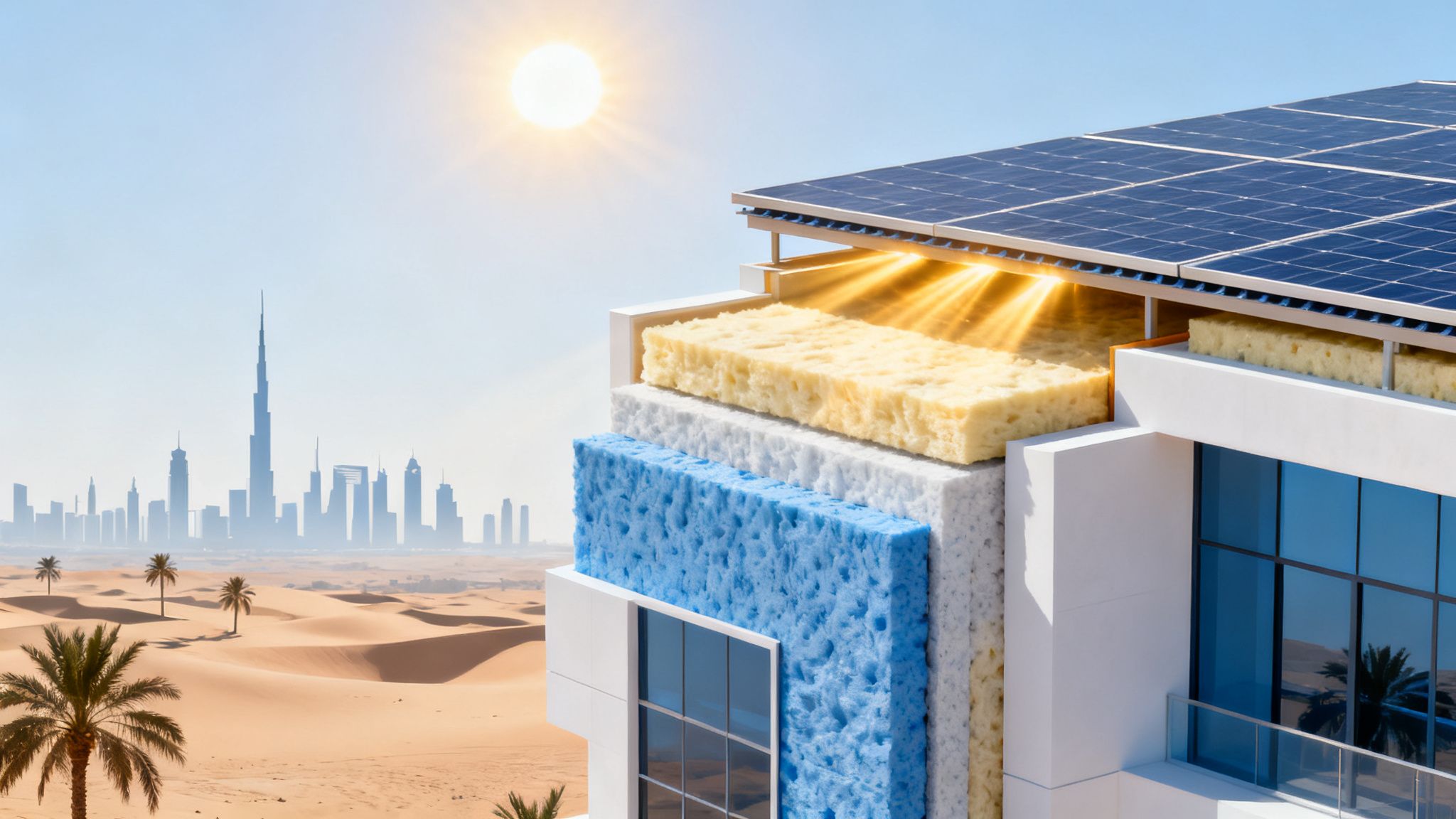
Insulation standards uae: reducing hvac loads with high-performance materials
In the relentless UAE heat, your building's insulation isn't just a component—it's the primary defence against skyrocketing energy bills. With HVAC systems accounting for a staggering 70% of energy consumption in many buildings, getting the insulation right is the single most effective strategy for cutting operational costs and ensuring regulatory compliance.
Your Building’s First Line of Defence Against Solar Heat
Think of a building's roof and walls as its physical shield. Here in the UAE, that shield is under a constant, blistering assault from solar radiation. If that shield is weak, heat bleeds straight through, forcing the air conditioning to run non-stop just to keep things bearable. This isn't just inefficient; it's a huge strain on the entire mechanical system and a major driver of high utility costs.
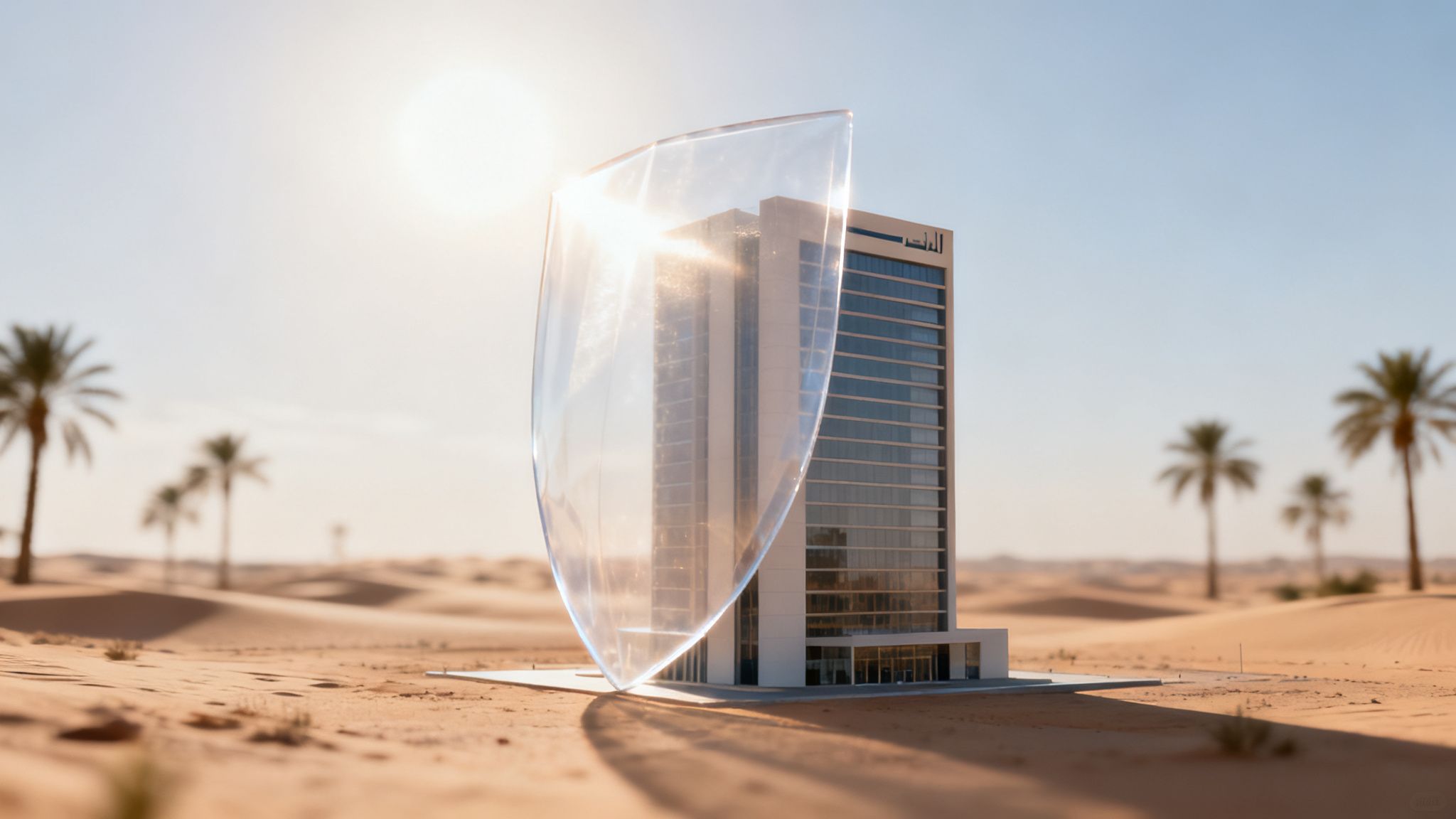
High-performance insulation is what transforms a basic wall into a high-tech thermal barrier. It works by dramatically slowing down heat transfer, keeping the cool air in and the scorching heat out. It’s less about just adding a layer and more about engineering a defence that keeps the indoor environment stable, no matter what the thermometer says outside.
The Mandate for a Stronger Shield
This isn't just a good idea; it's becoming the law. UAE regulators know exactly how much energy is wasted on cooling, and they're tightening the rules. The upcoming 2026 standards will demand much stricter U-values—the measurement of how easily heat passes through a material. For 2026, the mandatory U-values will be set at 0.19 W/m²K for roofs and 0.40 W/m²K for walls.
A lower U-value means better insulation, and hitting these new targets is non-negotiable for compliance. This is central to sustainability frameworks you’re already working with, like Dubai's Al Sa'fat and Abu Dhabi's Estidama. These energy efficiency regulations are all designed to combat one key problem: solar heat seepage, the process where the sun’s energy soaks through building materials and cranks up the indoor temperature.
The goal of modern insulation standards is simple: create a building envelope that’s as close to impenetrable as possible. This approach minimises thermal bridging and unwanted heat gain, making it the most powerful way to reduce the size, cost, and daily energy draw of your HVAC systems.
How Yasu’s Products Fortify the Building Envelope
Meeting the tough 2026 U-value targets means that old-school, standard insulation just won't cut it anymore. As a contractor, you need to be specifying energy efficient building materials engineered from the ground up for superior thermal resistance. This is where materials like Polyurethane (PU), Polyisocyanurate (PIR), and Extruded Polystyrene (XPS) from Yasu come in.
These products are incredibly effective because their structure consists of millions of tiny, closed cells that trap air, creating a powerful barrier against heat conduction. When installed correctly as a continuous layer, they effectively prevent solar heat from seeping through the walls and roof. This is what proper thermal insulation in Dubai and across the UAE looks like, and it’s the key to achieving real HVAC energy reduction.
By blocking heat right at the building's physical shield, you drastically reduce its dependence on mechanical cooling. The result is immediate and significant savings that continue for the entire life of the building.
Decoding UAE Insulation Mandates and U-Values
When you're trying to get a project signed off in the UAE, the maze of energy efficiency regulations can feel overwhelming. But for contractors on the ground, it really boils down to one critical number: the U-value. Get that right, and you're most of the way there.
Think of a U-value as the performance score for a building's thermal shield. It’s a straightforward measure of how easily heat can punch through a wall, a roof, or a window. Here in the UAE, a lower number is always what you’re chasing—it means you’ve built a stronger, more effective barrier against the blistering sun.
The U-Value: Your Project's Gatekeeper
A wall assembly with a high U-value is like a cheap cooler on a summer afternoon. It lets the heat pour in, forcing the air conditioning to run full blast just to keep up.
On the other hand, a low U-value, which you get by using top-tier insulation, acts like a premium vacuum flask. It keeps the inside cool and comfortable no matter how hot it gets outside. This is the simple, powerful idea behind all insulation standards in the UAE.
Regulations like Dubai Municipality’s Al Sa'fat Green Building Rating System and Abu Dhabi's Estidama Pearl Rating System are all about pushing for lower and lower U-values. They’re designed to make sure we use superior energy efficient building materials to create a tight thermal envelope that stops heat in its tracks.
A low U-value isn't just a number on a spec sheet—it's the real-world measure of how well a building stands up to our climate. For contractors, getting U-values right is the key to delivering compliant, high-performance buildings that save clients a fortune on DEWA bills down the line.
What the Regulations Actually Demand
With 2026 just around the corner, the codes are getting even tighter. The U-values that were acceptable a few years ago won't pass muster anymore. This makes choosing the right insulation material more critical than ever.
Here’s a practical look at what that means for your projects:
- Roofs: The roof takes the brunt of the sun's attack all day long. That's why it needs the absolute lowest U-value. You'll achieve this with thicker layers of high R-value insulation like PIR or XPS boards to form an almost impenetrable heat shield.
- Walls: They might not get the same direct overhead sun as a roof, but external walls soak up a huge amount of radiant heat. The regulations are just as strict here, demanding low U-values to stop that heat from bleeding into the building.
These rules are genuinely changing how we build. For example, Abu Dhabi's Estidama requires a minimum of Pearl 1 for private villas and Pearl 2 for government buildings. One study on Abu Dhabi villas showed that upgrading to 2-Pearl standards with better insulation cut annual energy use by an incredible 43%.
At the same time, Dubai Municipality's Green Building Regulations are demanding minimums like R-20 for walls and R-30 for roofs. With over 39,000 new homes built in 2023 alone, the demand for effective thermal insulation in Dubai is massive. You can find more insights into how developers are adapting to these standards and achieving energy efficiency.
How Yasu’s Products Help You Hit the Mark
Let’s be honest: you can't hit these low U-value targets with old-school, basic materials. It's just not possible. This is exactly where modern, high-performance insulation from Yasu becomes a project-saver.
Materials like Polyisocyanurate (PIR) and Extruded Polystyrene (XPS) pack a massive amount of thermal resistance (R-value) into a slim, easy-to-install board.
By specifying Yasu’s insulation products, you can design wall and roof systems that easily meet and even beat the 2026 U-value targets. These materials create a continuous thermal break that slashes heat transfer, which leads directly to a smaller, more efficient HVAC system and real HVAC energy reduction. It's the simplest way to ensure compliance while delivering a genuinely better, more cost-effective building for your client.
For a deeper dive into upcoming changes, check out our guide on Al Sa'fat 2026 and sustainable material selection.
How Better Insulation Directly Reduces HVAC Loads
The link between a project's insulation spec sheet and its real-world energy bills is a straight line. To really get it, you have to think about how heat bullies its way into a building in the first place. It’s a constant battle against conduction, convection, and radiation—what I call "solar heat seepage"—and every wall, window, and roof is a potential weak spot.
High-performance insulation is your frontline defence against all three. Materials like Polyurethane (PU), Extruded Polystyrene (XPS), and Polyisocyanurate (PIR) are engineered with a closed-cell structure that traps air, which is a terrible conductor of heat. This structure physically stops heat from conducting through the material, while its solid form blocks convective currents. Throw in a specialised foil facing, and you’ve got a shield that reflects radiant heat, too.
From U-Values To Cooling Tonnage
This is where the science translates directly into savings for the client and a much easier job for the mechanical systems. A lower U-value means less heat is punching through the building envelope. Simple as that. The less heat gets in, the less work the air conditioning has to do to keep the inside cool and comfortable.
This isn't just a tiny tweak; it fundamentally rewrites the cooling load calculation for the entire project.
Think about it this way: by dramatically cutting the heat gain through the roof and walls, you can often specify a smaller, less expensive HVAC unit right from the get-go. That initial capital saving, paired with the long-term drop in energy bills, makes high-performance insulation a direct investment in a more efficient and less costly mechanical system.
This infographic breaks down that core relationship between modern insulation standards and the tangible savings they deliver.
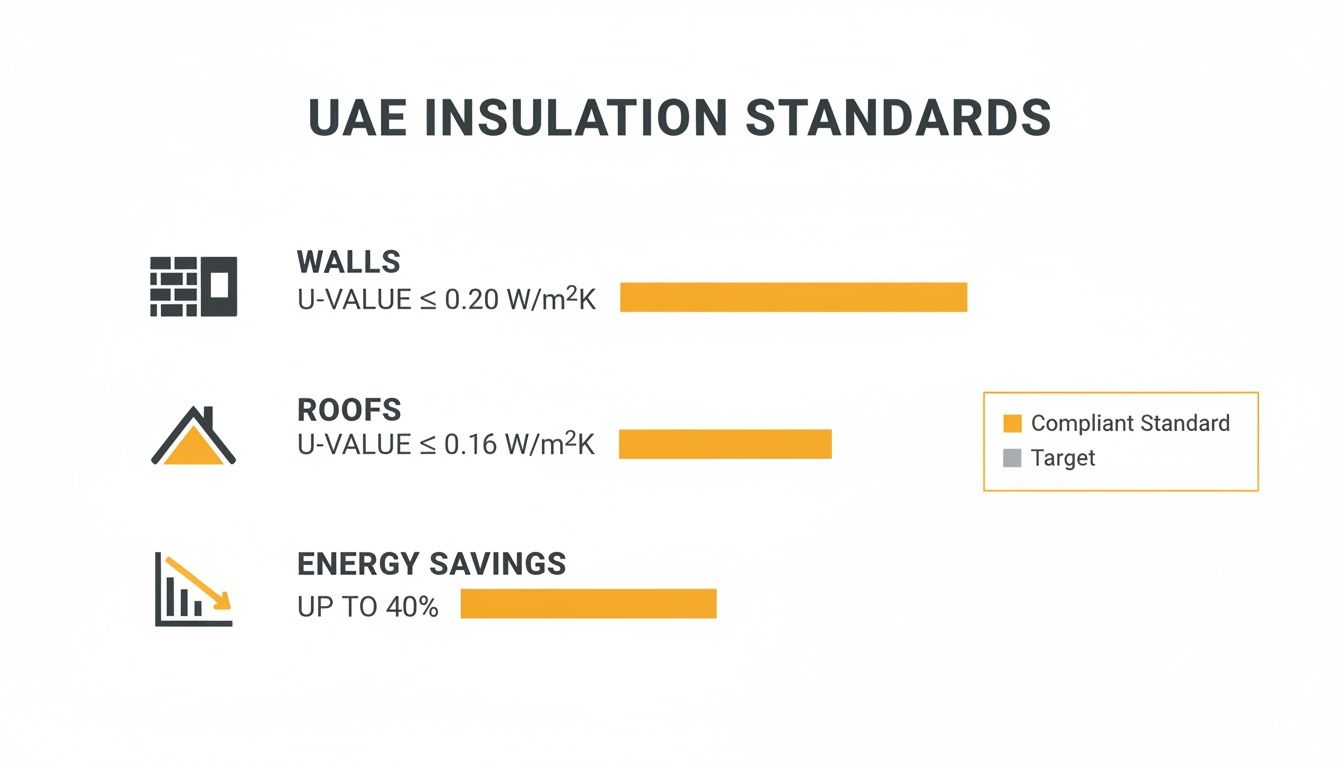
The main takeaway here is that by beefing up the thermal performance of your walls and roofs, you are directly slashing the building's cooling demand and, by extension, its running costs for years to come.
A Practical Example Of HVAC Energy Reduction
Let’s bring this down to a real-world job site in Dubai. Picture a standard concrete block wall, the kind that won't pass the upcoming 2026 regulations. The heat transfer through that uninsulated wall is enormous, dumping a huge thermal load onto the building's cooling system.
Now, take that exact same wall, but this time specify a continuous layer of Yasu’s PIR insulation boards. Suddenly, the assembly's R-value skyrockets, and the U-value plummets. Just that one upgrade can cut the heat gain through that wall by over 50%.
When you apply that same logic across the entire building envelope—every wall and the whole roof—the combined effect is massive. The total required cooling tonnage for the building drops right off. This is the heart of HVAC energy reduction: building a better thermal shield so the machines don't have to work so hard.
For a deeper dive into how specialised systems can boost a building's energy performance and longevity, it's worth reading up on tapered roof insulation. It’s a great example of an approach that improves thermal resistance while also solving other critical site issues like water drainage.
High-Performance Materials: The Key Enablers
Getting these kinds of results means using materials specifically engineered for the punishing UAE climate. Products from Yasu, like our XPS and PIR boards, are designed not just for exceptional thermal resistance but also to withstand the region's unique challenges, from intense humidity to extreme temperature swings.
To make specifying easier, here's a quick-reference guide comparing the heavy hitters in high-performance insulation for UAE projects.
Insulation Material Performance Comparison
| Material Type | Typical R-Value per Inch | Key Benefits for UAE Climate | Best Application (Wall/Roof) |
|---|---|---|---|
| PIR | R-6.0 to R-7.0 | Excellent thermal resistance and fire performance, making it a top choice for commercial and residential projects. | Both, especially effective for roofs due to high R-value per inch. |
| XPS | R-5.0 | High compressive strength and exceptional moisture resistance, ideal for below-grade applications and inverted roofs. | Both, particularly valuable for roofs and foundations. |
| PU Spray Foam | R-5.5 to R-6.5 | Creates a seamless air and vapour barrier, perfect for sealing complex shapes and preventing air leakage. | Walls and roofs, excellent for retrofits and complex geometries. |
Choosing the right material means you’re creating a building envelope that works smarter, not harder. This robust physical shield keeps solar heat out, letting the HVAC system run efficiently and affordably. At the end of the day, that’s the real goal of meeting the tough insulation standards in the UAE.
Selecting the Right Energy Efficient Building Materials
Choosing the right insulation for a project here in the UAE isn't just about ticking a box on a compliance sheet. It's one of the most critical decisions you'll make, directly impacting everything from long-term running costs to occupant comfort. Let's move past the theory and get practical about selecting the right energy efficient building materials to create a thermal shield that actually performs in our climate.
A "one-size-fits-all" approach to insulation is a guaranteed path to poor performance. The material that works brilliantly on a massive warehouse roof is likely the wrong choice for the basement walls of a Jumeirah villa. Every part of the building envelope—from the sun-baked roof to the humid foundation—faces its own unique set of challenges.
Matching Materials to the Application
To achieve real, measurable HVAC energy reduction, you have to play to the strengths of each material. Different high-performance insulation products are engineered for specific jobs.
Here’s a quick rundown of the top contenders and where they shine:
- Extruded Polystyrene (XPS): Think of XPS as the workhorse for tough spots. With its incredible compressive strength and near-total resistance to moisture, it’s the default choice for inverted roofs, foundations, and any below-grade application. It can handle foot traffic and shrugs off water, protecting the building’s core for decades.
- Polyisocyanurate (PIR): When you need the best possible thermal performance without sacrificing space, PIR is your answer. It delivers one of the highest R-values per inch, making it perfect for creating slim, highly effective wall and roof assemblies. Plus, its excellent fire ratings make it a top pick for commercial and residential projects where safety is non-negotiable.
- Spray Polyurethane (PU) Foam: Got complex shapes, tricky retrofits, or a need for a perfect air seal? Spray PU foam is in a league of its own. It expands on-site to fill every single gap and crack, forming a single, unbroken barrier that completely shuts down thermal bridges and air leaks.
The Growing Market for High-Performance Insulation
The drive for better building performance is fuelling a massive demand for these advanced insulation solutions. The UAE insulation market’s explosive growth shows just how seriously the industry is taking HVAC efficiency. Valued at USD 1.97 billion in 2024, it's on track to hit USD 2.67 billion by 2030. Materials like MDI-based PU technical insulation are leading the charge, especially for building envelopes, thanks to their fantastic thermal conductivity and fire ratings.
A boom in commercial projects, combined with the 39,000 Dubai residential units handed over in 2023 alone, is supercharging demand for PIR, phenolic, and XPS from specialist distributors like Yasu Trading Co. LLC.
Choosing the correct material isn't just about the R-value. It’s about understanding the entire system—how the material interacts with moisture, fire, and structural loads—to ensure the building performs as designed for its entire lifecycle.
For instance, a great real-world example is an insulated roll up door, which is specifically engineered to stop heat from pouring into a warehouse or factory through large openings. It’s a perfect illustration of how every single component has to be considered to meet modern insulation standards in the UAE.
Partnering with a Technical Supplier for Success
Trying to navigate the specifications for a major project can get complicated, fast. Tender documents are often filled with precise demands for thermal values, fire classifications, and strict compliance with Dubai Municipality or Estidama codes. This is where leaning on a knowledgeable technical supplier like Yasu becomes a massive advantage.
A true expert partner does more than just drop pallets on your site. They’re the ones who provide the technical data sheets, the compliance certificates, and the hands-on advice you need to ensure the specified material is a perfect fit for the job. This kind of collaboration saves you from costly mistakes—like using a material with the wrong compressive strength on a roof or one that can't handle the humidity below grade. A reliable partner helps you get it right the first time, keeping your project moving and your budget intact.
For more insights on this topic, you might be interested in our deeper look into selecting sustainable construction materials. By aligning your material choice with both performance needs and local regulations, you can deliver buildings that are genuinely a cut above the rest.
Avoiding Common Installation Mistakes
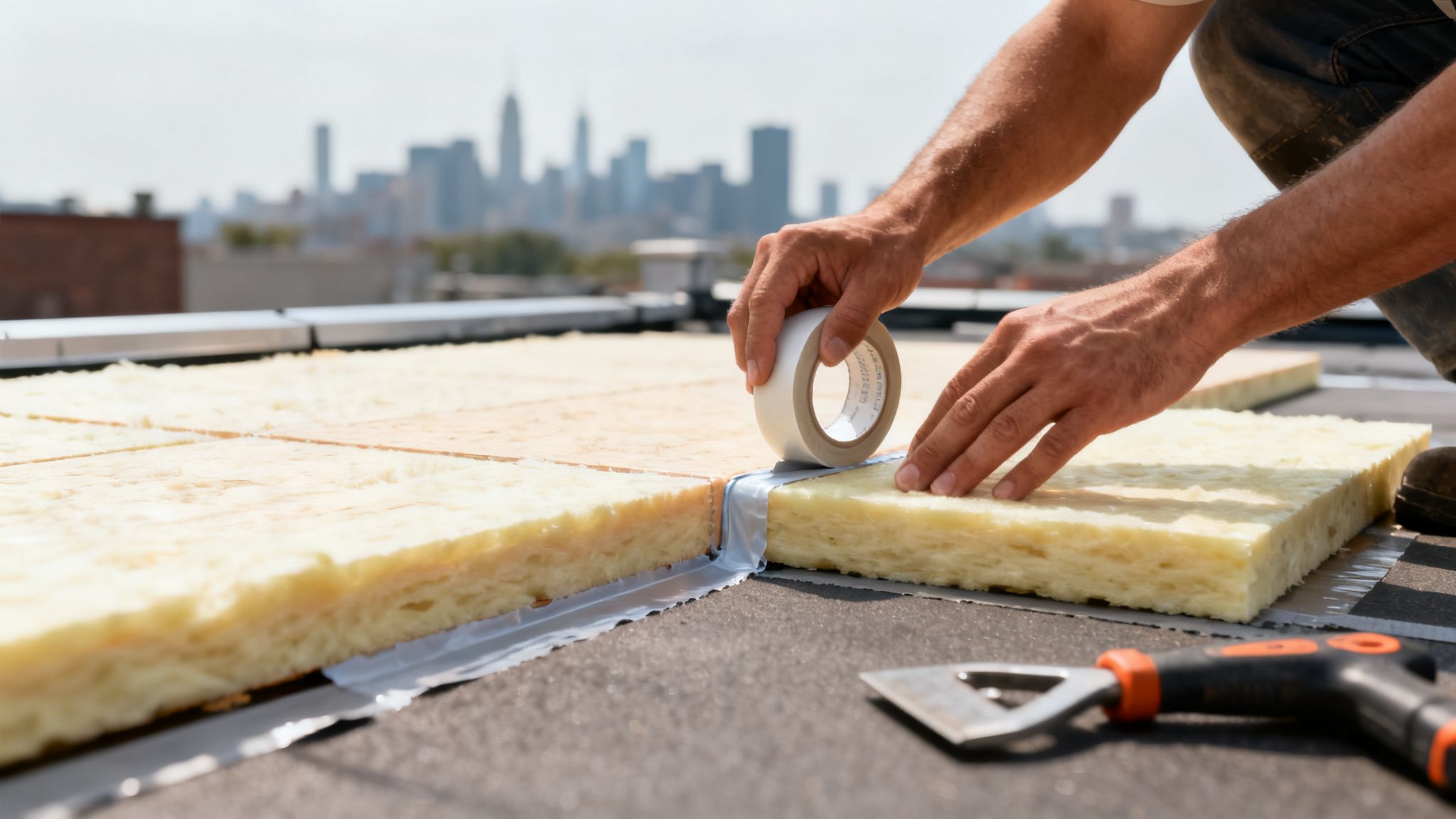
Sourcing the best energy efficient building materials is a great start, but it's only half the battle. If that high-performance insulation is installed poorly, its effectiveness nose-dives. This completely undermines your efforts to meet insulation standards in the UAE and achieve any meaningful HVAC energy reduction.
Think of it this way: a perfect thermal shield is only as strong as its weakest link.
Even the tiniest mistake during installation can create a "thermal bridge"—a weak point that acts like a heat superhighway, letting the blistering sun bypass your insulation and flood right into the building. These gaps, unsealed joints, and sloppy cuts are why so many buildings underperform, forcing the AC to run nonstop and sending energy bills through the roof.
This is why getting the installation right isn't just a box-ticking exercise. It's the most critical step to ensure the building actually performs the way it was designed to. Getting it right protects your work, prevents a world of headaches and rework, and delivers the performance your client is paying for.
The Most Common and Costly Errors
On a busy UAE construction site, it’s all too easy for small details to get missed. The problem is, these small oversights have massive consequences for the building's performance. A truly effective installation is all about creating a continuous, unbroken barrier against heat.
Here are the mistakes we see compromising the thermal envelope time and time again:
- Gaps Between Insulation Boards: This one seems obvious, but it happens constantly. Failing to butt insulation boards tightly together creates clear channels for heat to pour in. Every millimetre counts.
- Poorly Sealed Penetrations: Openings for pipes, ducts, and electrical conduits must be sealed with absolute precision. Unsealed gaps around these MEP services are a huge source of heat gain.
- Neglecting Joints and Transitions: The spots where walls meet the roof or the foundation are high-risk zones for thermal bridging. If you're not properly taping and sealing these junctions, you're leaving the door wide open for heat.
A perfectly insulated wall with an unsealed window frame is a failed system. The entire goal is a seamless, airtight shield across the building envelope, and that demands precise coordination between all trades on site.
Best Practices for a Seamless Thermal Shield
To guarantee the integrity of the thermal barrier, you need a proactive approach from the very beginning. It’s not just about slapping boards on a wall; it’s about engineering a cohesive system that will stand up to the relentless UAE sun and pass any inspection thrown at it.
To get a high-quality installation every time, make sure your teams are focused on these steps:
- Ensure Tight Joints: Every insulation board must be installed with tight, compressed joints. Use the manufacturer-approved tapes and sealants to cover every single seam, creating a single, monolithic layer of protection.
- Seal Every Penetration: Use specialised collars, expanding foams, or flexible sealants around every pipe, vent, and wire that punches through the insulation. This is how you stop air and heat from finding a shortcut into the building.
- Coordinate with MEP and Facade Teams: The insulation installer can't work in a silo. Hold regular coordination meetings with the MEP and facade contractors to meticulously plan every penetration and transition. This prevents other trades from coming in later and cutting or damaging the insulation you just carefully installed.
When you focus on these critical details, you move past just trying to be compliant. You deliver a building that genuinely performs, breezes through inspections, and provides massive long-term value through significant HVAC energy reduction. That commitment to quality is what protects your reputation and keeps clients happy.
Finding a Supply Partner You Can Count On
Choosing the right insulation is only half the battle. The real test is getting those materials to your site, on schedule, with all the correct paperwork. This is where projects either keep moving or grind to a halt. A project’s success isn't just about high-spec products; it’s built on a bulletproof supply chain that prevents delays and cuts through procurement headaches. Trying to juggle materials from multiple vendors just adds paperwork and a huge risk of mismatched deliveries, which can easily throw a tight construction schedule into chaos.
This is exactly why partnering with a specialised B2B distributor makes so much sense. When you work with a single expert source, sourcing materials stops being a logistical nightmare and becomes a real advantage. It’s all about consolidating your needs through one partner who actually gets the demands of construction in the UAE.
The Single-Source Advantage
A great supply partner does a lot more than just process orders. Think of them as an extension of your own project team, making sure you have a deep inventory of municipality-compliant products ready to go at a moment's notice. No more chasing one supplier for PIR boards, another for fasteners, and a third for sealants. You get one point of contact for everything.
This streamlined approach delivers some serious benefits:
- Compliance Guaranteed: An expert distributor will hand you all the necessary technical data sheets and compliance certificates. You can be confident every product meets Dubai Municipality or Estidama standards.
- Logistics Made Simple: With direct-to-site delivery, materials show up exactly when and where you need them. This keeps your project on schedule and your team productive.
- Less Admin, More Building: One order, one delivery, one invoice. This slashes the paperwork, freeing up your team to focus on the job site, not on procurement.
Turn Sourcing from a Problem into a Plus
For any contractor working in Dubai or Abu Dhabi, sourcing compliant materials from a trusted distributor like Yasu Trading Co. LLC in Deira is a game-changer. It ensures you get municipality approvals and direct-to-site delivery without any drama. Yasu stocks brands that offer high-performance energy efficient building materials, like PIR and phenolic foams, which are perfect for those demanding MEP specs. This doesn’t just help you meet tender requirements; it can trim long-term operational costs by up to 35% on cooling loads.
The market is definitely heating up—commercial permits were up 12.5% year-over-year in 2024. The numbers back it up; you can see the details on the UAE insulation products market, which hit USD 1.97 billion that year and is on track to reach USD 2.67 billion by 2030.
A strong supply partner is your project’s insurance policy against delays. They provide the technical support to solve challenges on the fly and the logistical muscle to eliminate the risk of costly downtime, ensuring you meet the stringent insulation standards in the UAE without a hitch.
At the end of the day, picking a reliable distributor gives you certainty in an industry where schedules mean everything. It guarantees you have access to quality-assured materials that support HVAC energy reduction and ensures your project runs smoothly from the tender stage right through to final handover. That kind of strategic partnership is the foundation for delivering high-quality, compliant, and profitable projects in the competitive UAE market.
Your Questions Answered: UAE Insulation Explained
When it comes to insulation standards in the UAE, contractors on the ground have plenty of questions. Getting the details right is crucial for compliance, but it’s also about delivering a high-performance building. Let's tackle some of the most common queries to give you clear, practical answers for your next project.
Getting this right from the start is the key to passing inspections and achieving serious HVAC energy reduction.
What Are the Minimum U-Values for New Dubai Buildings?
While the exact U-values depend on a project’s specific Al Sa'fat rating, the Dubai Green Building Regulations are strict. Generally, they demand performance that's equivalent to an R-20 for walls and R-30 for roofs.
Hitting these numbers means you need extremely low U-values. This makes high-performance thermal insulation in Dubai—think PIR, PUR, or XPS—absolutely essential. You simply can't block the intense solar heat gain and secure compliance without it.
How Does Upgrading Insulation Affect My Project Budget?
It's true that top-tier insulation comes with a higher upfront material cost, but looking at that number alone is a mistake. The return on investment is huge, and it starts immediately. Better insulation often means you can spec a smaller, less expensive HVAC system right from the get-go, delivering an instant capital saving.
Over the building's lifecycle, the energy savings from reduced cooling loads are massive—often cutting operational costs by up to 35%. For your client, this means a more valuable and sustainable property in the long run.
Can I Use the Same Insulation for Both Roofs and Walls?
You might be able to, but you shouldn't. For maximum performance, you have to choose the material for the specific application. Roof insulation, for instance, needs high compressive strength to handle foot traffic during maintenance. This makes rigid boards like XPS or PIR the clear winner.
For walls, your priority might be squeezing the highest possible R-value into a tight space. The best approach? Talk to a technical supplier. They’ll help you choose the most effective and cost-efficient energy efficient building materials for each part of the building envelope.
How Do I Ensure My Insulation Is Approved by UAE Municipalities?
This one is simple: source your materials from an established, authorised distributor in the region. It's the only risk-free way to operate.
Specialised suppliers will give you all the paperwork you need, from technical data sheets to certificates of compliance. This documentation is your proof that the products meet the tough local standards set by Dubai Municipality or Abu Dhabi's Estidama programme.
Taking this single step avoids the massive headache of using non-compliant materials, which can lead to failed inspections, costly rework, and project-killing delays. A trusted local partner is your best guarantee for a smooth project.
For guaranteed access to municipality-compliant, high-performance insulation and other essential building materials, trust Yasu Trading Co. LLC. We provide the technical expertise and reliable, site-direct delivery you need to keep your UAE projects on schedule and within budget. Explore our full range of construction solutions today.