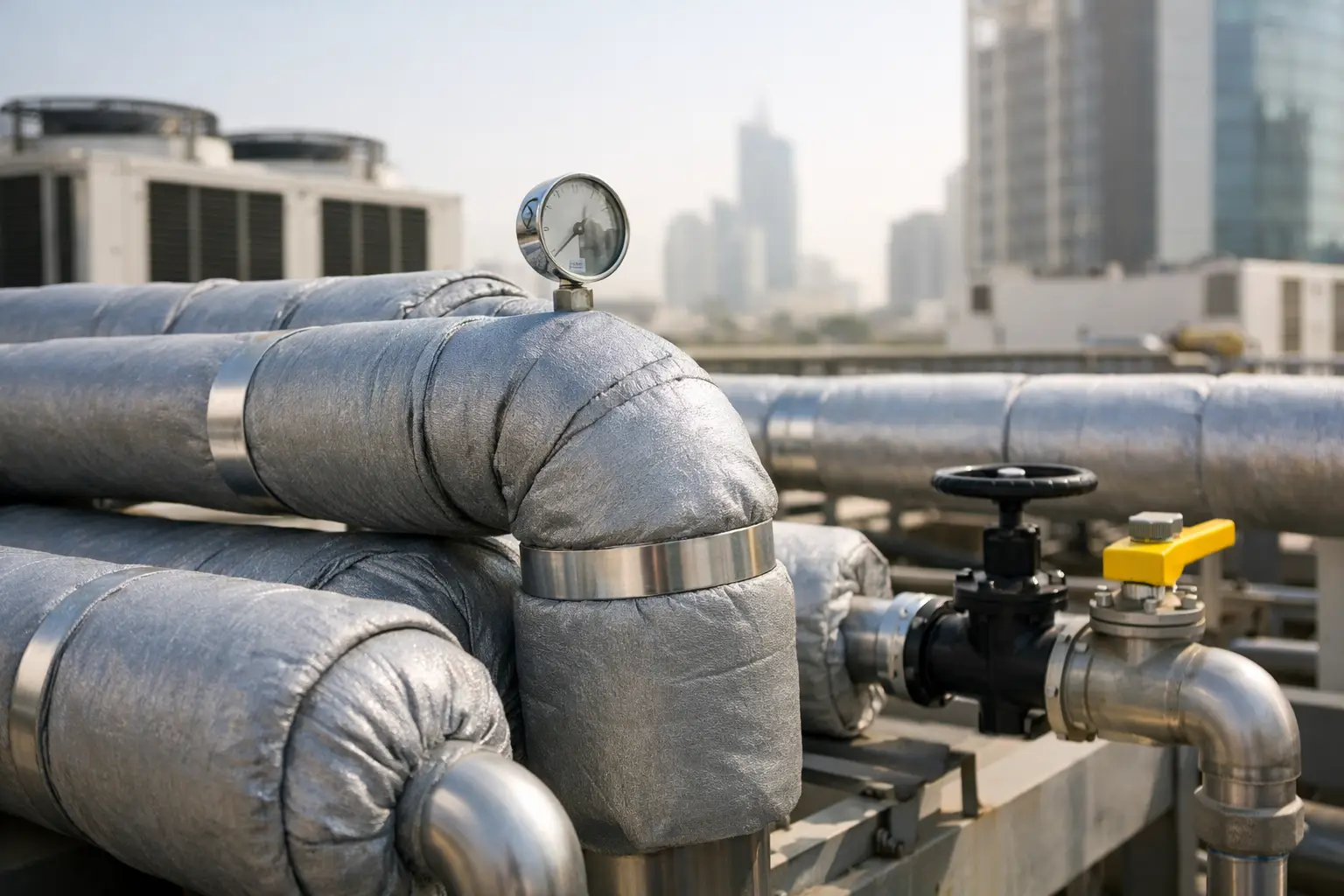
Pipe Insulation Performance Review for UAE Projects
A pipe insulation performance review should start where project risk starts: at the installed pipework, not at the product data sheet. On UAE sites, high ambient temperatures, humid plant rooms, long service runs, and fast construction programs can expose weak insulation selection or poor workmanship quickly. For contractors and MEP procurement teams, the objective is straightforward - keep systems operating efficiently, prevent condensation and corrosion, meet approved specifications, and avoid rework after ceilings and shafts are closed.
What Pipe Insulation Performance Should Be Measured Against
Insulation is not a single requirement. Its performance depends on the service temperature, pipe material, location, moisture exposure, fire strategy, and the quality of installation. A product that works well on an internal chilled-water branch may not be the right choice for exposed roof-level pipework, hot-water lines, or pipes running through a fire-rated shaft.
The first review point is the approved MEP specification. Confirm the required insulation material, thickness, density where relevant, facing or vapor barrier requirements, fire classification, and approved manufacturer. Substituting based only on a similar-looking roll, tube, or price can create a compliance gap that appears during consultant inspection or final handover.
A practical review also checks whether the insulation is suitable for the actual duty. Chilled-water and refrigerant lines need reliable condensation control. Domestic hot-water and heating lines need heat retention. Drainage and soil pipe insulation may be specified for acoustic control as well as thermal protection. Each application demands a different performance priority.
Thermal Performance: Controlling Heat Gain and Heat Loss
Thermal conductivity is the core technical measure. Lower conductivity generally means the material transfers less heat, but procurement decisions should not stop there. The stated value must relate to the expected operating temperature and be supported by the required installed thickness.
For chilled-water pipework, insufficient thickness allows heat gain from surrounding air. This increases cooling load and can raise operating costs across the building's life. More immediately, it can bring the pipe surface temperature below the dew point, leading to sweating and water damage in ceilings, risers, and finished areas.
For hot-water services, poor insulation means greater heat loss between the plant room and the point of use. The result may be longer wait times for hot water, unnecessary energy use, and a system that fails to meet design expectations at remote fixtures. Where pipework runs are extensive, small reductions in insulation performance become a measurable operational issue.
During review, compare installed thickness with the approved schedule at several locations, including large-diameter pipes, fittings, valves, branches, and risers. Thickness is often correct on straight runs but compromised where access is difficult. A system performs only as well as its weakest unprotected section.
Why Ambient Conditions Change the Decision
UAE projects require particular attention to high outdoor temperatures and humidity. In air-conditioned interiors, the temperature difference between chilled services and surrounding air can be substantial. In plant rooms, roof areas, parking structures, and service corridors, insulation may face elevated temperatures, moisture, dust, and mechanical contact.
This does not always mean selecting the most expensive material. It means selecting a system appropriate to the exposure and then protecting it properly. External or exposed installations may require weather-resistant cladding, UV protection, or a durable jacket. A basic insulation material can lose performance if its finish is damaged or unsuitable for the installation environment.
Moisture Resistance and Condensation Control
For cold services, moisture control is often the deciding factor in a pipe insulation performance review. Closed-cell elastomeric insulation is commonly specified where a continuous vapor-resistant layer is needed around chilled-water, refrigerant, and other low-temperature pipework. The material alone is not enough. Every joint, seam, termination, and penetration must be sealed according to the approved installation method.
A small gap in the vapor barrier allows humid air to reach a cold pipe surface. Condensation can then form behind the insulation, where it remains hidden until staining, dripping, corrosion, or mold-related complaints appear. Repair after ceiling closure is expensive and disruptive because the fault may be far from the visible damage.
Review teams should look closely at elbows, tees, valve assemblies, flange covers, support points, and pipe penetrations. These are the locations most likely to have cut edges, compressed insulation, open seams, or missing accessories. Where insulation is removed for testing or adjustment, reinstatement should match the original thermal and vapor-control performance.
For fibrous insulation systems, verify that the specified facing, jacket, and sealing method are present. Glass wool or mineral wool can be suitable for many services, particularly where fire and acoustic requirements are relevant, but moisture protection must align with the application. Material selection is not interchangeable between wet, cold, hot, internal, and exposed conditions.
Fire Performance and Specification Compliance
Fire performance should be reviewed as part of the complete pipework assembly, not treated as a label on insulation packaging. Check the approved fire classification, smoke requirements, and compatibility with firestopping systems at wall and floor penetrations. In shafts and escape-route-adjacent areas, the consultant's approved details may require specific insulation types, facings, and installation methods.
A common procurement risk is mixing products from different systems without confirming their combined compliance. Tape, adhesive, facing, cladding, and firestop components can all affect the final installation. Maintain manufacturer documentation, batch traceability where required, and approvals for substitutions before materials reach the site.
Municipality-compliant materials and documented product approvals help the project team avoid a late-stage rejection. They also give facilities teams clearer records for maintenance, warranty discussions, and future alterations.
Installation Quality Is the Real Performance Test
Even correctly specified insulation underperforms when it is installed carelessly. Site inspections should verify full contact with the pipe, clean butt joints, continuous vapor sealing on cold lines, and secure fixing without excessive compression. Compression reduces effective thickness and creates thermal bridges.
Pipe supports deserve special attention. A standard metal clamp can compress insulation and create a direct path for heat transfer. Depending on the system design, insulated pipe supports or load-bearing inserts may be required to maintain thermal continuity. This is particularly relevant on chilled-water mains, where repeated support failures can lead to condensation along an otherwise well-insulated run.
Inspectors should also check whether valve bodies, strainers, flanges, and fittings are insulated where the specification requires it. Leaving these components exposed may simplify access, but it can create heat gain, heat loss, or condensation. Removable insulation covers can be the right solution when regular maintenance access is necessary.
A Practical Review Process for Procurement and Site Teams
Before ordering, align the bill of quantities with pipe sizes, service categories, specified thicknesses, accessory requirements, and expected installation waste. A low unit price can be misleading if the order excludes matching adhesive, tape, vapor-seal materials, cladding, or preformed fitting pieces.
At delivery, verify manufacturer, product type, thickness, dimensions, condition of packaging, and documentation against the approved submittal. Damaged insulation should not be accepted simply because it can be used on a short run. Crushed tubes, wet fibrous products, and torn facings compromise quality before installation begins.
During installation, use hold points before shafts are closed, ceilings are installed, or cladding hides the work. A focused inspection of representative areas is more effective than trying to identify defects after completion. Photograph labels, joints, supports, terminations, and test areas for the project quality file.
For large projects, consolidated supply also matters. Split deliveries from multiple sources can lead to inconsistent material grades, missing accessories, and unapproved substitutions when a crew runs short. Working with an inventory-backed B2B supplier helps procurement teams maintain the approved system while protecting installation sequence and site delivery dates.
Assessing Lifecycle Value, Not Just Material Cost
The lowest-priced insulation may cost more if it leads to higher cooling loads, recurring condensation repairs, premature replacement, or failed inspections. Conversely, specifying a premium system everywhere may not be justified where the service conditions are controlled and the approved specification permits an alternative.
The right choice depends on the pipe service, location, risk of damage, fire requirements, and expected maintenance access. Review total installed cost: material, accessories, labor, protection, inspection, potential energy impact, and rework exposure. This gives project managers a clearer basis for comparing quotations.
For time-sensitive MEP packages, obtain a quote that separates pipe insulation by service and thickness, includes required accessories, and confirms delivery timing to the jobsite. A well-reviewed insulation package protects more than the pipework - it protects the commissioning plan, ceiling-close dates, and the confidence of the facilities team that inherits the building.