Understanding the 2026 Fire Safety Codes in Dubai for Contractors
Dubai's skyline never stands still, and neither do the regulations that keep it safe. The upcoming 2026 fire safety codes are more than just a minor update; they represent a fundamental shift in how we must approach fire prevention in every project. Driven by the Dubai Civil Defence (DCD), these changes demand smarter detection, faster suppression, and significantly tougher material standards for all new builds and major renovations.
Decoding the 2026 Dubai Fire Safety Mandates
Dubai’s architectural ambition is world-renowned, and the 2026 fire safety codes are designed to protect these incredible assets—and the people inside them. This isn't just about tweaking old rules. It's a complete rethink of the safety philosophy for the emirate. For contractors, developers, and facility managers on the ground, getting to grips with these new mandates is non-negotiable.
Think of the old codes like a standard smoke alarm. It does its job, but it’s reactive. The 2026 regulations are a leap forward, calling for an intelligent, interconnected system that can anticipate and pinpoint threats before they have a chance to grow. This proactive stance is the real heart of the new code.
What is the main goal of the new fire safety codes?
The main goal is to shift from passive compliance to active, built-in prevention, which is crucial in a city as dense as Dubai. The updated regulations mean every component, from a door hinge to a bead of fire-retardant sealant, is now scrutinized for its performance under fire conditions. The burden of sourcing and correctly installing DCD approved materials now falls squarely on the shoulders of the project teams.
The updated regulations demand a change in mindset. It's no longer about ticking boxes on a checklist. It's about engineering an integrated fire safety system where every single material contributes to the building's overall resilience.
This guide is here to cut through the dense regulatory language and give you practical, actionable advice. We’ll break down the key pillars of the code, helping you align your projects with the new UAE construction standards. Navigating these changes isn’t easy; it takes diligence and the right supply partners.
Here's a quick rundown of the major focus areas:
- Smarter Detection: Advanced, often AI-assisted, alarm and notification systems are becoming mandatory.
- Faster Suppression: Expect stricter requirements for the performance of sprinkler and suppression technologies.
- Tougher Materials: A heavy emphasis is being placed on certified fire-rated hardware and passive fire protection products.
As you plan for these fire safety mandates, remember they're part of a wider regulatory evolution affecting everything from site work to Dubai Company Formation 2026. For any construction professional, the takeaway is clear: partnering with a knowledgeable building materials distributor who can supply certified fire safety products Dubai is the only way to avoid costly delays and ensure every project is safe, compliant, and delivered on time.
What Are the Core Changes in the 2026 Fire Code?
If you want to understand the new 2026 fire safety codes in Dubai, you need to see them for what they are: a fundamental shift away from simply reacting to fires and towards proactively preventing them with smart technology. This isn't just a minor update; it's a direct response to the city's ambitious safety goals. It’s no longer good enough to just have the right equipment on site—the new rules demand that every single component works together as one intelligent, cohesive system.
At its heart, the new code is built on three pillars of change: Smart Detection and Alarms, Advanced Suppression Systems, and—the one that will most affect your day-to-day procurement and installation work—massively upgraded standards for Passive Fire Protection. Getting a handle on these changes is absolutely critical for staying compliant and keeping your projects on track.
This top-down drive for better safety comes straight from Dubai Civil Defence's '1 Billion Readiness Project'. It’s a forward-thinking plan that mandates much stronger fire prevention measures in all new builds and retrofits. And the numbers show why it's needed. With over 12,000 fire incidents reported across the UAE in 2024 alone, and 40% of those happening in high-rise buildings, these codes are tackling a very real and present danger. You can discover more about the project and its goals to reduce regional fire incidents.
What’s the biggest change in fire detection systems?
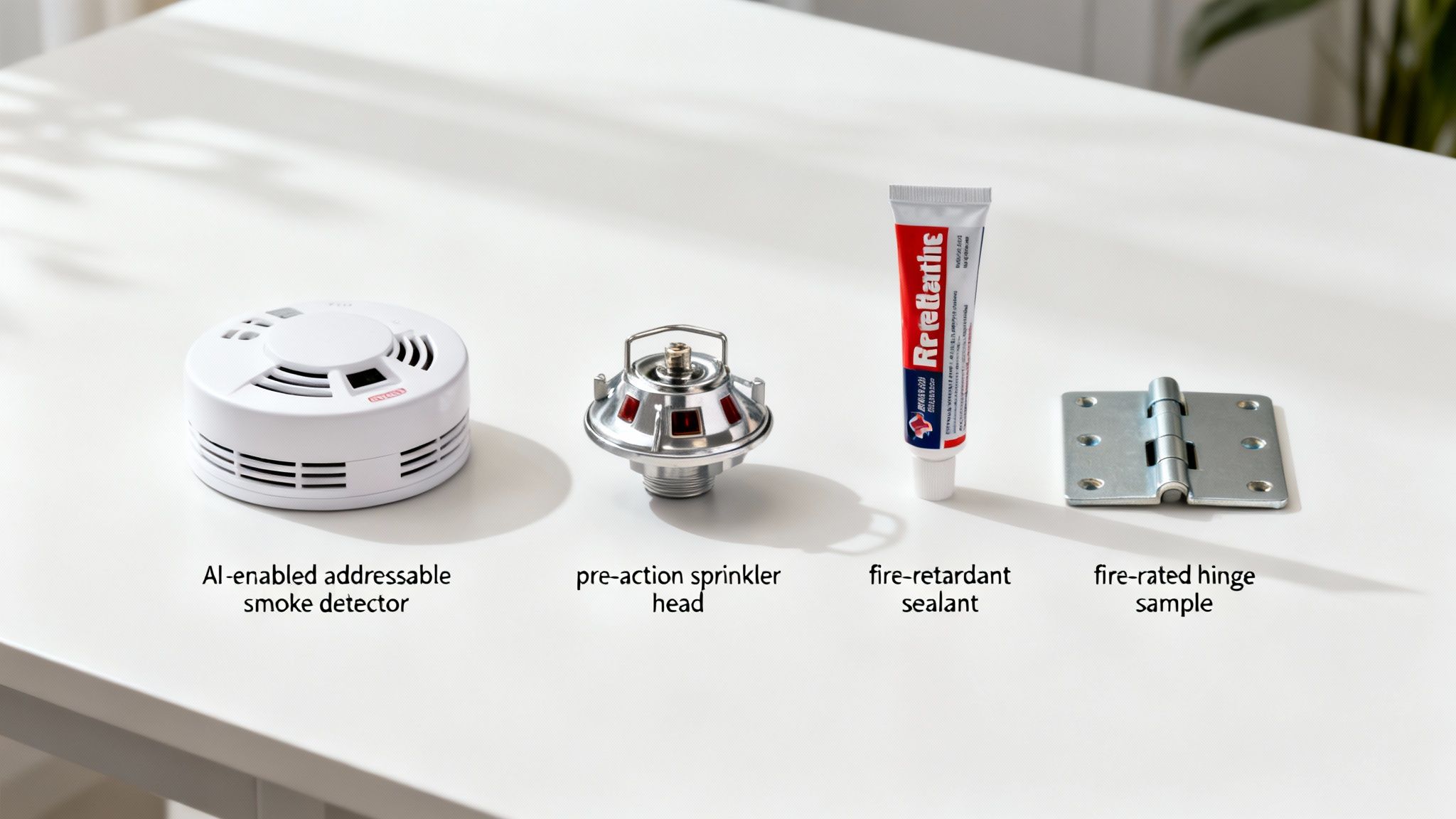
The biggest change is the mandatory switch to AI-enhanced, addressable fire detection systems for high-rise buildings. These intelligent systems pinpoint a fire's exact location, differentiate between real threats and false alarms, and provide real-time data to control rooms. This means fewer unnecessary evacuations and gives emergency services crucial, precise information before they're even on-site.
This is a major step up for UAE construction standards. For contractors, it means you'll be working much more closely with your MEP specialists to get these complex systems installed and commissioned correctly. It also means sourcing your panels and sensors from a supplier in Dubai who can give you the right technical support and, most importantly, provide the DCD certifications for these advanced technologies.
How are fire suppression systems being upgraded?
The 2026 codes require more effective and specialized suppression systems tailored to the building's specific use, ending the "one-size-fits-all" approach. For example, pre-action sprinkler systems, which require a two-step detection process before releasing water, are now mandatory in sensitive areas like data centers and industrial facilities to prevent accidental water damage to critical equipment.
These upgrades mean project managers have to do more detailed planning right from the design stage. The choice of suppression system now depends entirely on what the building is used for, how many people are in it, and its specific risk factors. This requires a much deeper knowledge of the various fire safety products Dubai has to offer.
The new code views every building as a unique ecosystem. A data centre's fire suppression needs are vastly different from a residential tower's, and the 2026 regulations now formally reflect this reality.
What are the new standards for passive fire protection?
The new standards significantly raise performance requirements for all passive fire protection (PFP) materials, focusing on fully tested and certified systems, not just individual products. This change, which covers fire doors, fire-retardant sealants, and intumescent coatings, will have the biggest impact on daily procurement and installation work.
This shift directly affects how you buy and install materials. You now have to source DCD approved materials for every single part of your passive fire protection strategy. It’s no longer enough to just have a fire-rated door; the entire door set, including the frame, hinges, and closers, has to be certified as a complete, tested system.
- Fire-Retardant Sealants: Must meet higher burn-through resistance times and be applied perfectly at all service penetrations through fire-rated walls and floors.
- Fire-Rated Hardware: Hinges, locks, and door closers must all carry their own DCD certifications and be installed exactly as the manufacturer specifies.
- Fire Doors: The entire assembly is under scrutiny, not just the door leaf. It must be sourced from a verified supplier.
Successfully meeting these tough new requirements comes down to partnering with a reliable building materials distributor. A good partner can ensure every component you buy, from a simple tube of sealant to a complex door closer, meets the stringent new standards, protecting your project from failing inspections and suffering costly delays.
How the New Codes Impact Material Selection
The 2026 fire safety codes are where the architect's vision meets the hard reality of your procurement list. This is the point where theory gets tested on a live construction site, and the new regulations are crystal clear: using DCD approved materials is no longer optional—it's a strict, non-negotiable requirement. For contractors, this fundamentally changes how you source, check, and install everything.
Every single material choice now carries serious weight. Something as simple as choosing a door hinge or a tube of sealant has transformed from a routine task into a compliance-critical decision. The new codes demand a much deeper, more practical understanding of material performance, turning your procurement team into one of your most important lines of defence against fire.
Why is material certification so critical now?
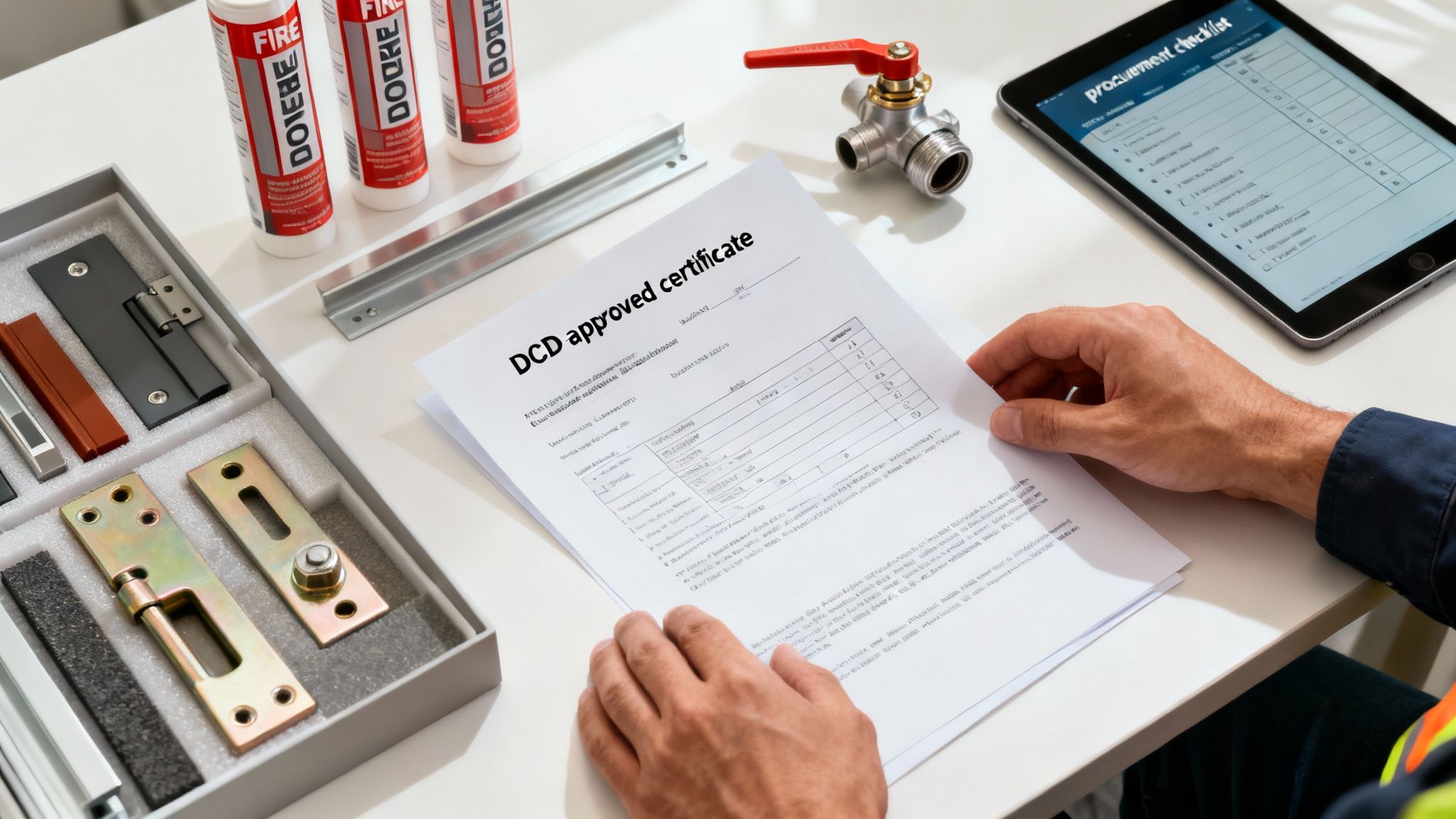
Material certification is critical for traceability and accountability, ensuring every fire-rated product has been tested to perform as intended during a fire. Dubai Civil Defence requires a valid Certificate of Conformity for every fire safety product, a systematic push to eliminate the substandard or counterfeit materials that have failed in past incidents.
This means a product's technical data sheet just doesn't cut it anymore. You absolutely must have a valid DCD Certificate of Conformity for every fire-rated product you install on-site. If you can't produce that certificate, your installation will fail inspection. That leads to costly rework, frustrating project delays, and fines big enough to blow a hole in any budget.
What is the best type of fire-rated hardware to use?
The best fire-rated hardware is any component that has a valid DCD approval certificate and is part of a fully tested and certified assembly. The 2026 codes focus on treating fire doors as complete systems, meaning the door leaf, frame, hinges, closer, and locks must all be certified to work together.
This system-based thinking is a major shift in mindset. You can no longer get away with mixing and matching components from different brands, even if each individual piece claims to be "fire-rated." The job now is to source complete, certified door sets. This is the only way to guarantee the entire assembly will hold up and provide the required protection—whether it's 30 minutes or up to 120 minutes—as specified in the building's fire strategy.
Think of passive fire protection like a chain—it's only as strong as its weakest link. A DCD-certified fire door installed with uncertified hinges is considered a complete system failure in the eyes of an inspector.
How do the codes affect sealants and MEP penetrations?
The codes place intense scrutiny on how MEP penetrations through fire-rated walls and floors are handled, mandating certified fire-retardant sealants to properly firestop these gaps. Every pipe, cable, or duct creates a potential pathway for fire and smoke, so using the correct, high-performance sealant is critical for containment.
Just grabbing any tube of "fire sealant" won't do. The product you choose must be specifically tested and approved for the exact type and size of the penetration, as well as the rating of the barrier it’s passing through. Using the wrong sealant or applying it incorrectly is one of the fastest and most common ways to fail a DCD inspection. For more on how these components work together, our guide on choosing the right fire-resistant wallboard provides some helpful background.
When you're selecting sealants, your checklist should look like this:
- Approval: Is the sealant DCD-approved for this specific use?
- Rating: Does the sealant's fire rating match or exceed the wall or floor's rating?
- Compatibility: Is the product compatible with the PVC pipe or armoured cable you're sealing around?
Why is partnering with the right supplier essential?
Partnering with the right supplier is essential because it is a core part of your risk management strategy, mitigating the high risk of sourcing non-compliant materials. A knowledgeable building materials distributor ensures every product is certified, documented, and fit for purpose, preventing costly compliance failures.
A specialised supplier in Dubai who lives and breathes the 2026 codes can make your life infinitely easier. They can ensure every fire safety product you buy—from fire-rated hardware to intumescent sealants—is fully certified, comes with the correct documentation, and gets to your site when you need it. That kind of partnership protects your project, your timeline, and your reputation, helping you meet the tough UAE construction standards with confidence.
Mapping Your Compliance Obligations as a Contractor
In the intricate world of Dubai construction, compliance with the 2026 fire safety codes isn't a one-person show. It's a shared responsibility, woven into the very fabric of a project from the first blueprint to the final handover. Every single stakeholder has a part to play, and understanding your specific duties is the first, most critical step to avoiding risk and delivering a successful project.
For contractors, the game has changed. The focus is now on three core areas: meticulous installation verification, rock-solid documentation, and the exclusive use of certified materials. Developers, on the other hand, shoulder the responsibility from day one, ensuring fire safety is baked into the project's DNA, not just sprinkled on as an afterthought.
What is a contractor's main duty under the new codes?
A contractor's main duty is to flawlessly execute the approved fire safety design on-site, using only specified DCD approved materials and installing them exactly to manufacturer guidelines. This responsibility goes beyond simple installation; you must verify that every component matches the approved submittals and document the process with evidence.
This shift effectively turns your site supervisors and project managers into the front line of compliance. Every installation needs to be checked, then checked again, and backed up with photographic proof. Even a tiny deviation can trigger a failed inspection, sending you into a spiral of costly rework and delays that will absolutely demolish your profit margins.
Who is ultimately responsible for documentation?
The main contractor is ultimately responsible for compiling and managing the complete fire safety documentation dossier, which is a mandatory requirement for DCD inspection and project handover. While the entire project team contributes, the contractor owns the final, organised record that proves every element meets the required UAE construction standards.
This isn't just a messy pile of papers, either. It needs to be an organised, detailed log including:
- Valid DCD Certificates of Conformity for all fire safety products Dubai.
- Technical data sheets for every single material used.
- Installation reports, complete with photographic evidence for critical applications like firestopping.
- Commissioning reports for active systems like alarms and sprinklers.
In this new regulatory environment, poor documentation is the same as non-compliance. If you can’t prove you used the right materials and installed them correctly, you haven’t met the code.
Compliance Responsibility Checklist by Role
To make sense of who does what, it's helpful to break down the responsibilities clearly. With stakes this high, there's no room for ambiguity on a project site. Every role, from the developer to the facility manager, has specific, critical tasks that contribute to the project's overall compliance.
The table below outlines these key duties, making it easier for every stakeholder to understand their specific part in achieving full compliance with the 2026 Dubai Fire and Life Safety Code.
| Stakeholder Role | Key Responsibility | Critical Action Item | Relevant Yasu Product/Service |
|---|---|---|---|
| Developer/Owner | Ensuring the initial design and specifications are fully compliant with the 2026 codes. | Mandate the use of DCD-approved materials in all tender documents and design specifications from the project's inception. | Specification review and material selection guidance. |
| Consultant/Architect | Designing fire safety systems and specifying approved materials that meet or exceed code requirements. | Create a detailed Fire Safety Strategy Report using only listed and certified products for every application. | Technical data sheet and certificate provision for submittals. |
| Main Contractor | Executing the approved design on-site and managing the complete documentation dossier. | Implement a rigorous on-site QA/QC process to verify every installation against approved submittals, including photo documentation. | Supply of certified firestopping, sealants, and hardware. |
| MEP Contractor | Installing and commissioning active fire systems (alarms, sprinklers, suppression) correctly. | Conduct thorough testing and commissioning, providing detailed reports that are included in the final handover documents. | Sourcing of DCD-approved pipes, fittings, and system components. |
| Facility Manager | Maintaining all fire and life safety systems in a state of operational readiness post-handover. | Establish a regular inspection and maintenance schedule as per DCD guidelines, keeping meticulous records of all activities. | Provision of certified spare parts and maintenance materials. |
By having a clear roadmap like this, project teams can work together seamlessly, ensuring that every box is ticked and the final building is not just compliant, but genuinely safe for its occupants.
How can a supplier help mitigate compliance risks?
A knowledgeable supplier helps mitigate risks by acting as a compliance partner, ensuring every fire safety product you procure is fully certified, fit for purpose, and comes with the correct DCD documentation. This proactive partnership prevents costly procurement mistakes and stops non-compliant materials from ever reaching your site.
The numbers back this up. The UAE Fire Safety Systems market is on a steady growth trajectory, which highlights just how much financial sense it makes to get compliance right from the start. With mandatory upgrades needed in 70% of existing commercial buildings and penalties for non-compliance reaching up to AED 100,000, the cost of getting it wrong dwarfs the investment in certified materials. You can read the full research about the UAE fire safety market for a deeper dive into these trends.
Working with a trusted supplier in Dubai simply makes your life easier. They can consolidate what you need, offer technical advice on material selection, and guarantee every delivery is backed by the required DCD paperwork. This kind of strategic partnership lifts the administrative weight off your shoulders, letting your team focus on quality installation, confident that the materials they’re using will sail through inspection.
Navigating the DCD Approval Process for Materials
Getting your materials approved by the Dubai Civil Defence (DCD) is a make-or-break moment for any project. Let’s be honest, if you aren't prepared, this stage can bring everything to a grinding halt, causing delays that mess up your entire schedule. A smooth run from procurement to installation hinges on knowing the process inside and out and having all your paperwork in order from day one.
Think of the DCD approval certificate as a passport for your product. Without that official stamp, a material simply isn't getting installed on any site in Dubai. This applies to every single fire safety component, from a tube of fire-retardant sealant to a complex sprinkler head. When the inspector shows up, showing them this documentation isn't just a good idea—it's a non-negotiable part of meeting UAE construction standards.
Why is a DCD Certificate of Conformity so important?
A DCD Certificate of Conformity is crucial because it is the only official proof that a product has been independently tested and will perform as required during a fire. It is your guarantee that the material meets the strict requirements of the code, and without it, the product is considered non-compliant and will fail inspection.
This whole certification process was put in place for a good reason: to keep shoddy or counterfeit fire safety products Dubai out of our buildings. It ensures every part of a building’s fire protection system is genuinely reliable. As the contractor, the buck stops with you to check every certificate before a single item is installed.
The rule is simple, but it's absolute: if you can't show a valid DCD certificate for a material during an inspection, it's non-compliant. To the inspector, an uncertified product is a failed product.
This workflow breaks down the contractor's compliance journey, from design right through to installation.
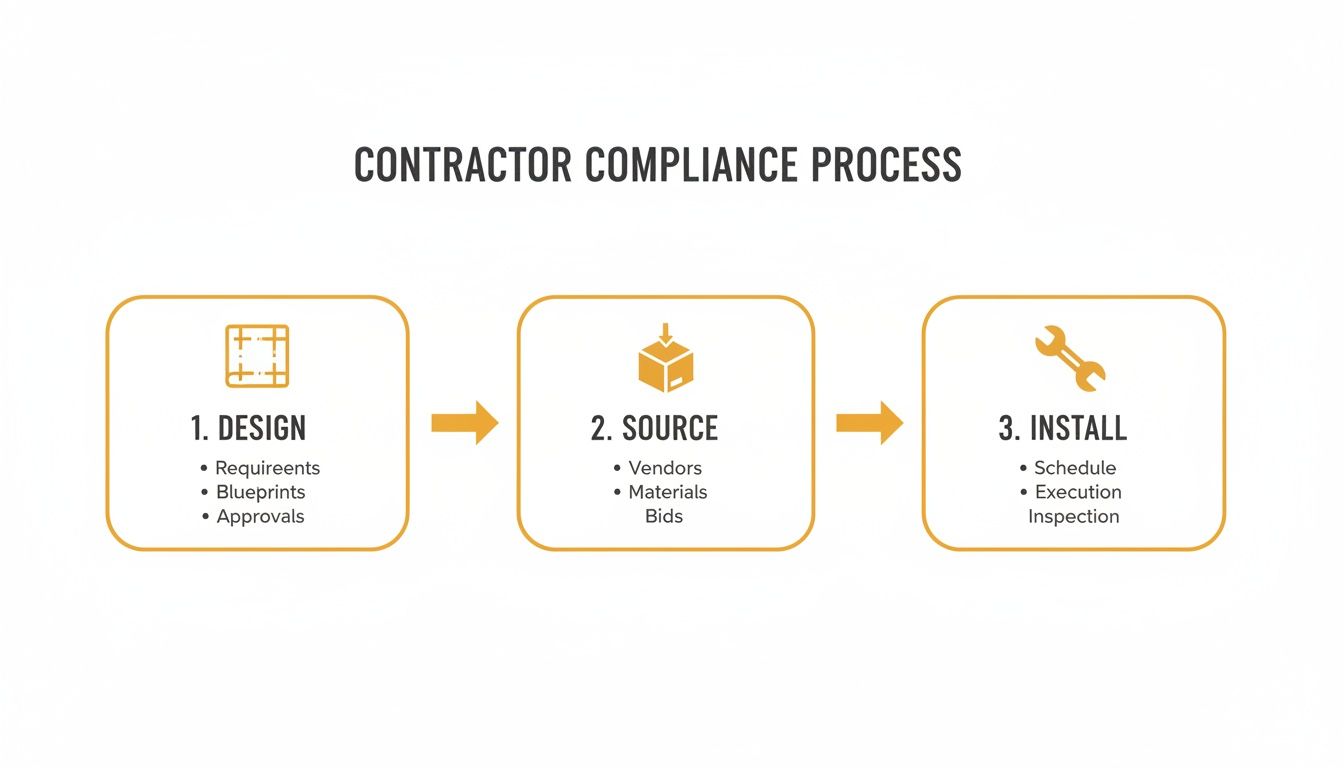
As you can see, sourcing certified materials isn't just one step in the process; it's the critical link that connects a compliant design to a successful, approved installation.
What are the most common pitfalls that lead to failed inspections?
The most common pitfalls are using materials with expired DCD certifications, relying on unverified suppliers who may provide counterfeit products, and having disorganized or incomplete on-site documentation. These entirely preventable mistakes are frequent causes of failed inspections, leading to significant project delays and rework costs.
Here are three of the most common reasons we see for failed DCD inspections:
- Using Materials with Expired Certifications: DCD approvals don't last forever. A certificate could have been perfectly valid when you bought the product, but expired by the time you install it. Always, always check the validity dates.
- Relying on Unverified Suppliers: Buying from an unfamiliar supplier in Dubai is a huge gamble. They might unknowingly sell you products with fake or invalid paperwork, leaving you to face the consequences during an inspection.
- Inadequate On-Site Documentation: Having the right DCD approved materials on site is only half the job. You need to have the matching certificates organised and ready to hand over to the inspector the moment they ask.
This is exactly where having a trusted partner makes all the difference. A specialised building materials distributor takes all the guesswork and paperwork headaches off your plate. They make sure your entire stock of fire-rated hardware and other safety products is fully compliant, backed by the correct DCD certificates, and delivered right when you need it. For more on this, check out our guide on fire safety compliance and choosing the right materials. It’s about working smarter to keep your project on track, without the constant stress of potential inspection failures.
Your Partner in Achieving Full Code Compliance
Getting to grips with Dubai's 2026 fire safety codes is more than just a box-ticking exercise. It’s a genuine commitment to building a safer emirate for everyone who lives and works here. We've walked through the major shifts in detection, suppression, and passive fire protection, but now it's time to shift gears from theory to practice—from understanding the rules to executing them flawlessly on site.
Let's be clear: knowledge alone won't get you across the compliance finish line. You need the right materials in hand, solid technical backup, and a partner who truly gets what’s at stake on your project.
Why is a strategic supplier so important for compliance?
A strategic supplier is vital because they act as your first line of defense against non-compliance, ensuring every product you use meets strict UAE construction standards and comes with the required DCD certification. This partnership eliminates procurement risks, provides technical support, and streamlines your path to a successful and timely project handover.
This kind of partnership lets you centralise your procurement, from MEP essentials to the final finishing works, giving you consistent quality and control. When you’ve got a supplier with deep inventory and battle-tested logistics, you can stick to those tight construction schedules without ever cutting a corner on safety.
A partnership built on trust and technical expertise transforms the complex task of regulatory compliance into a manageable, streamlined process, securing both your project's timeline and its legacy of safety.
As a dedicated building materials distributor, we do more than just move boxes. We deliver peace of mind. Our warehouses are stocked with DCD approved materials, including the specific fire-rated hardware and certified fire-retardant sealants you now need. Crucially, we make sure every item comes with the correct documentation, ready for any inspection.
Our job isn’t just to be a supplier in Dubai. We see ourselves as your compliance ally. We have the technical know-how and the reliable logistics to help you navigate the fine print of these new regulations. Together, let's make your next project a benchmark for quality and safety, fully aligned with the future of fire protection in the UAE.
Common Questions About the 2026 Dubai Fire Codes
Getting to grips with the new 2026 fire safety codes in Dubai always throws up a few practical questions. For the contractors, project managers, and site engineers on the ground, a clear answer is essential. Here’s a straightforward breakdown of the most common queries we handle every day.
Do the 2026 fire safety codes apply to existing buildings?
Yes, the codes apply to existing buildings undergoing major renovations, retrofits, or changes in use, although they are primarily aimed at new construction. Key upgrades, like installing smart fire detection systems, are now mandatory for many older high-rise and commercial buildings to bring them up to current Dubai Civil Defence (DCD) standards.
If you're managing an older property, a compliance audit is a very smart first step. It means you can’t just replace old parts with the same old spec if they don't meet the 2026 requirements.
How can I be sure a fire safety product is genuinely DCD approved?
The only way to be sure is by obtaining the official Certificate of Conformity for the product from your supplier. This is the only proof an inspector will accept, and any reputable supplier in Dubai should provide this documentation upfront for all fire safety products Dubai, including fire-rated hardware and sealants.
Never, ever take a product based on a catalogue claim or a salesman's word. Always demand the certificate.
In the eyes of a DCD inspector, a product without a valid, current certificate is a non-compliant product. There's no grey area here. Using unverified materials is one of the biggest risks you can take on a project.
What are the biggest mistakes to avoid with the new codes?
The biggest mistakes are purchasing materials based on price without verifying DCD certification, maintaining poor on-site documentation, and performing incorrect installations of passive fire protection systems. These common errors frequently lead to failed inspections, project delays, and costly rework.
Partnering with an experienced building materials distributor who knows the ropes is the easiest way to steer clear of these problems. Don’t forget that proper training for your installation teams is just as important as choosing the right material.
Do these new codes affect projects in other emirates?
Yes, while these codes are specific to Dubai, they align with the broader UAE Fire and Life Safety Code of Practice and reflect a national trend toward higher safety standards. Authorities in Abu Dhabi and Sharjah are implementing similar regulations, so adopting Dubai's advanced standards now helps future-proof your projects across all UAE construction standards.
For over 20 years, Yasu Trading Co. LLC has been the partner contractors trust to navigate the UAE's demanding construction standards. We supply a full range of DCD-approved fire safety products, and we back them up with the technical support and paperwork you need to pass inspection with confidence.
Ensure your next project meets the 2026 fire safety codes by partnering with us today.