What PPE Is Required on Sites? A UAE Guide
A missing hard hat, the wrong glove, or damaged eye protection can stop more than one worker. It can delay a permit, fail a site inspection, expose a contractor to liability, and put the day’s program behind schedule. For project teams asking what PPE is required on sites, the practical answer is not a single standard issue pack. PPE must match the task, the exposure, the site rules, and the approved risk assessment.
For contractors, MEP subcontractors, fit-out teams, and maintenance crews, personal protective equipment is a controlled site requirement, not an item to buy only when an inspection is due. The right PPE protects people while helping supervisors maintain access control, productivity, and compliance across active work areas.
What PPE Is Required on Sites?
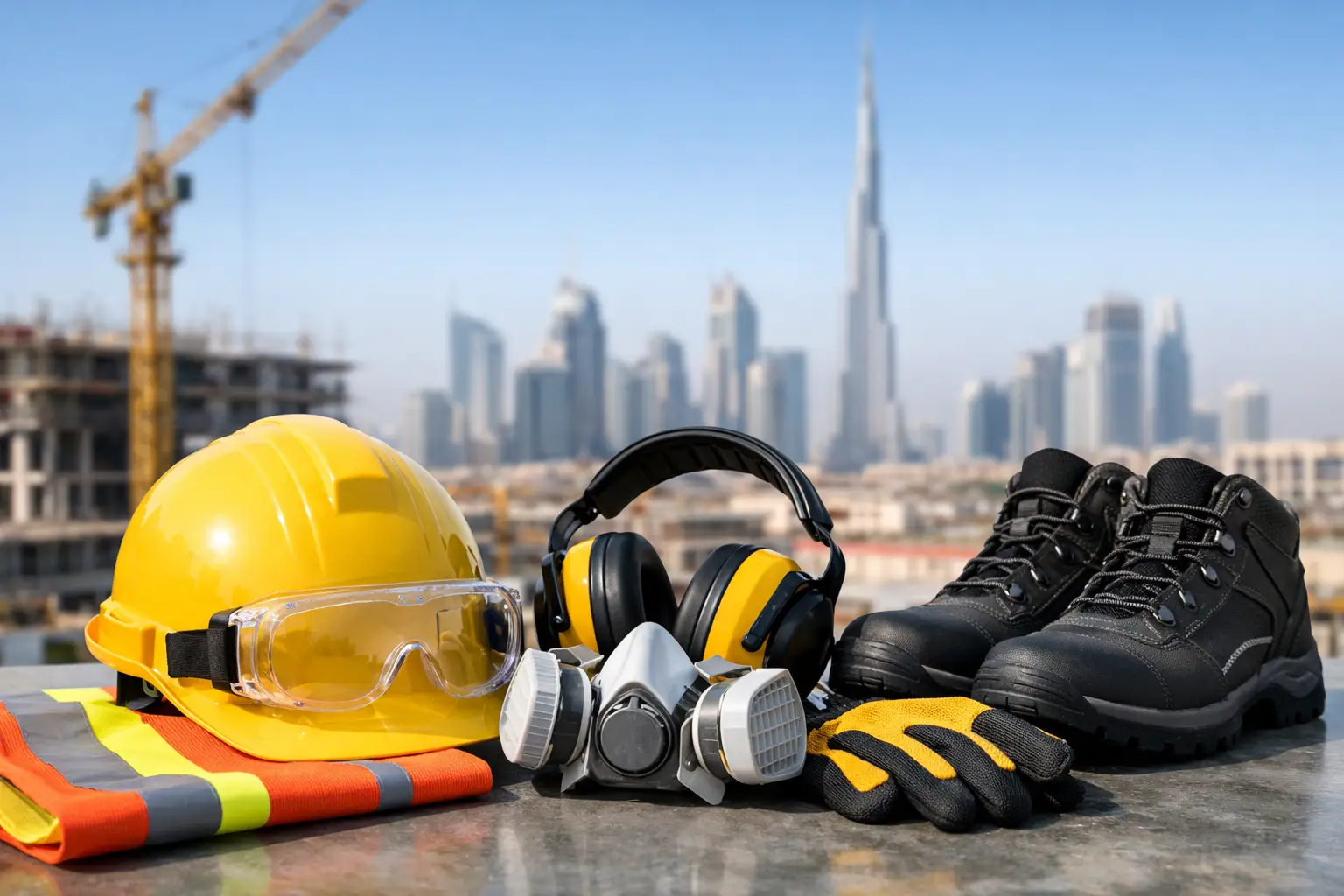
Most construction sites require a core set of personal protective equipment before anyone enters an active work zone: a safety helmet, high-visibility vest or clothing, safety footwear, suitable gloves, and eye protection where there is a foreseeable risk from dust, debris, splashes, or flying particles. This is the baseline, not the full answer.
The required level changes with the work. A worker drilling overhead needs different protection from a plumber using chemical solvent cement. An electrician working near energized equipment requires PPE selected for electrical risk, while a worker cutting concrete may need respiratory and hearing protection in addition to eye, hand, and foot protection.
Site management should define mandatory entry PPE in the project safety plan, then add task-specific equipment through method statements, permits to work, toolbox talks, and risk assessments. Local authority rules, main contractor requirements, consultant specifications, and client standards may also set the minimum acceptable product type or certification. When requirements differ, the stricter approved requirement should guide procurement and use.
Core PPE for Construction Site Entry
Head protection
A safety helmet is standard on sites where there is exposure to falling, moving, or overhead objects. It also matters around scaffolding, lifting operations, racking, incomplete ceilings, and congested material storage areas. Helmets should be inspected for cracks, impact damage, UV degradation, altered shells, and damaged suspension systems.
A helmet that has been drilled, painted with incompatible material, or kept in a hot vehicle until the shell deforms should be removed from service. Procurement teams should also check compatibility with chin straps, face shields, earmuffs, and welding visors where those accessories are needed.
Safety footwear
Safety shoes or boots protect against dropped materials, sharp objects, uneven ground, and slips. The correct choice depends on the site condition. Toe protection alone may not be sufficient for wet work, oil exposure, puncture hazards, or electrical work.
For general construction, crews commonly need footwear with slip-resistant soles and protective toes. Where nails, offcuts, or scrap metal are present, puncture-resistant midsoles may be appropriate. Waterproof safety boots can reduce disruption for external works, plumbing repairs, and areas affected by washdown or standing water.
High-visibility clothing
High-visibility vests, jackets, or shirts help plant operators, delivery drivers, and other workers identify people in traffic routes and low-light areas. They are especially relevant around loading zones, excavation work, road interfaces, warehouses, and night shifts.
Visibility clothing must remain visible. A vest covered in cement dust, paint, or grease no longer provides the same benefit. Supervisors should keep replacement stock available rather than allowing workers to continue in worn or heavily soiled garments.
Gloves
There is no universal construction glove. General handling gloves may be suitable for moving pipes, fittings, fasteners, timber, or packaged materials, but they may not protect against solvents, sharp sheet edges, hot surfaces, or electrical hazards.
Select gloves by the actual exposure: cut-resistant gloves for metalwork and sharp materials; chemical-resistant gloves for cleaning chemicals, adhesives, sealants, and plumbing solvents; heat-resistant gloves for hot work; and insulated electrical gloves where the electrical procedure requires them. Gloves must fit correctly. Loose gloves can reduce grip and may create an entanglement risk around rotating tools.
Eye and face protection
Safety glasses are commonly required for drilling, cutting, grinding, chiseling, chemical handling, and work in dusty areas. Goggles provide a closer seal when there is splash risk or high dust exposure. A face shield may be needed for grinding, chemical transfer, or cutting operations, but it should normally supplement, not replace, suitable eye protection.
For welding and thermal cutting, use the correct welding helmet or shield with the appropriate lens shade. Teams should avoid treating standard clear safety glasses as sufficient protection for every high-energy task.
Task-Specific PPE Cannot Be Treated as Optional
The highest-risk work activities need a tighter PPE selection process. This is where generic buying decisions create compliance gaps and unnecessary reordering.
Workers using power tools may require safety glasses, hearing protection, gloves suited to the material being handled, safety footwear, and respiratory protection when dust cannot be adequately controlled by engineering measures. Cutting, grinding, and demolition work can produce silica-containing dust, metal particles, and high noise levels. PPE supports protection, but it does not replace dust extraction, wet cutting, machine guards, and controlled work zones.
Electrical work requires particular care. Arc-rated clothing, face protection, insulated gloves, and dielectric footwear may be required depending on the voltage, fault energy assessment, switching activity, and established electrical safety procedure. A standard hard hat and work gloves are not an acceptable substitute for electrical PPE. Only trained and authorized personnel should determine the required protection for energized or potentially energized work.
For work at height, a full-body harness with a compatible lanyard, energy absorber, or self-retracting lifeline may be required. The complete fall-arrest system matters: harness, anchor point, connecting equipment, clearance distance, rescue plan, and inspection status must work together. Supplying a harness without a suitable anchorage plan does not make the work safe.
Confined spaces, spray painting, chemical cleaning, hot work, and excavation each introduce additional hazards. Respiratory protective equipment may require fit testing, cartridge selection, cleaning, storage, and replacement controls. Hearing protection must provide appropriate attenuation without stopping workers from hearing alarms or instructions. PPE is effective only when it is matched, maintained, and worn correctly.
How to Specify PPE for Procurement
A procurement request that simply says “safety items” creates room for unsuitable substitutions. A better request identifies the work package, hazard, required product category, sizing range, quantity, certification or approval requirement, and delivery date.
For example, an MEP team preparing for pipe installation may need general handling gloves, chemical-resistant gloves for solvent work, safety glasses, face shields for cutting, and waterproof safety footwear for testing and drainage areas. A fit-out contractor may need dust masks or reusable respirators selected for sanding and cutting activities, plus hearing protection for extended power-tool use. The product schedule should reflect those differences.
Where a project has approved brands or municipality-compliant requirements, confirm them before placing a bulk order. The lowest unit price can become expensive if the product is rejected at the gate, does not fit the workforce, or must be replaced after one shift. Consider service life, replacement frequency, comfort, compatibility with other PPE, and stock continuity alongside price.
Keep common consumables available at site level. Safety glasses scratch, gloves wear out, and disposable respiratory products need regular replacement. Central purchasing can control standards and pricing, while site stores should maintain enough buffer stock to avoid workers borrowing damaged or unsuitable equipment from another trade.
Inspection, Training, and Replacement Control
PPE issuance is only the beginning. Supervisors should check use during daily site walks and address problems before they become incidents. Common failures include workers wearing helmets without securing them during elevated work, using damaged footwear, removing eye protection during quick cuts, or wearing the wrong glove for chemical handling.
Workers need practical instruction on fitting, limitations, cleaning, and storage. This is particularly critical for harnesses, respirators, electrical gloves, welding shields, and hearing protection. If an item is uncomfortable or incompatible with the task, workers are less likely to wear it consistently. Feedback from foremen and safety officers should inform the next procurement cycle.
Set clear replacement rules. Replace PPE after an impact, contamination, visible damage, expired service period, failed inspection, or loss of performance. Keep records for higher-risk equipment such as fall-arrest gear and respirators. A controlled issue register also helps project managers forecast demand as manpower changes between work phases.
Keep PPE Available Before the Work Starts
PPE shortages usually appear at the worst moment: a new crew arrives, a permit is released, a delivery is unloaded, or an inspection is scheduled. Consolidating safety equipment with construction hardware, power tools, plumbing materials, electrical components, adhesives, and fasteners reduces supplier coordination and helps keep approved products moving to site together.
Yasu Trading supports contractors with jobsite-ready fire and safety equipment, construction consumables, and project-based supply coordination for Dubai and wider UAE operations. The objective is straightforward: provide the specified equipment in time for the work, without creating a separate procurement delay.
Before releasing the next work package, review the risk assessment with the site team, confirm the approved PPE schedule, check sizes and quantities, and order replacement stock early. A crew that starts properly equipped is easier to manage, safer to deploy, and far less likely to hold up the program.